Entrepreneurship of Awakening
JOURNAL ANNOTATIONS
425 words · 1.5 min read
This Journal Annotation was created for the Why The Dreamer Project page. It reframes awakening as research and development — not private doctrine but design inquiry, tested in organizations, communities, and public life.
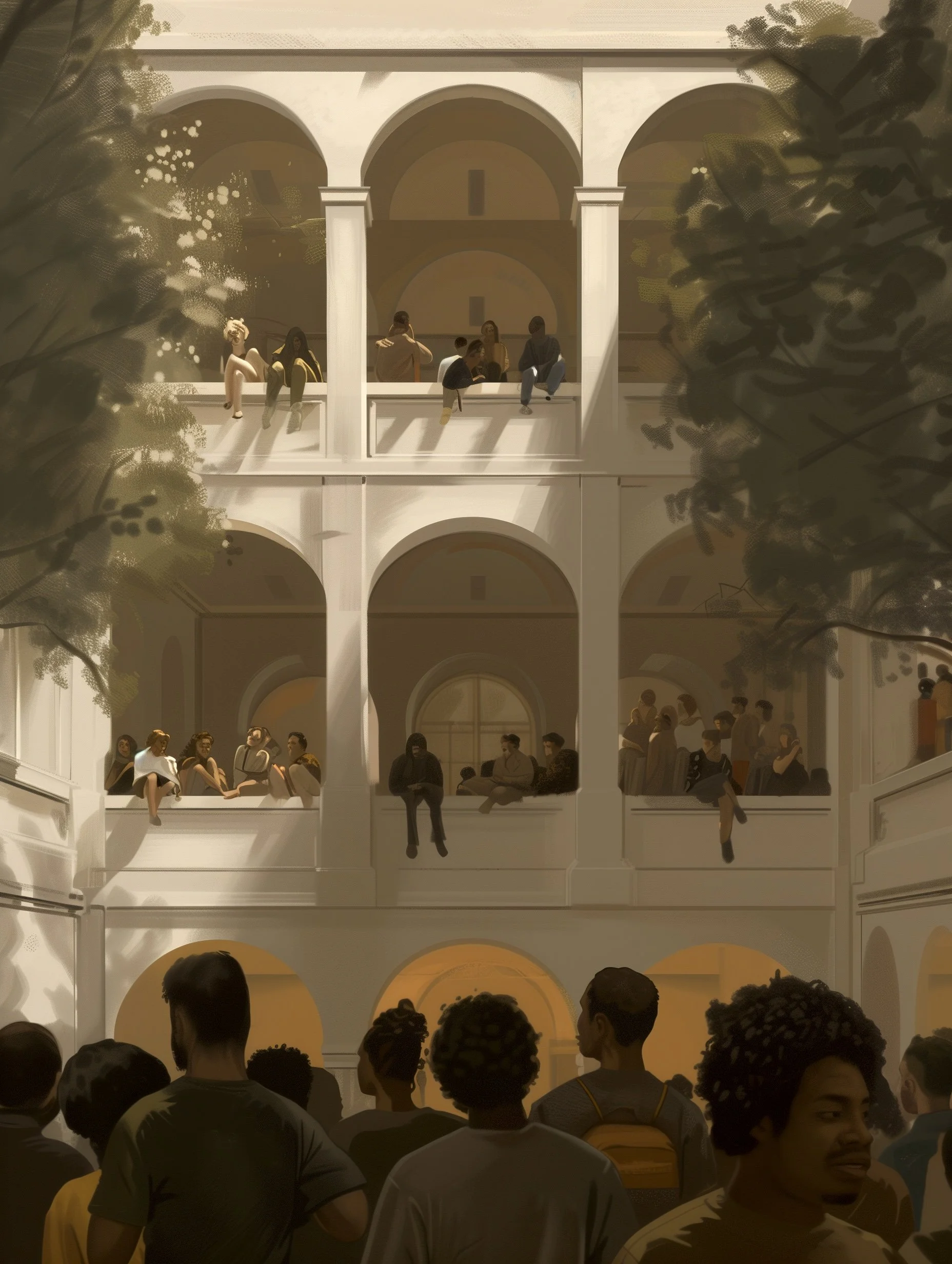
To treat awakening as research is to admit uncertainty, yet to proceed anyway. The experiment is not to prove a belief but to test whether presence itself can design new systems.
DARPA incubated the internet. What if we treated awakening as research and development?
Governments and corporations have long invested in research projects with no guarantee of outcome. The internet, GPS, and mRNA vaccines all began as speculative bets, tested in labs and pilot programs long before their use in daily life became clear. The Dreamer Project asks whether awakening could be treated in a similar way — not as doctrine, but as research and development for human capacities.
Suppose groups of ordinary people trained, for chosen hours, in qualities like presence, peace, generosity, and oneness. Suppose these qualities were treated not as virtues to revere but as living variables to test. What new forms of cooperation might appear when negotiation is guided by presence rather than defensiveness? How might organizational culture shift when generosity is practiced as baseline rather than scarcity? Could post-conflict reconciliation look different if peace and oneness replaced retaliation as the working assumptions?
This is awakening as R&D — an applied, secular inquiry where pilot cohorts could be hosted by organizations willing to experiment. An NGO might test whether Dreamer-trained mediators change the texture of dialogue in reconciliation efforts. A company might compare a pilot team’s decisions under stress to a conventional control group. A city might imagine a “trust economy” where residents practicing clarity and generosity anchor cooperation at scale. These scenarios remain speculative, but so did the internet when it was first proposed.
The aim is not to create saints or sages. It is to see what becomes possible when ordinary people toggle, for selected hours, into Dreamer mode, testing another stance within their roles as parents, colleagues, or neighbors. The results would be uncertain, but the uncertainty itself is the point. By sketching these possibilities, we begin to reframe awakening as more than private wellness — as a public experiment, a form of design research with the potential to reshape systems.
If other institutions incubated new technologies, why not incubate new states of mind?
Further Reading.
Bibliothèque: Peter Senge, The Fifth Discipline — systems thinking and organizational learning.
Donald Hoffman, The Case Against Reality — perception as interface.
Otto Scharmer, Theory U — leading from the emerging future.
Michael Nielsen, Reinventing Discovery — on collective intelligence as innovation model.
Meta Note
This page is a living document. Last updated: New post.
Connection: Extends the Why The Dreamer Project page.