THE DREAMER PROJECT
Design as Method
How The Dreamer Project turns consciousness-first philosophy into lived conditions for testing perception.
Last updated: June 13, 2026
Photo: Caroline Mardok
A Philosophy Turned Design Inquiry
The Dreamer Project begins with a philosophical question: what changes if consciousness is treated, provisionally, as primary?
Rather than answer that question only through argument, belief, or private insight, the project turns it into conditions that can be lived, repeated, interrupted, and logged.
That is where design becomes method.
Design turns abstract questions into prompts, practices, tools, situations, and repeatable conditions. In The Dreamer Project, that method is used to observe what shifts in attention, perception, identity, choice, conflict, repair, and relationship when ordinary life is entered under a consciousness-first premise.
The point is not to prove a metaphysical claim from private experience. The point is to create a condition, enter ordinary life, observe what appears, and record what changed, or did not change, before explaining it too quickly.

BUILDING CONDITIONS
The Dreamer Project is a consciousness-first study conducted through ordinary life. It does not begin by asking people to accept a doctrine. It begins by asking what happens if a premise is lived as a test: What if consciousness comes first?
What if the world appears in mind?
What if identity is less fixed than it feels?
What if separation is not the final truth of relationship?
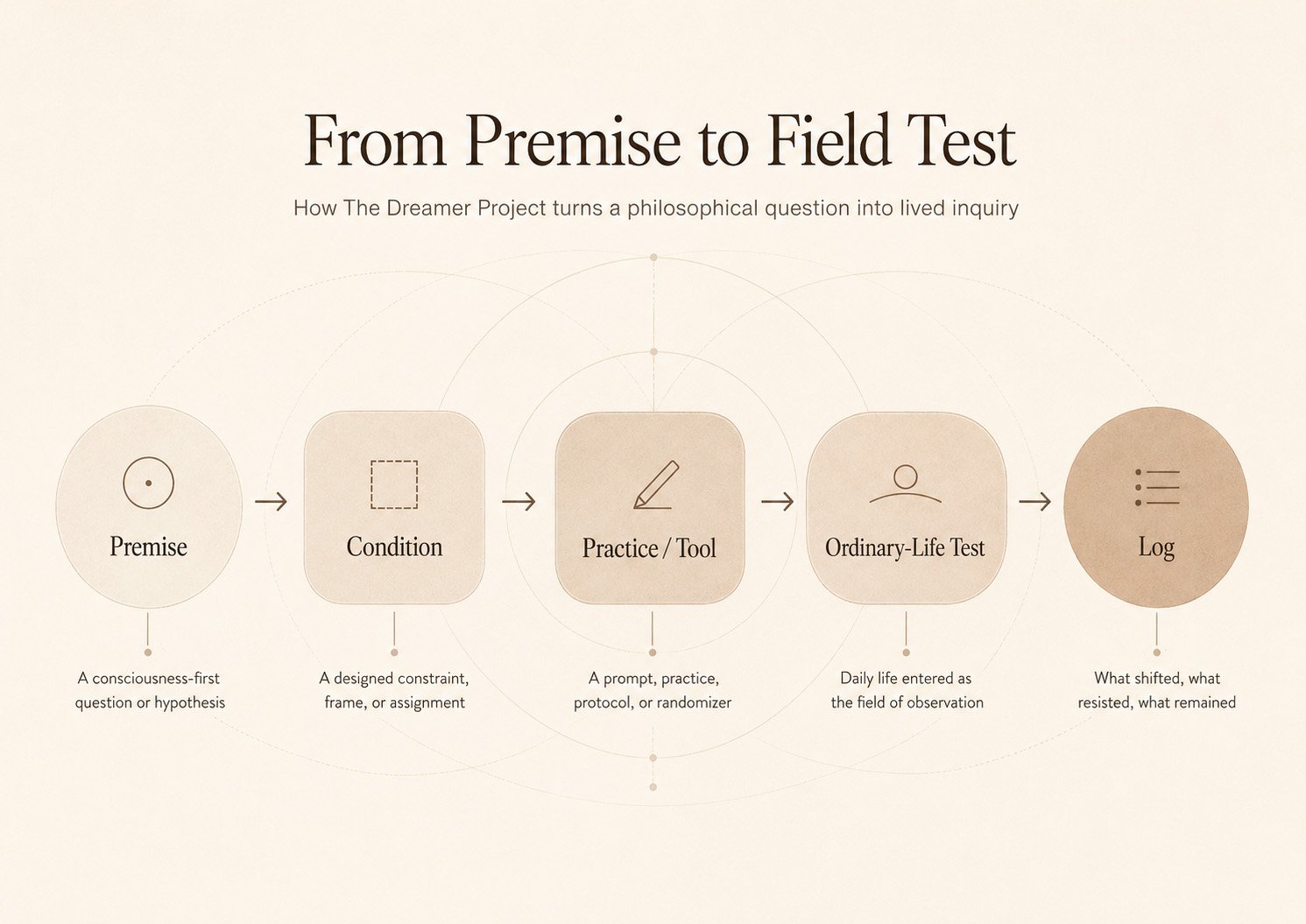
Design makes those questions usable. A philosophical question can become a morning calibration, a metaphysical premise can become an eyes-open practice, and a moment of conflict can become a field test. Even a reaction can become material for observation, not as a way to reduce life to data, but as a way to notice how quickly perception, identity, and interpretation take form under pressure.
The method is not neutral in the scientific sense. I am still the participant, designer, and observer. But the project can become more disciplined through structure: assigned practices, repeated conditions, randomized prompts, written logs, null results, and explicit ethical limits.
Design gives the inquiry a body.
FIELD INFRASTRUCTURE
Tools for Structuring the Field
The project uses small tools to prevent the experiment from becoming too friendly to mood, preference, or convenience.

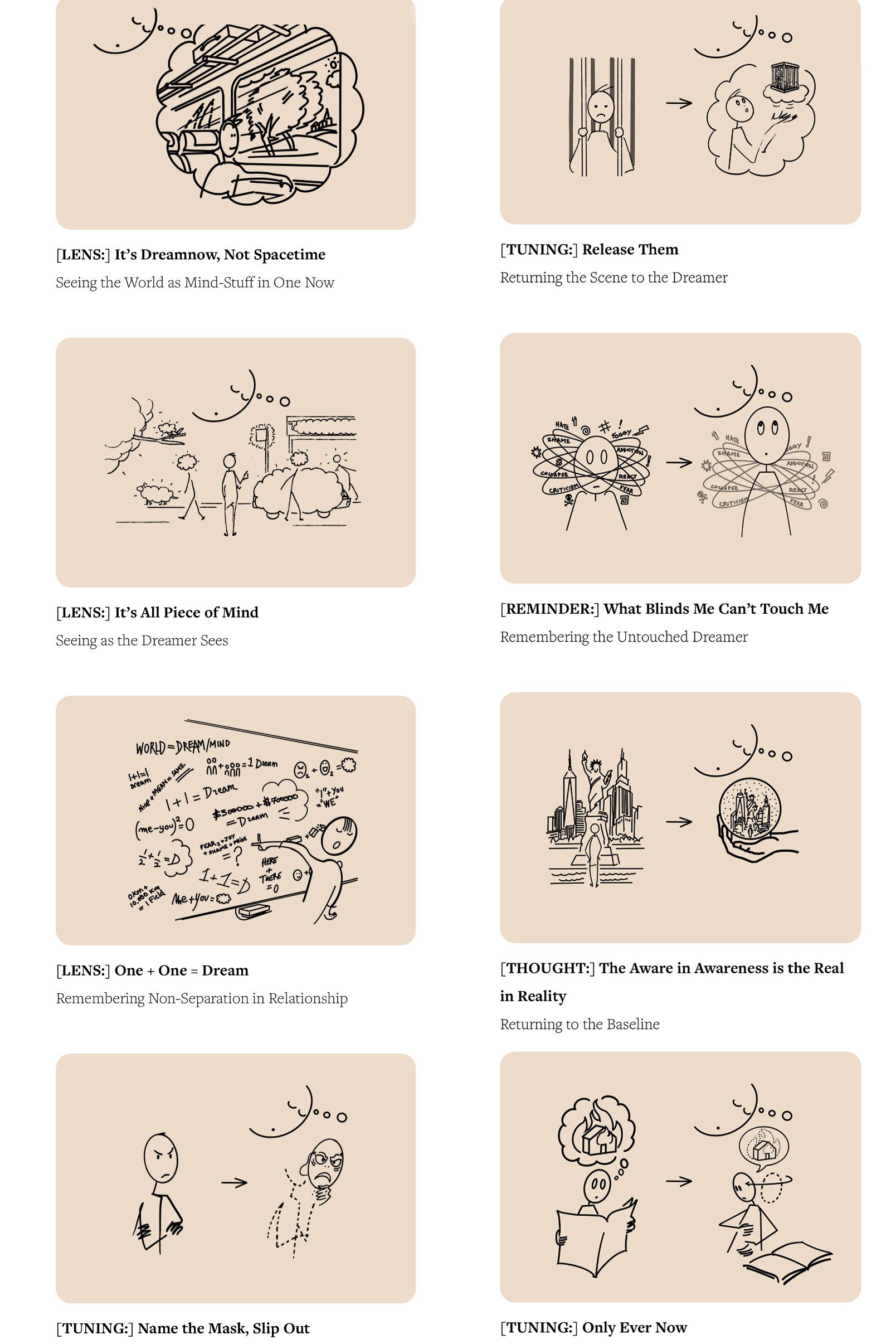
Practice Library. The practice system. The Practice Library is where the project’s practices, perception cues, and design interventions are drafted and organized. It gathers the tools used to test the We The Dreamer living theory in daily life.
Visual Practice Finder. The visual map. The Visual Practice Finder is a visual map of the We The Dreamer experiment: a field of Martin Lenclos’s sketches for mind-first practices, perceptual cues, and ordinary-life tests.
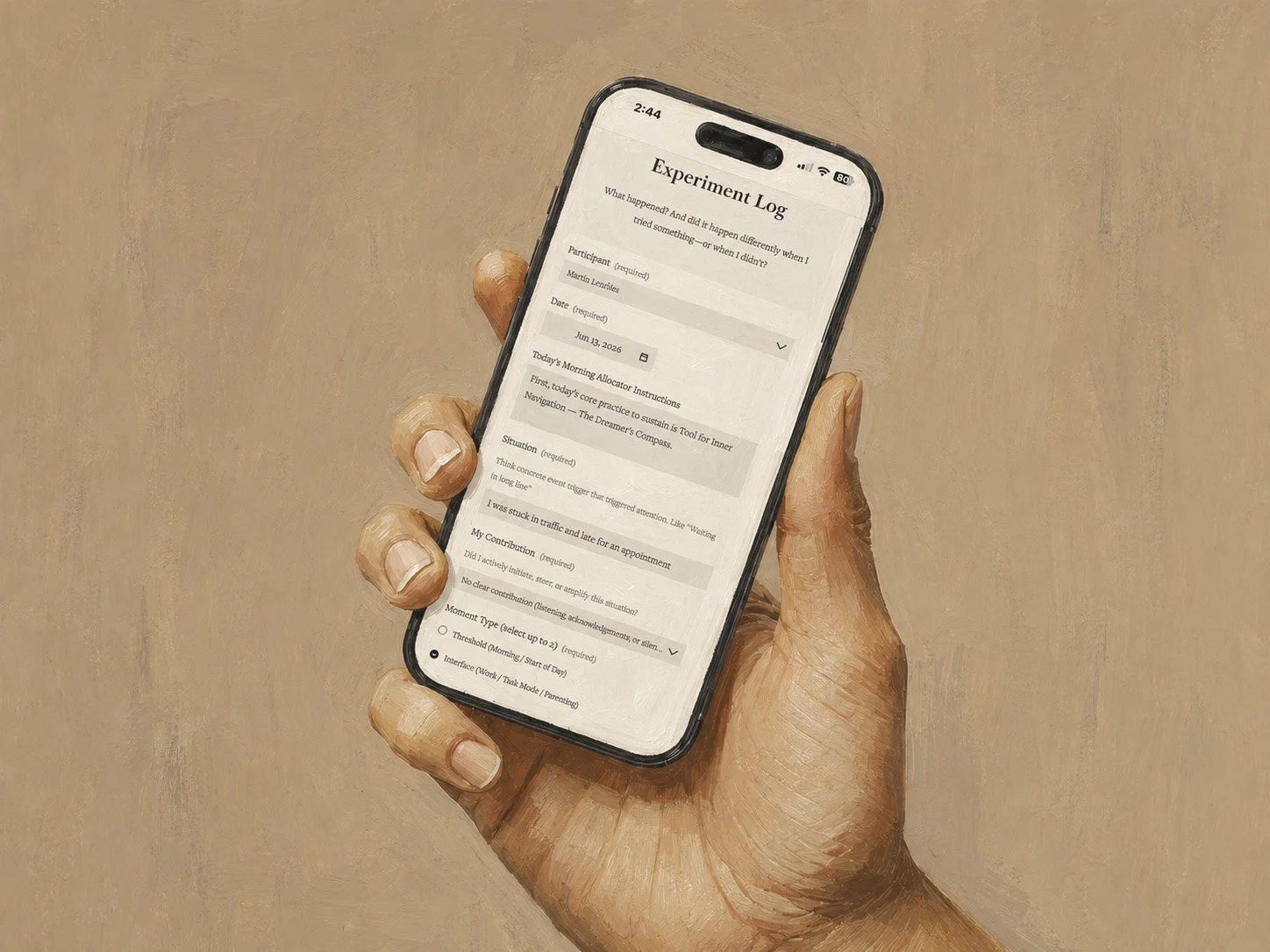
Log Form. The experiment record. It completes the method by recording what happened: the situation, the condition, the practice used or withheld, what shifted, what resisted, what remained unchanged, and any post-event ratings. This is where the experiment becomes a record rather than only an experience.
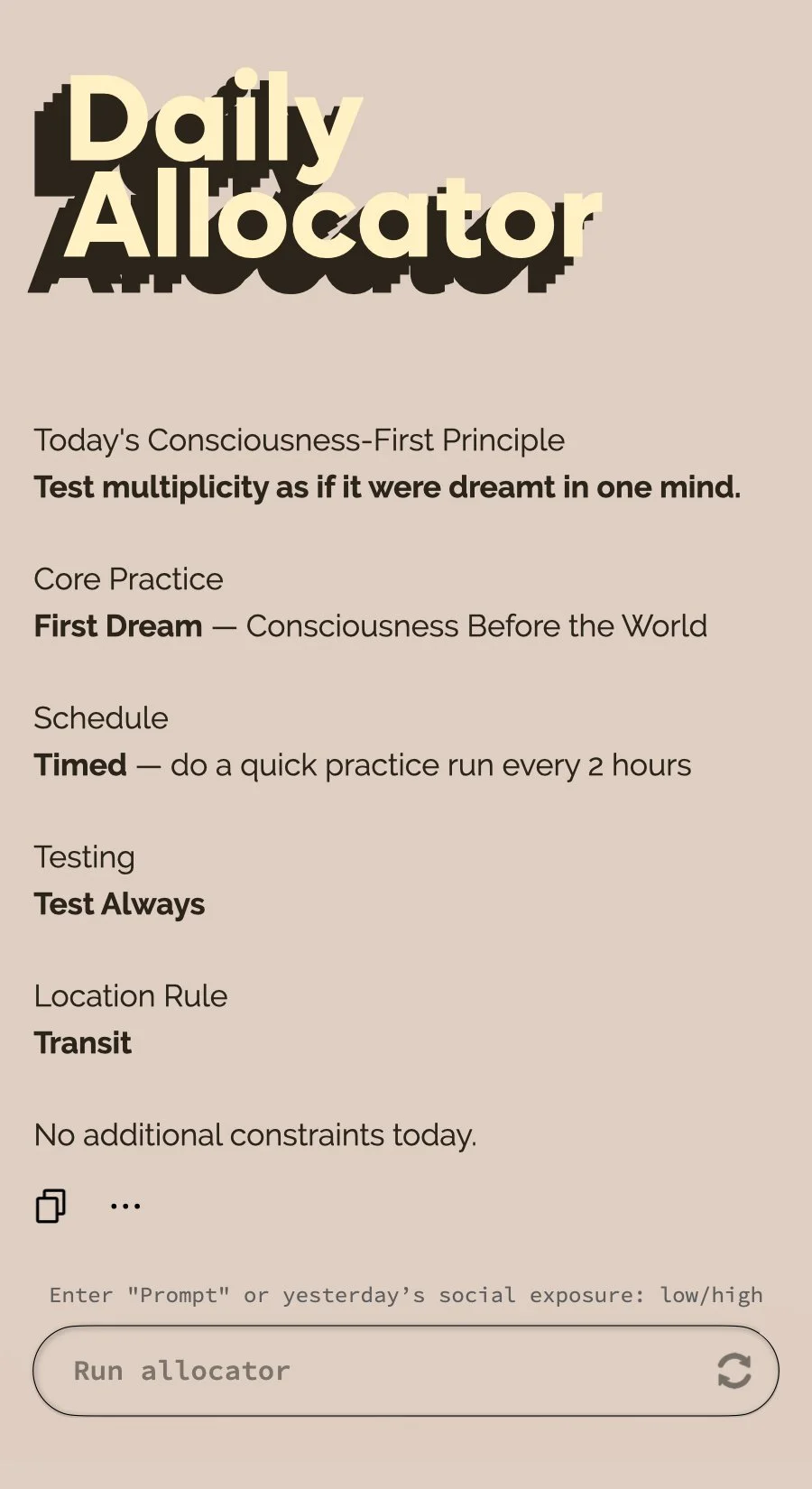
View the Log Structure →Daily Allocator. The day’s test conditions. The Daily Allocator assigns the day’s experiment: a principle to hold, a practice to sustain, a rhythm for using it, and limits shaped by context such as energy, mobility, and social exposure. It helps the day begin inside the experiment rather than inside habit.
Additional Field Tools


What Now Tool. The field test. The What Now tool assigns a field test. Sometimes the assignment is observational only. Sometimes it adds a condition: use a practice, compare before and after, apply the practice proactively, wait until a pattern appears, or let chance decide.
Practice Match. The test of choice. Practice Match helps select a practice when a situation has already appeared and I am not sure which practice fits. It translates a live condition or pressure point into a practice choice without letting preference decide too quickly.
PRACTICE ARCHITECTURE
Designing Conditions,
Not Beliefs.
The practices are where the philosophical premise becomes usable. If The Dreamer Project asks what changes when consciousness is treated, provisionally, as primary, then the practices ask how that question can be tested inside ordinary life: in conflict, anxiety, comparison, beauty, boredom, pressure, and relationship.

Identity Model
We The Dreamer is the project’s working model of identity. It does not claim to solve identity. It tests a shift: from separate self to shared field, from fixed other to relational perception, from enemy to appearance in experience.
The model does not deny difference, boundaries, pain, or responsibility. It asks whether a scene can be held differently without erasing what is real in it.
Perceptual Model
The dream analogy is the project’s perceptual model. It is not used to claim that life is literally a private dream. It is used because dreams show how a world, a self, others, threats, and meanings can appear inside mind while seeming external.
As a practice model, it asks what changes if waking life is approached more like appearance in awareness: not as fantasy, not as denial, but as a test of perception.
Practice Conditions
The practices are designed conditions, not reminders or affirmations. Each one gives the mind a specific way to interrupt the automatic reading of a moment before the usual story becomes fixed.
The design question is practical: what condition would let this philosophical idea be tested in daily life?
Sequence Design
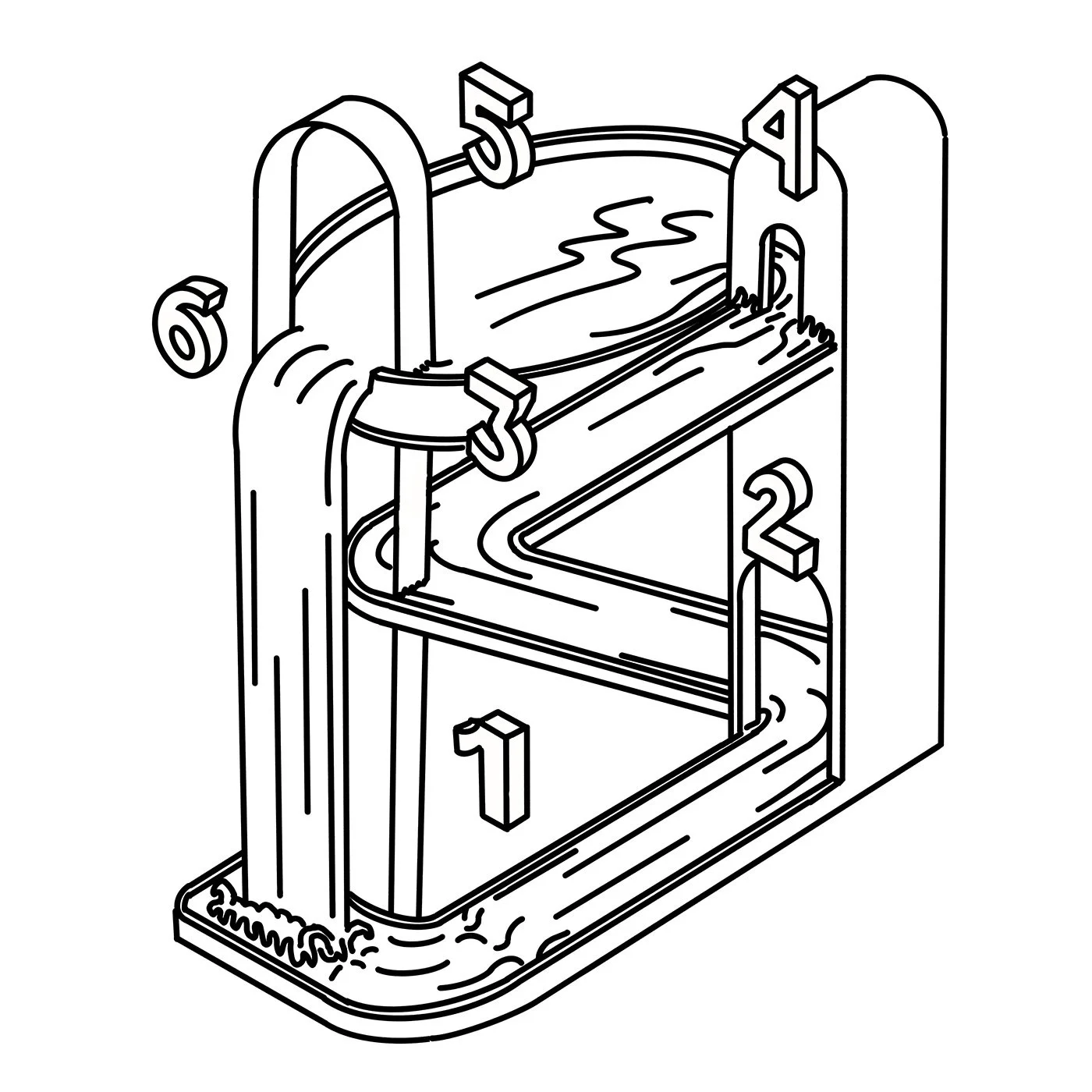
The core practices are designed as a loop, not a checklist. They can be followed in sequence or entered through the practice that fits the moment.
The loop moves from present-moment anchoring, to field awareness, to the reversal of separation, to identity testing, to felt perception, and finally back into choice under pressure.
This is design as method: a philosophical premise becomes a sequence, a map, and a repeatable way to test perception in ordinary life.
Names Are Not the Method
The project uses strong names, images, and frames, which is both useful and risky. A name can feel like the answer. A frame can feel like proof. A brand can make the project sound more complete than it is.
So the method has to remain answerable to experience. If the names are questioned, the method must still stand.
The value of a practice is not whether it sounds beautiful, but whether it reveals what was operating and returns to conduct.
META NOTES
This page is a living document. Last updated: June 13, 2026
Updates in this version: First version of the Design as Method page, created to clarify how The Dreamer Project uses design as a methodology for consciousness-first inquiry. This version foregrounds lived experiment, ordinary-life field testing, practice design, assignment tools, ethical conduct, and the connection between the Dreamer Project and earlier art/design works.