ART & DESIGN
Self-Questioning Devices
Objects that interrupt habit and invite inquiry.
Last updated: June 7, 2026Self-Questioning Devices are objects designed less for utility than for perceptual disturbance — subtle interventions that challenge familiar assumptions about form, function, and meaning.
For both maker and observer, they function as prompts for self-questioning: not by delivering answers, but by interrupting the automatic reading of what is in front of us, especially when the objects become part of everyday life.
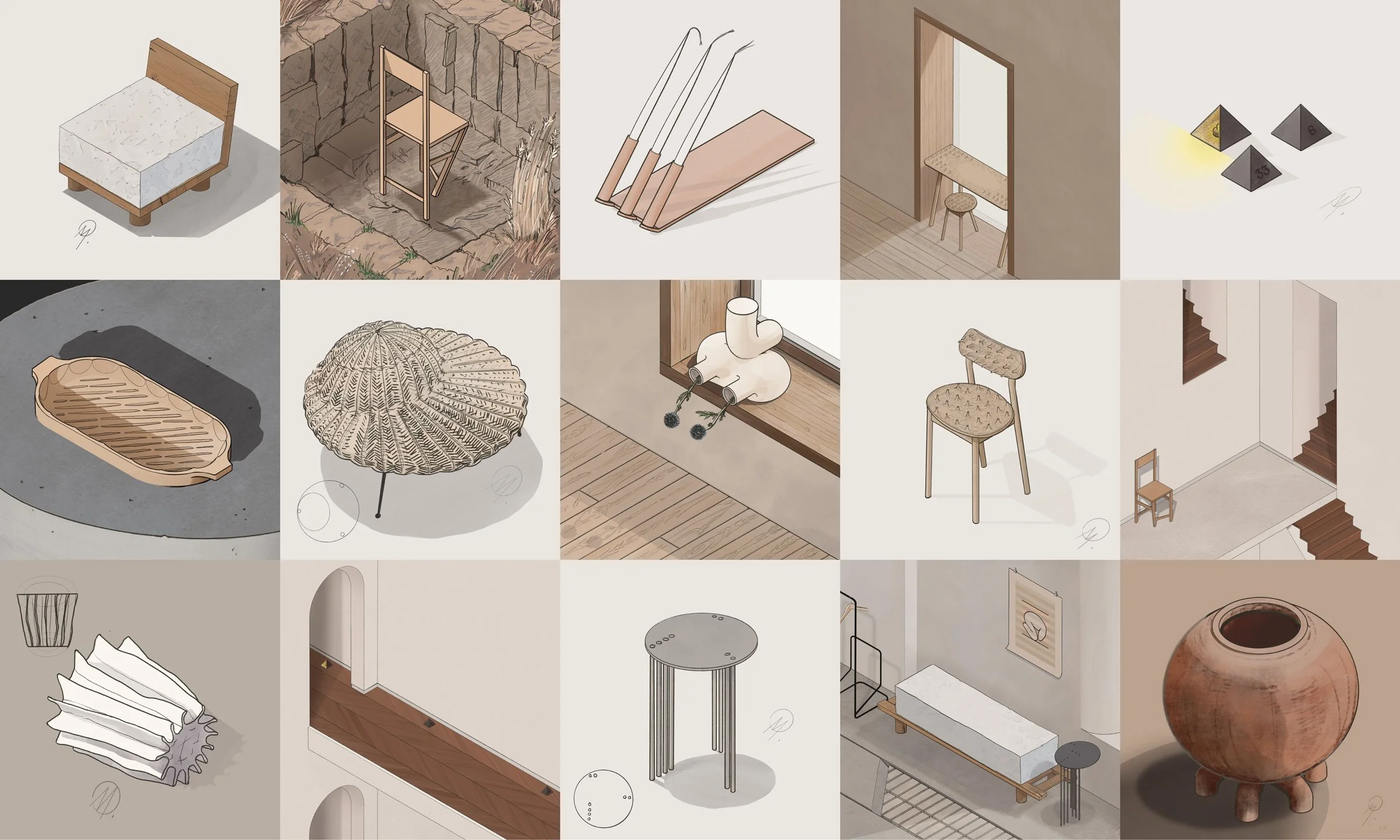
Projects: Martin Lenclos
Rather than behaving exactly as expected, these artistic and conceptual objects introduce a small friction into experience. That friction can open space for attention, uncertainty, and self-questioning.

Photo: Martin Lenclos
Overview
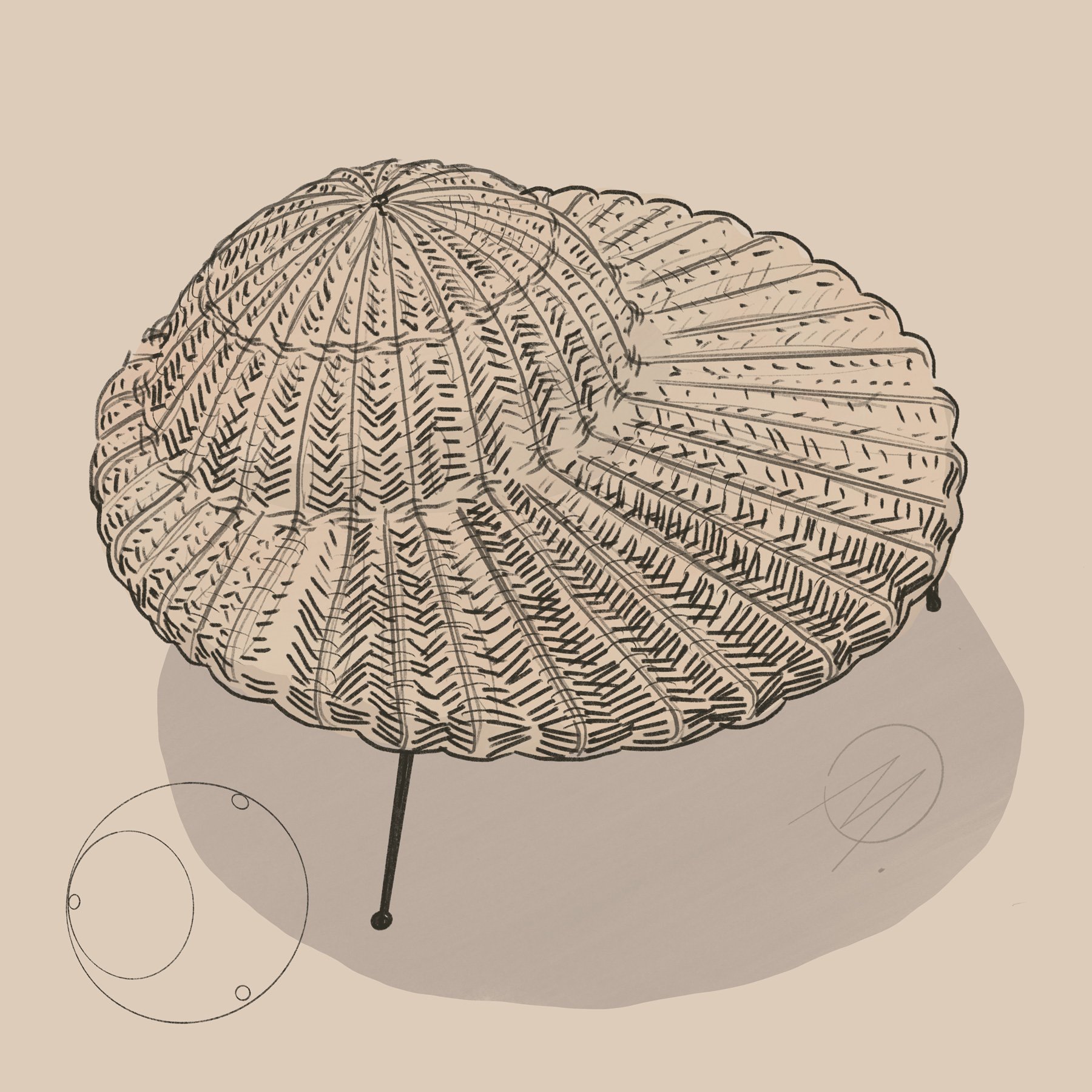
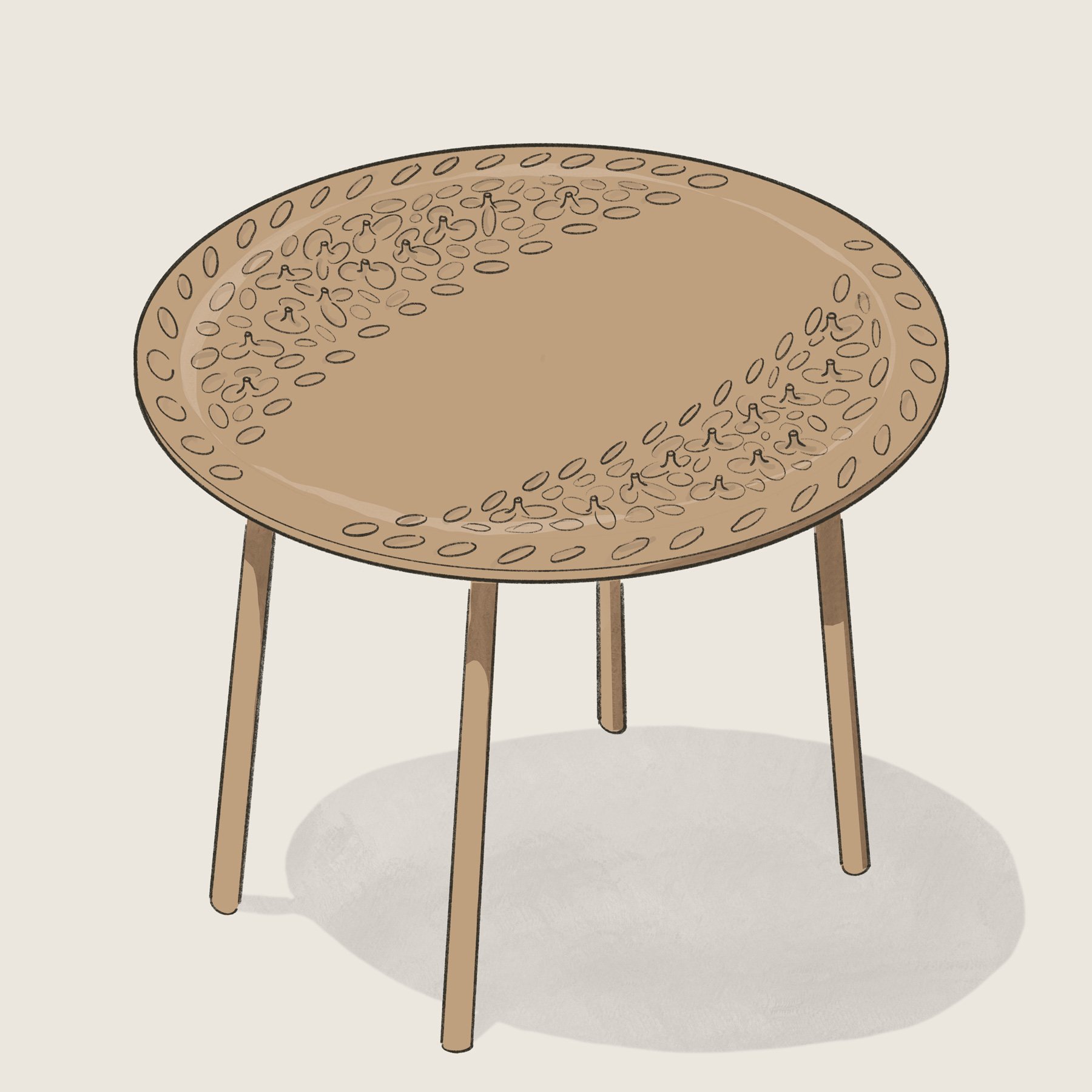
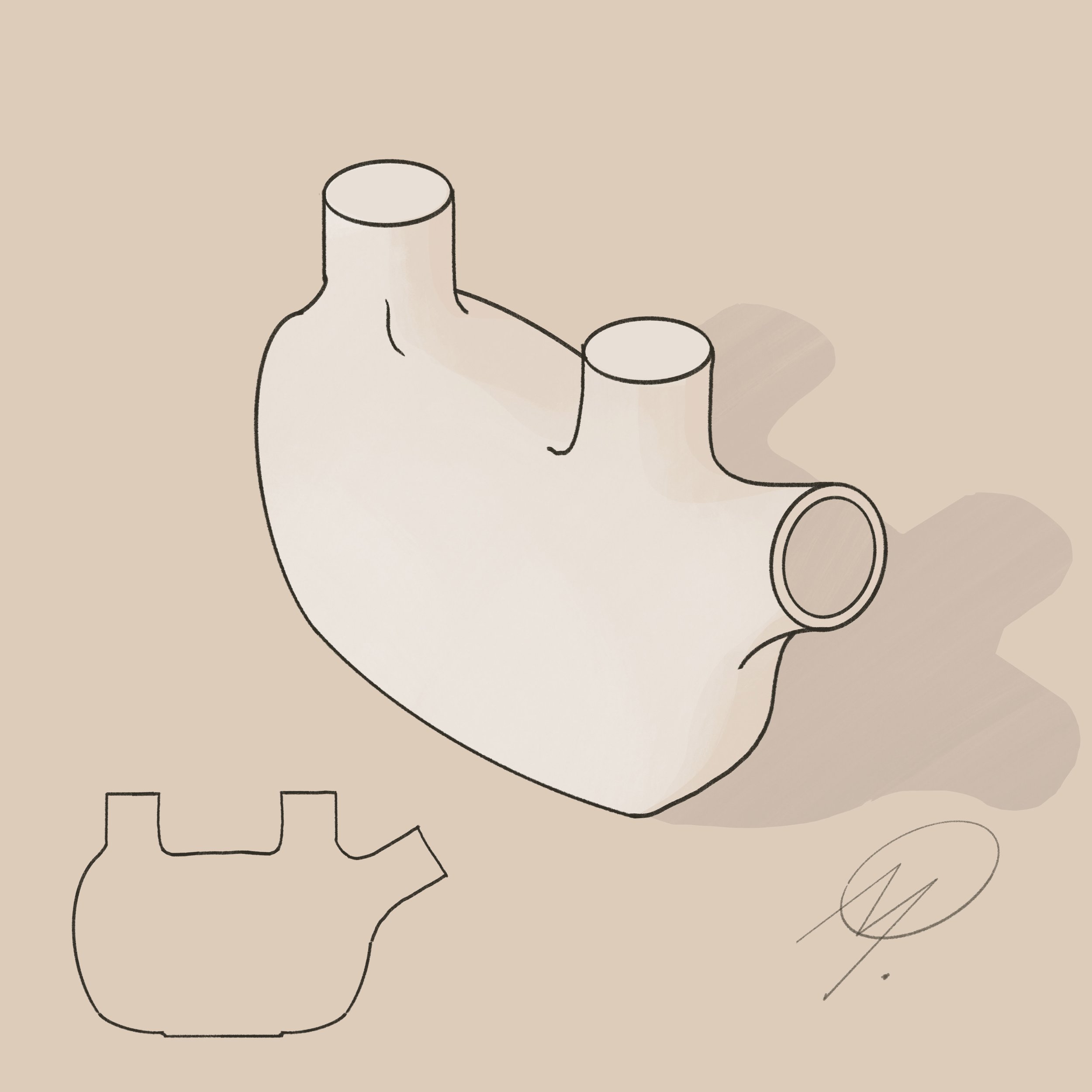
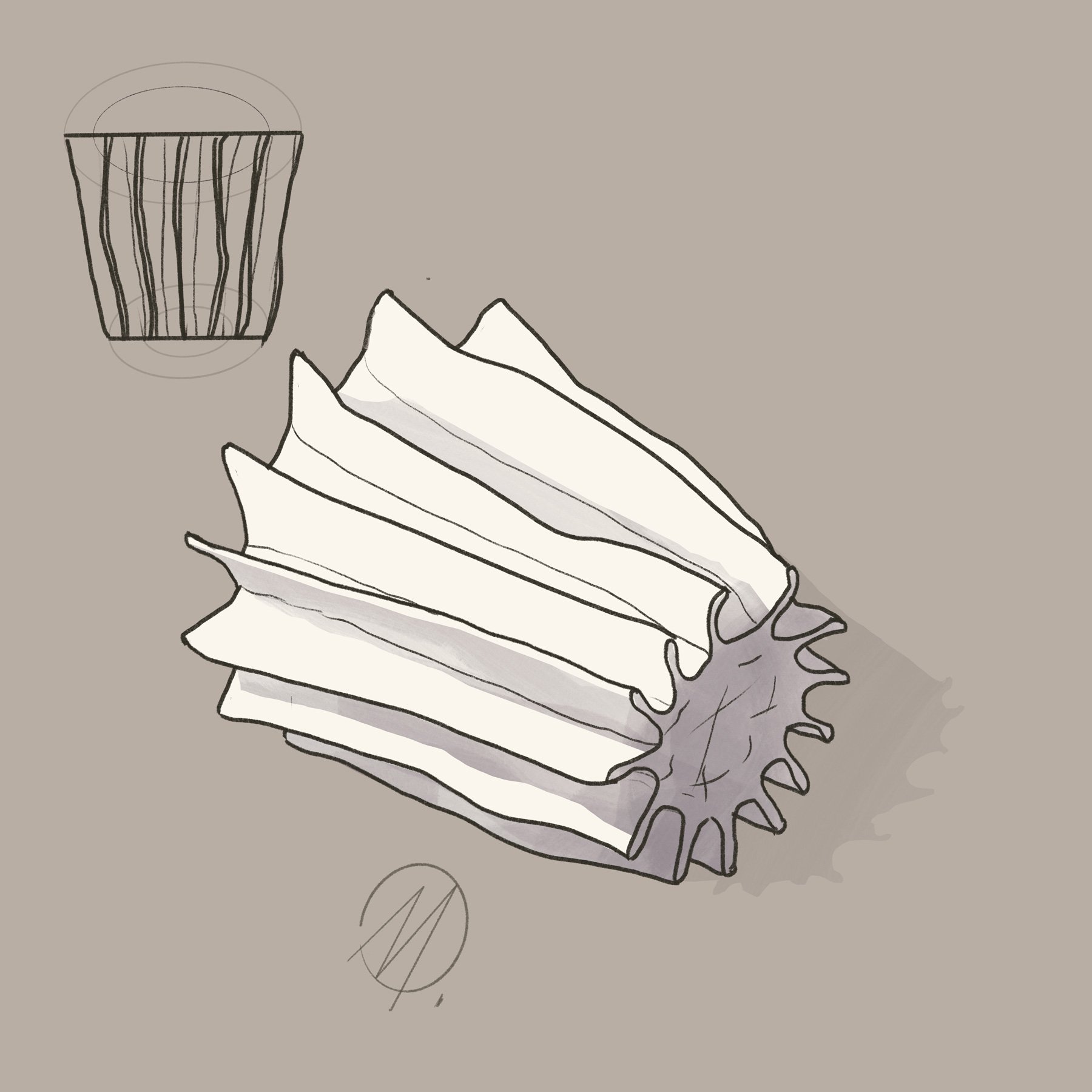
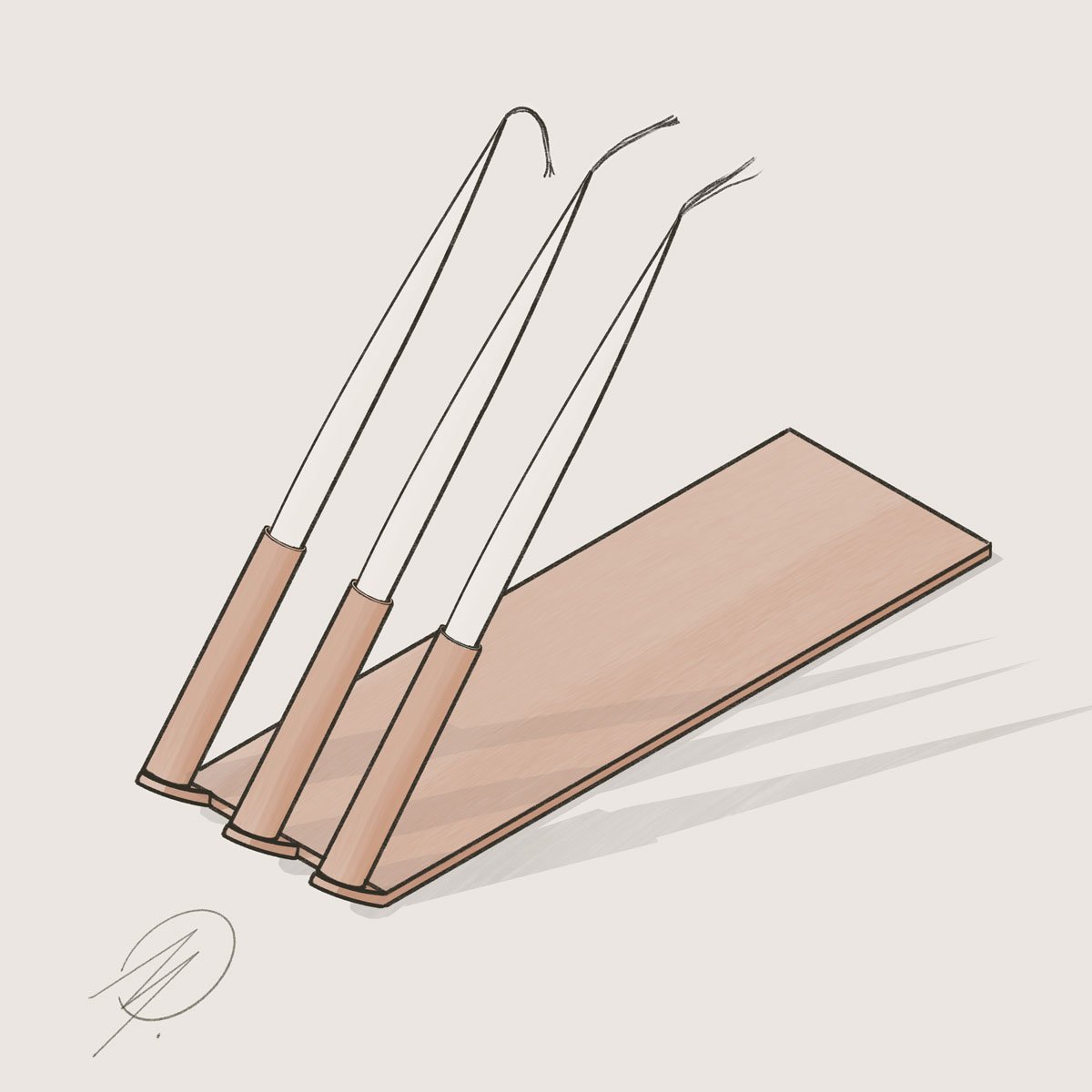
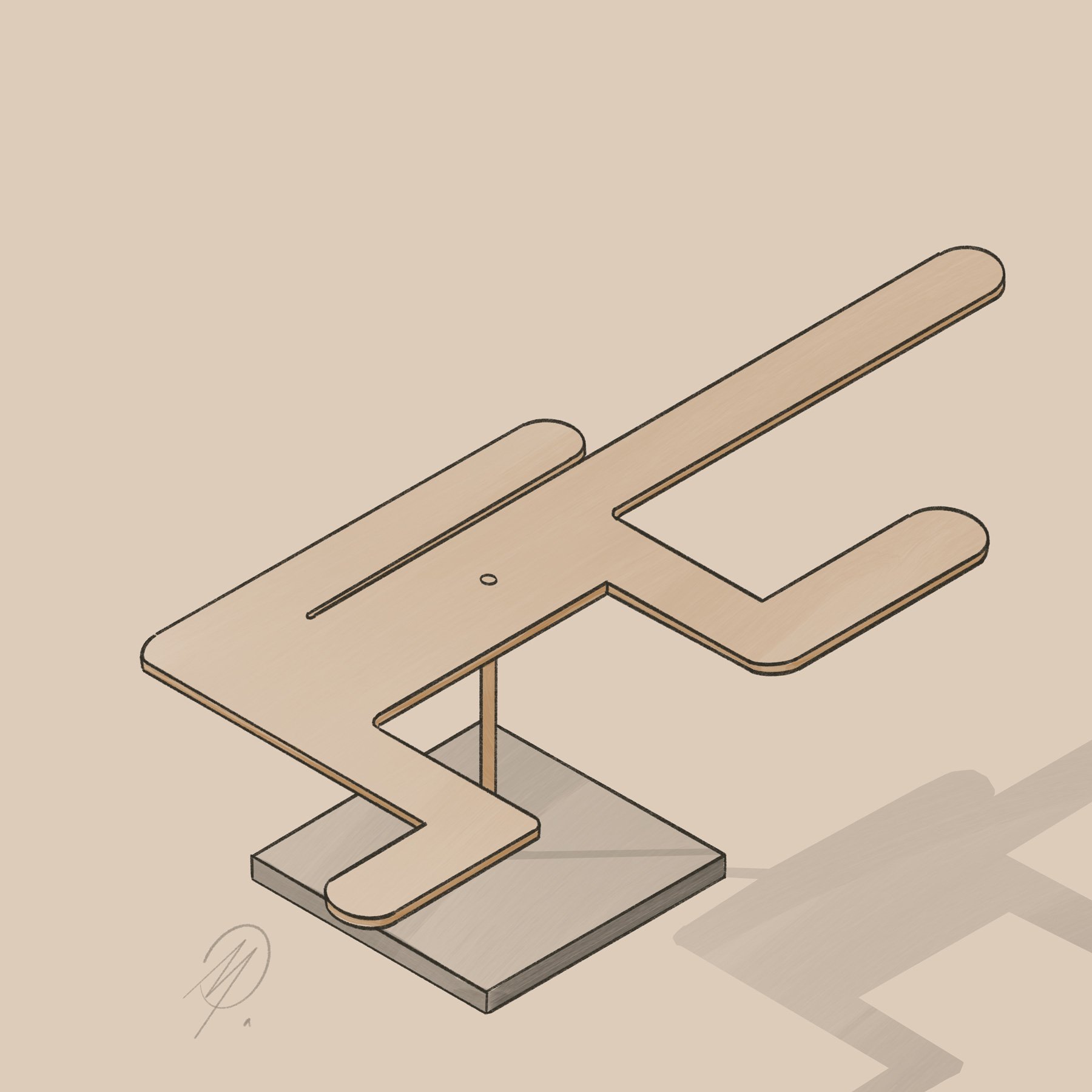
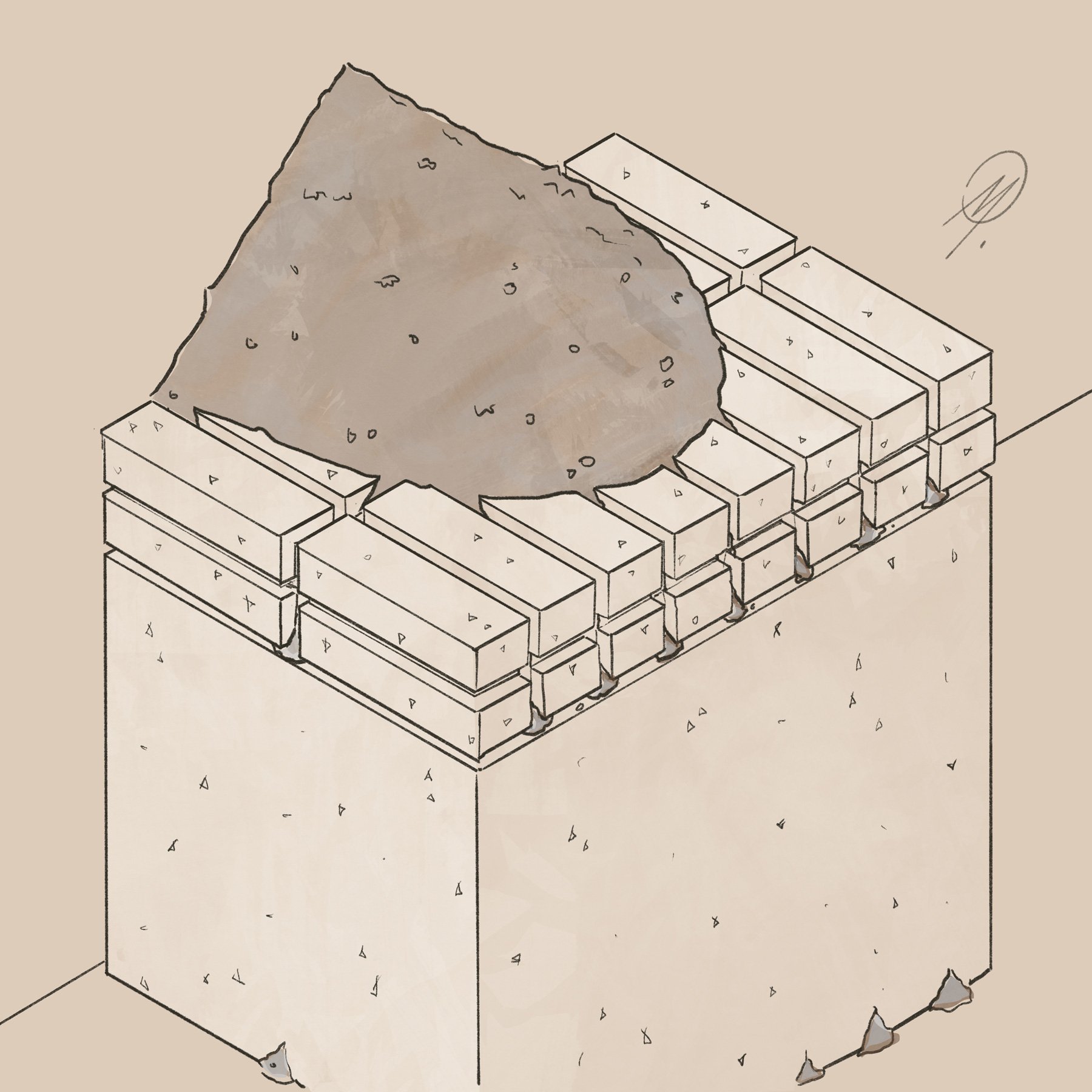
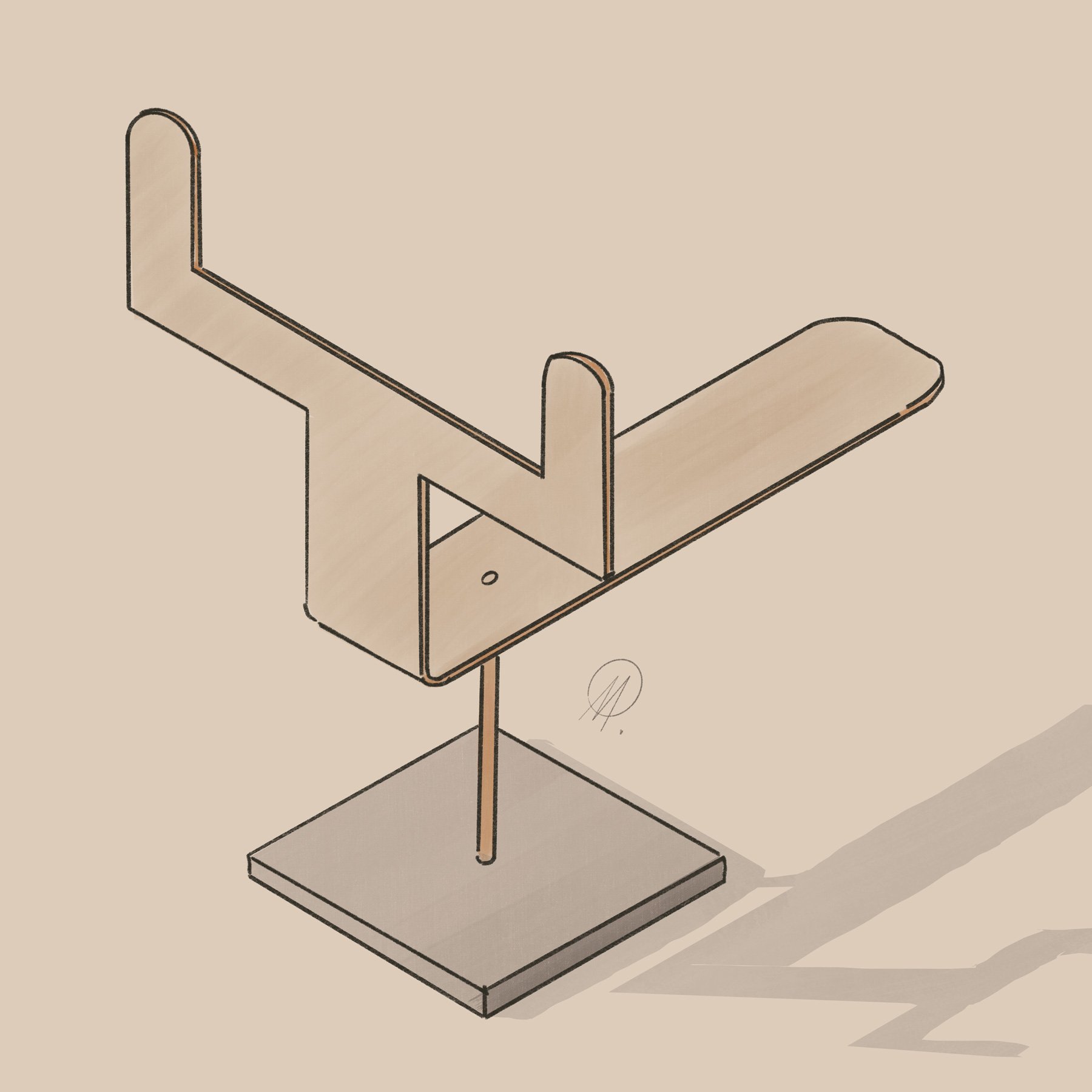
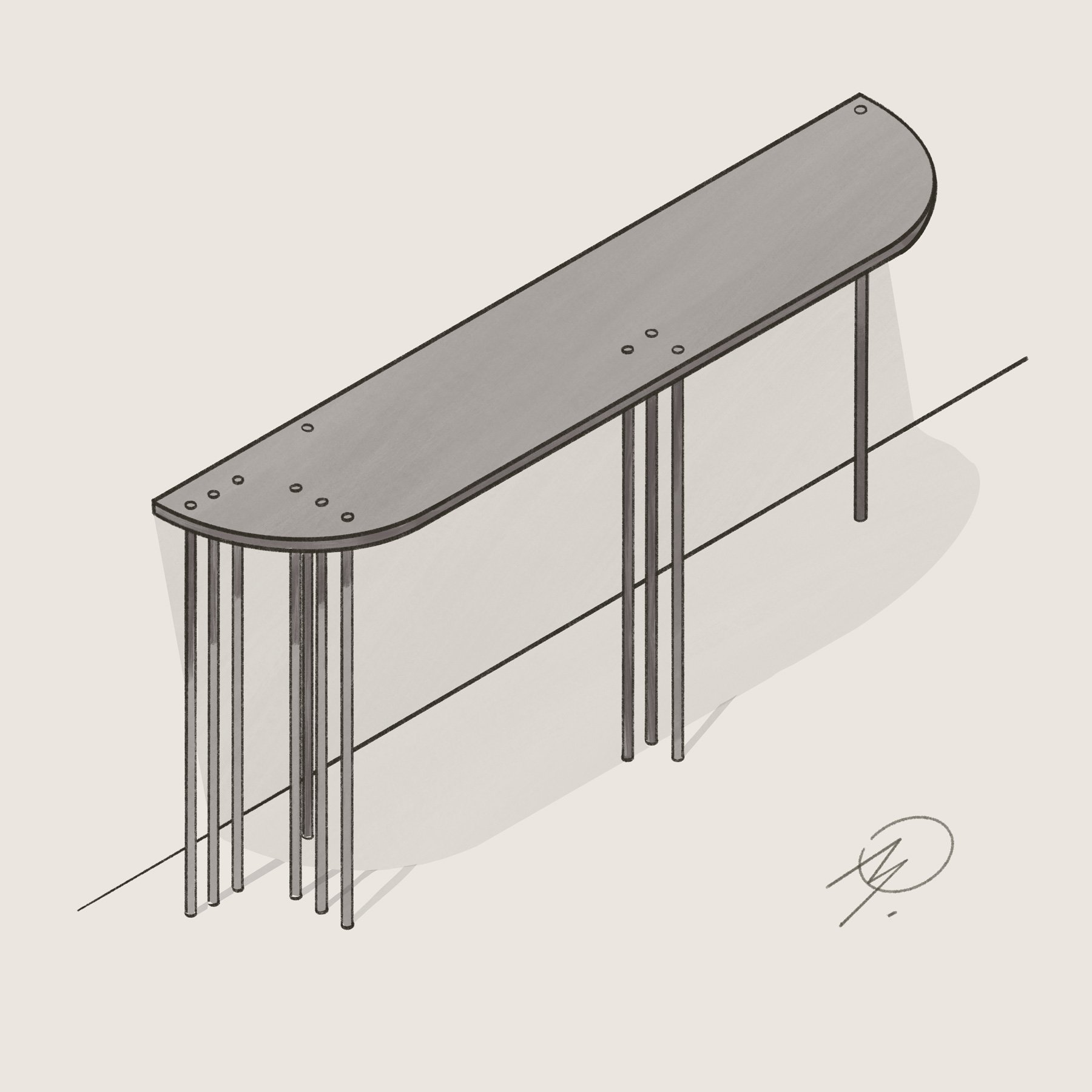
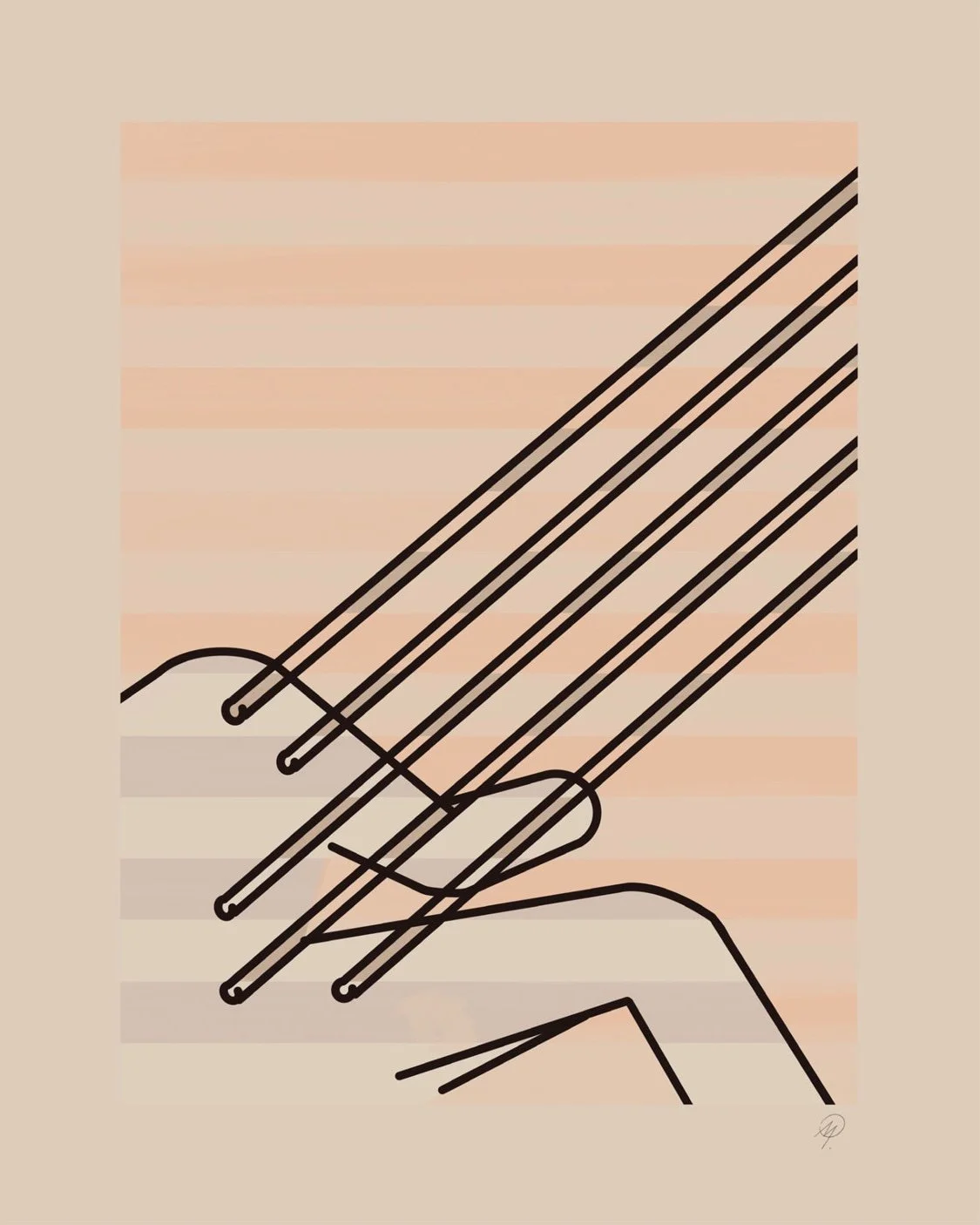
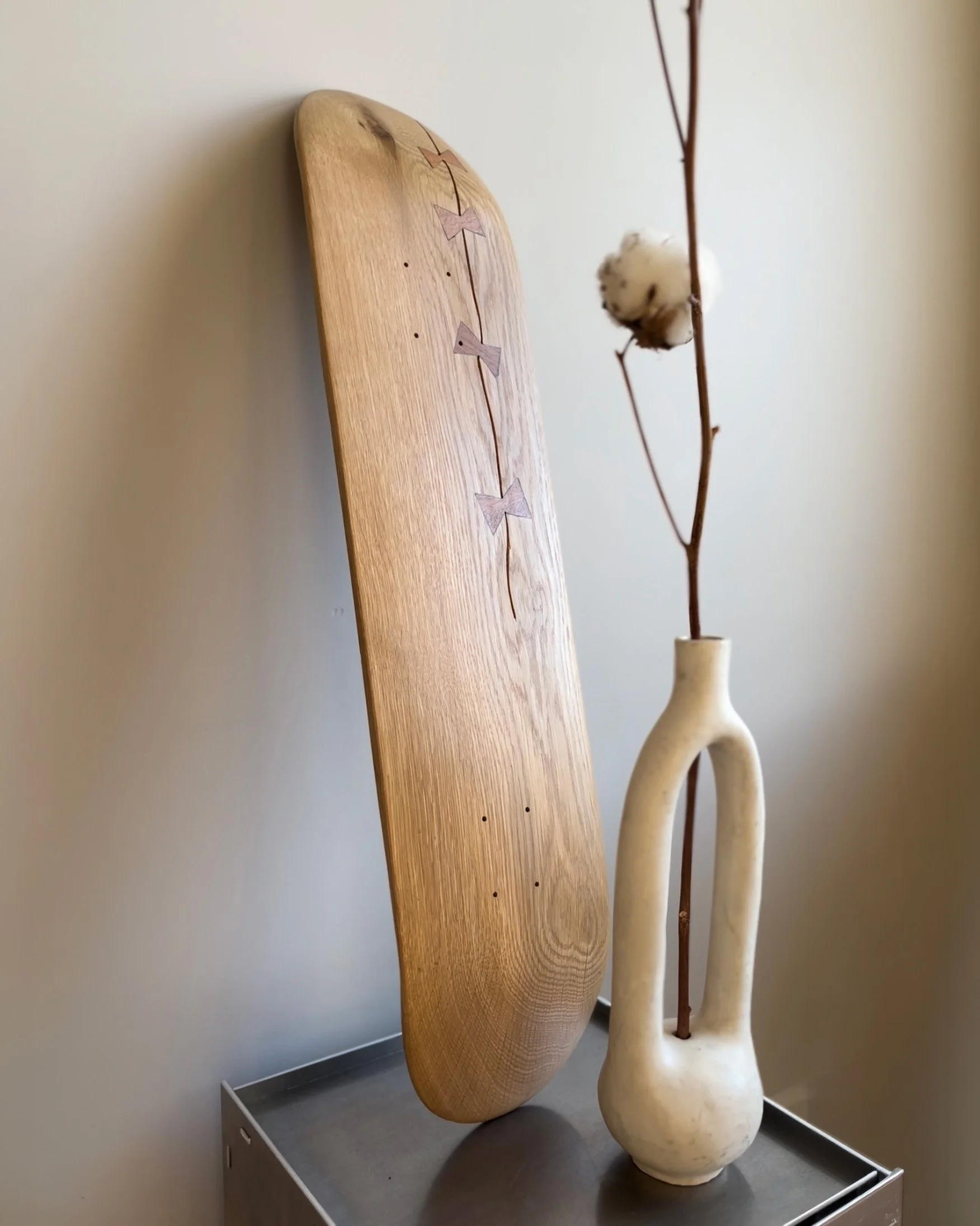
Where possible, I produce paintings, furniture, and other forms that explore how objects can shift the terms of perception. By modifying familiar forms in subtle but disruptive ways, I try to turn ordinary encounters into moments of reflection, ambiguity, and interpretive choice. The language of the work moves between functional and conceptual, so that engagement becomes less passive and more participatory.
This line of work helped lead toward what I later called Design for Nothing — a broader method for loosening habitual interpretation in daily life. In that sense, a Self-Questioning Device is not just an object to look at, but a structured prompt for inquiry: something that can briefly unsettle the automatic reading of what is in front of us.
To someone expecting utility first, these objects may appear impractical, incomplete, or even faulty. That response is part of the point. Their unfamiliar logic invites hesitation, skepticism, and discussion. Instead of offering immediate clarity, they ask what happens when certainty loosens, even slightly.
Scroll down to view concept sketches and prototypes. Some pieces are available in the L’Enclos online store. Purchases support the continued development of this work and its broader inquiry into perception, design, and consciousness-first experimentation.
FIELD TEST / SELF-QUESTIONING DEVICE
Sitting With the Unknown
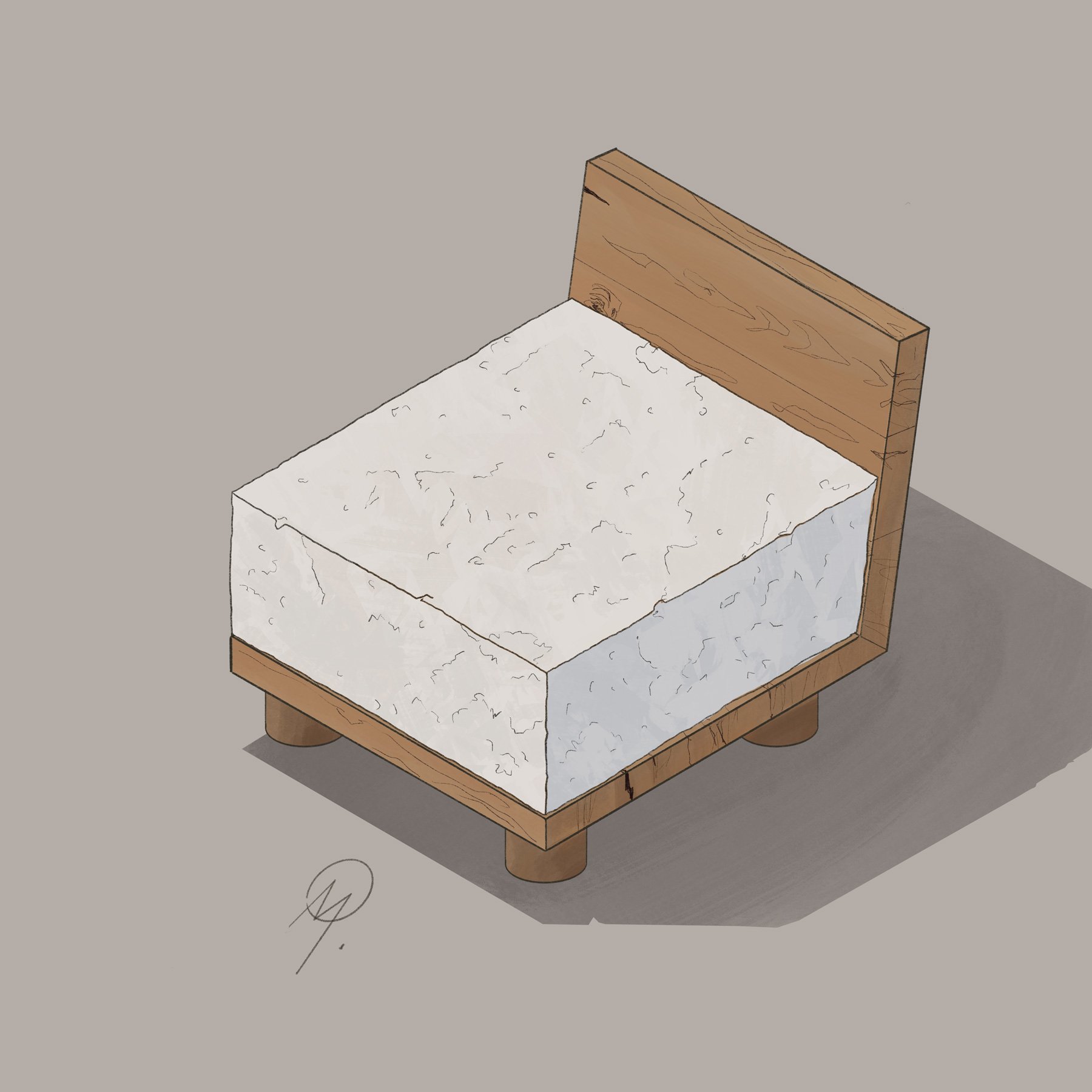
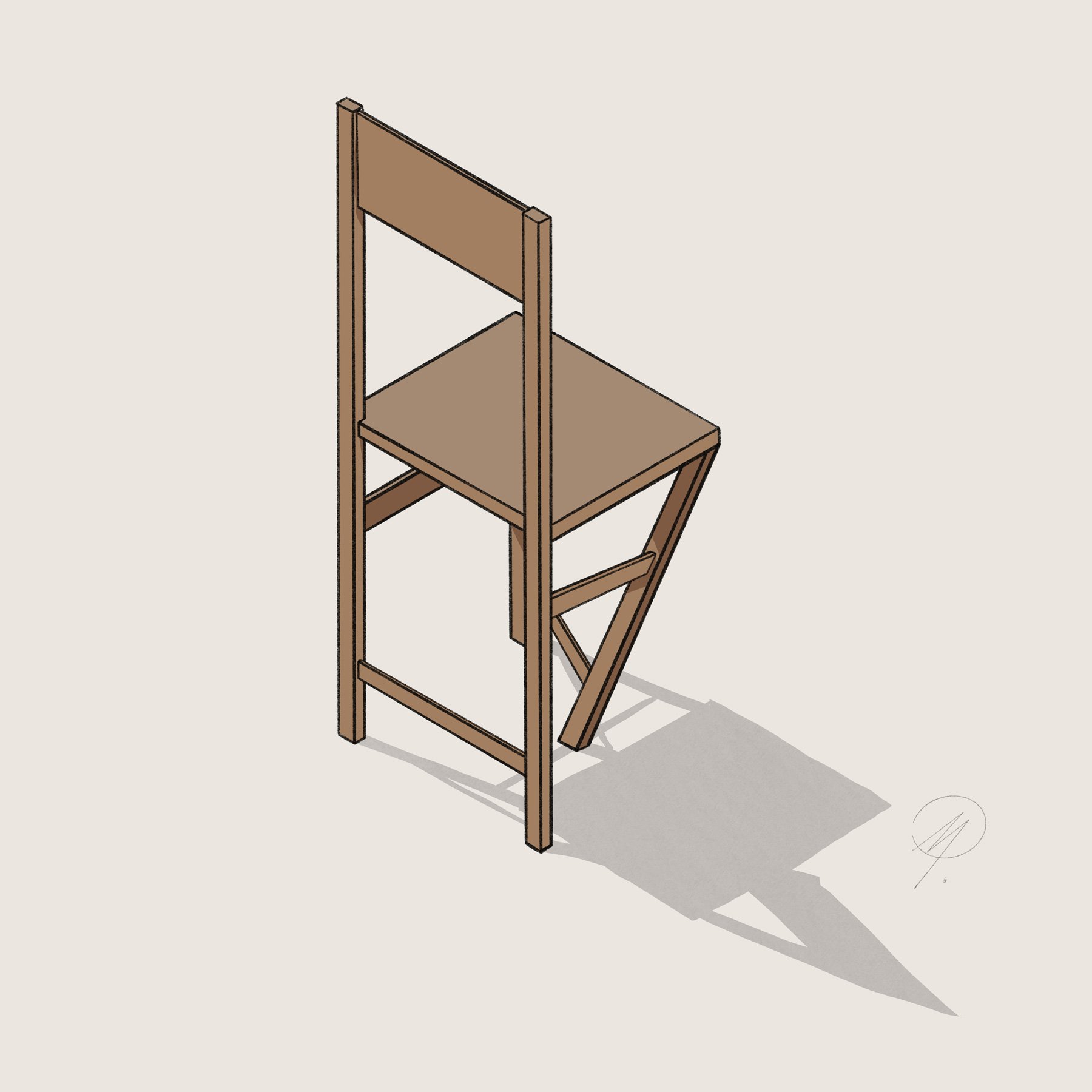
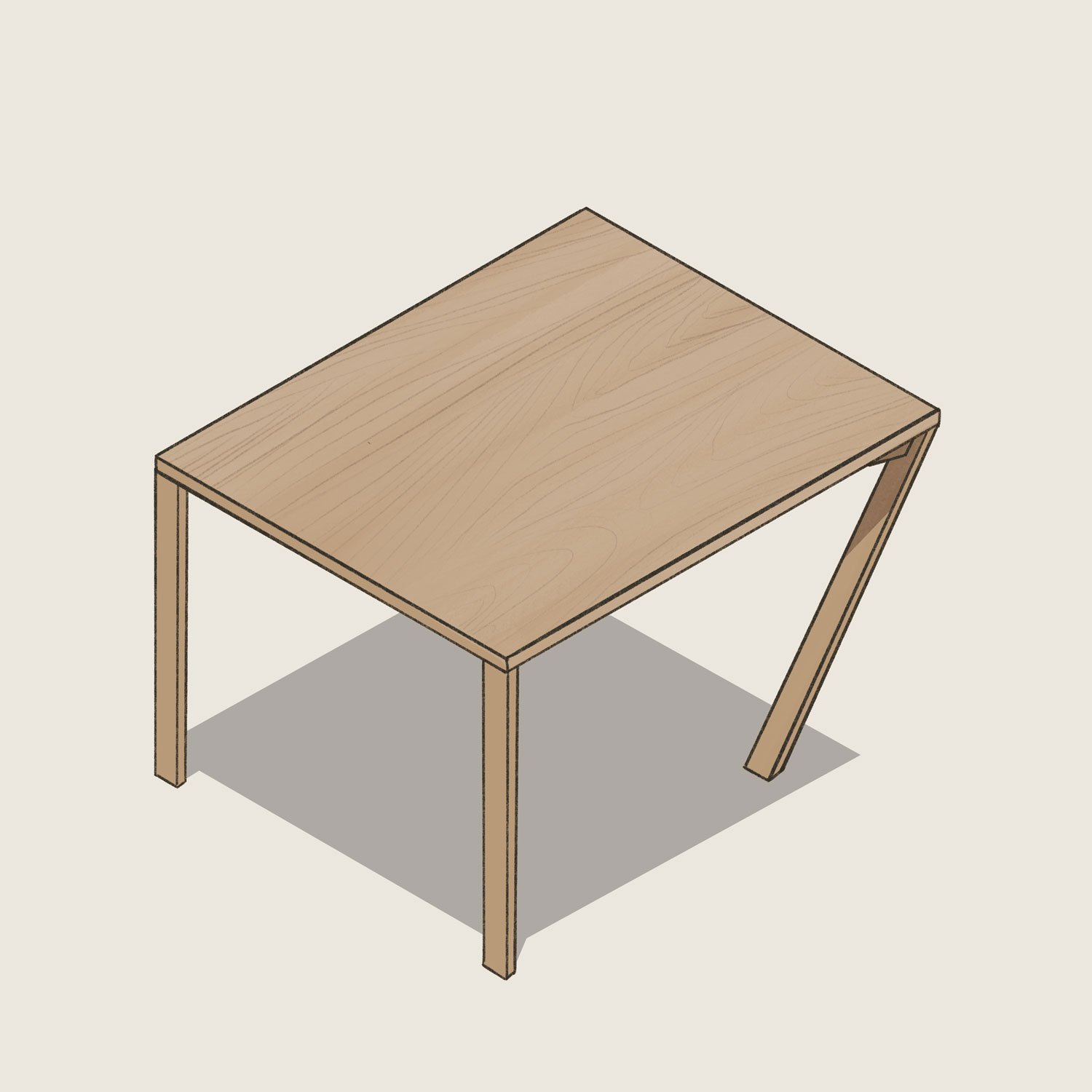
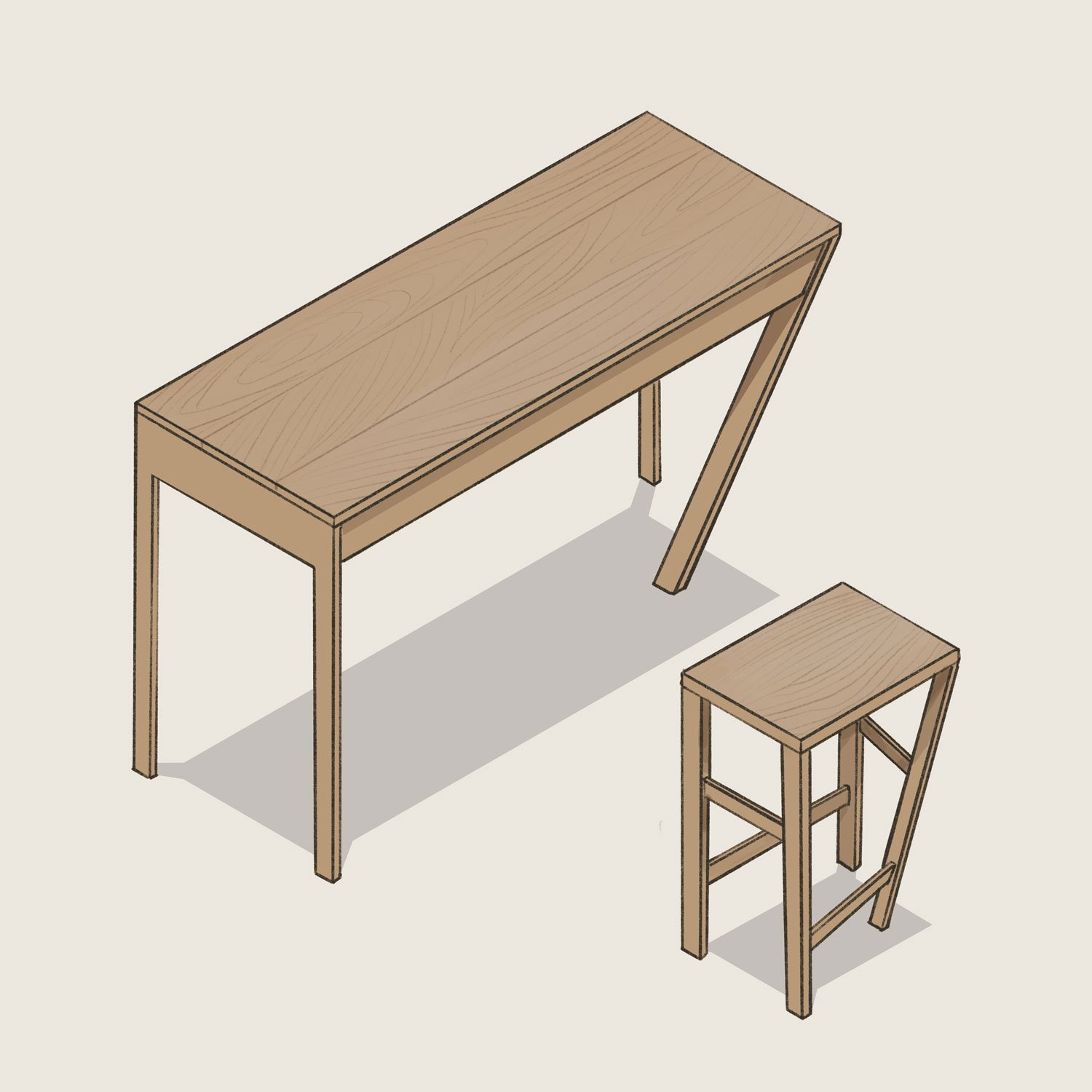
During Design Week 2022 in New York, the Paradox of the Typical Atypical Device was placed where furniture was expected to behave. It looked broken. It was engineered to hold.
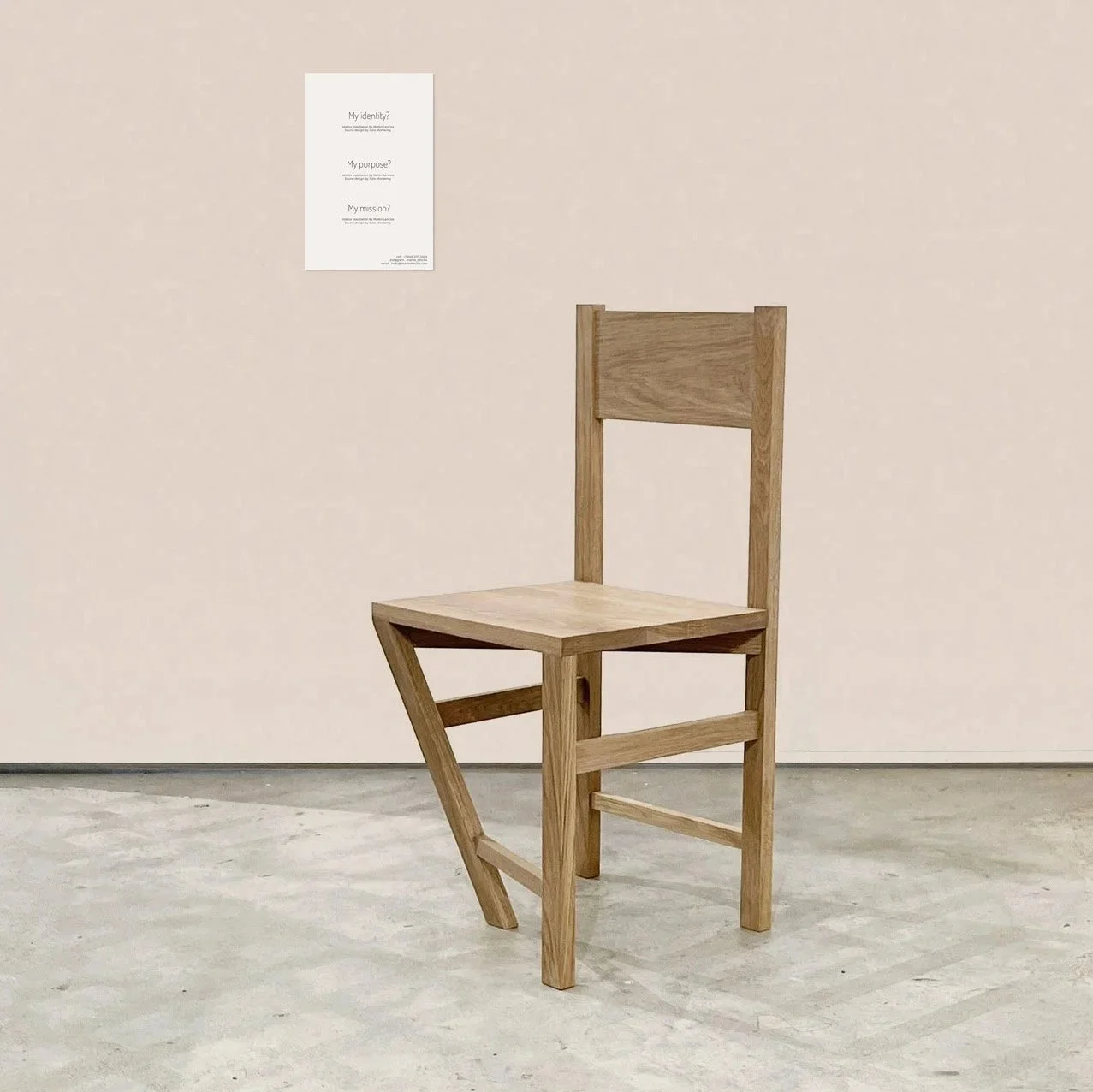
Photos: Martin Lenclos
The experiment happened in the pause before sitting: hesitation, nervous laughter, partial trust, relief, refusal, curiosity. A chair-shaped question about support, appearance, and the moment before belief becomes certainty.
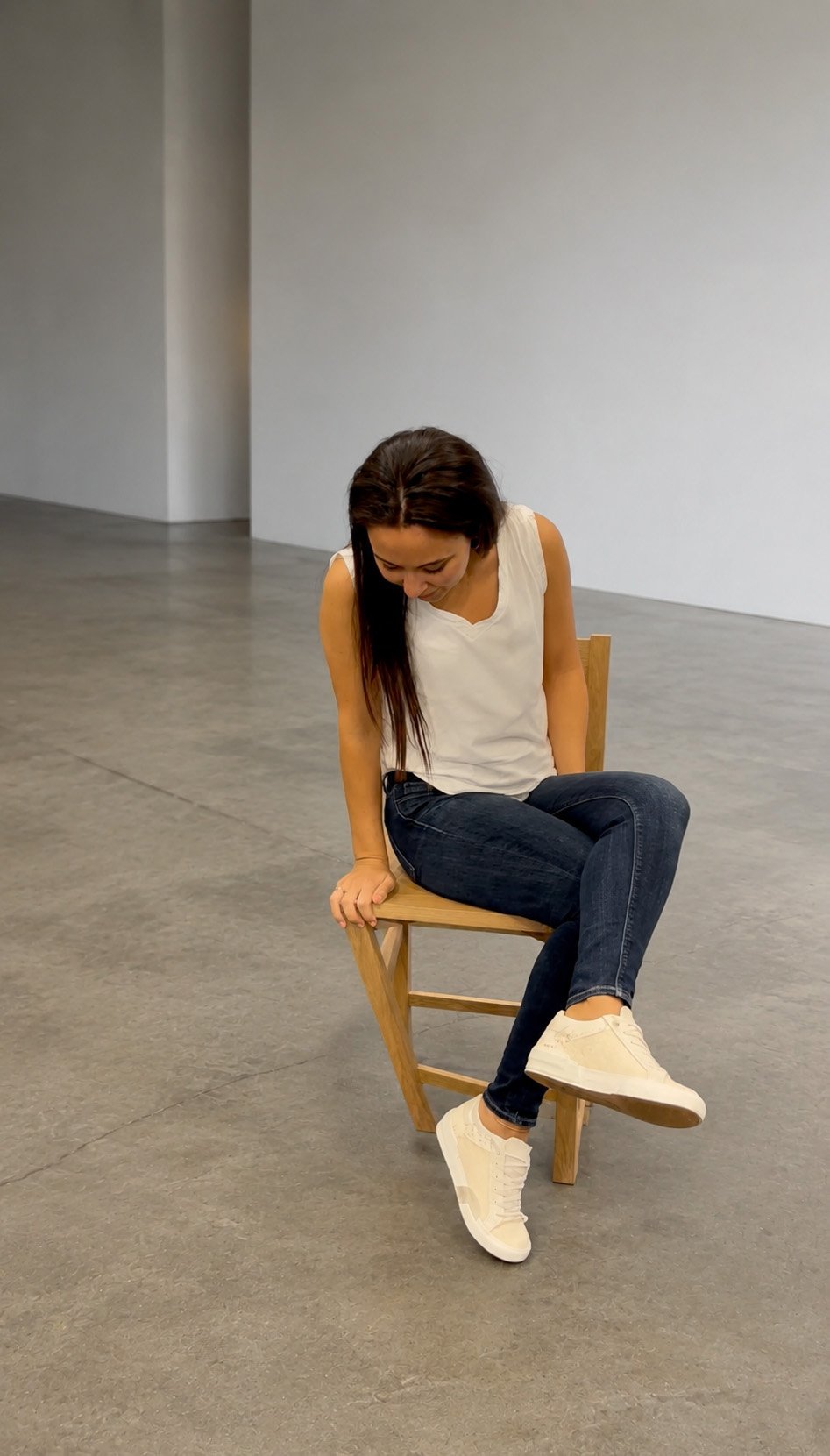
“This looks like a lawsuit to me.” She laughed before trusting it.

She sat down slowly. “My brain said no. I ended up checking.”

“That leg is rude.” A small leap of faith disguised as wit.

She wanted to believe me. “I know it works. I still don’t like that leg.”
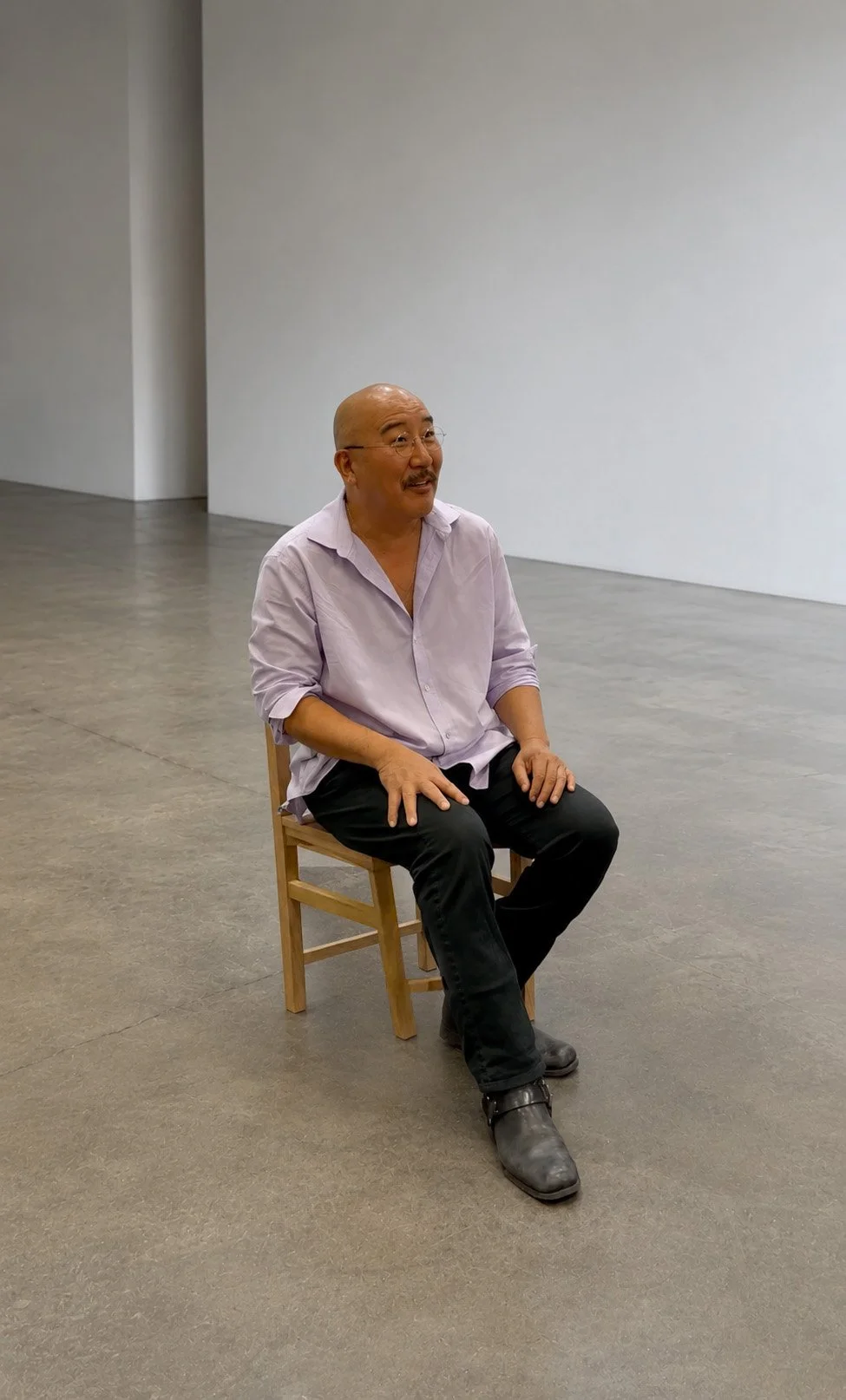
He thought my chair had broken during transport. "I felt sad for you, haha."

She looked down more than once, then smiled. “Oh. It’s actually holding.”
KITCHEN COUNTER / SELF-QUESTIONING DEVICE
Appetite for Uncomfortable News
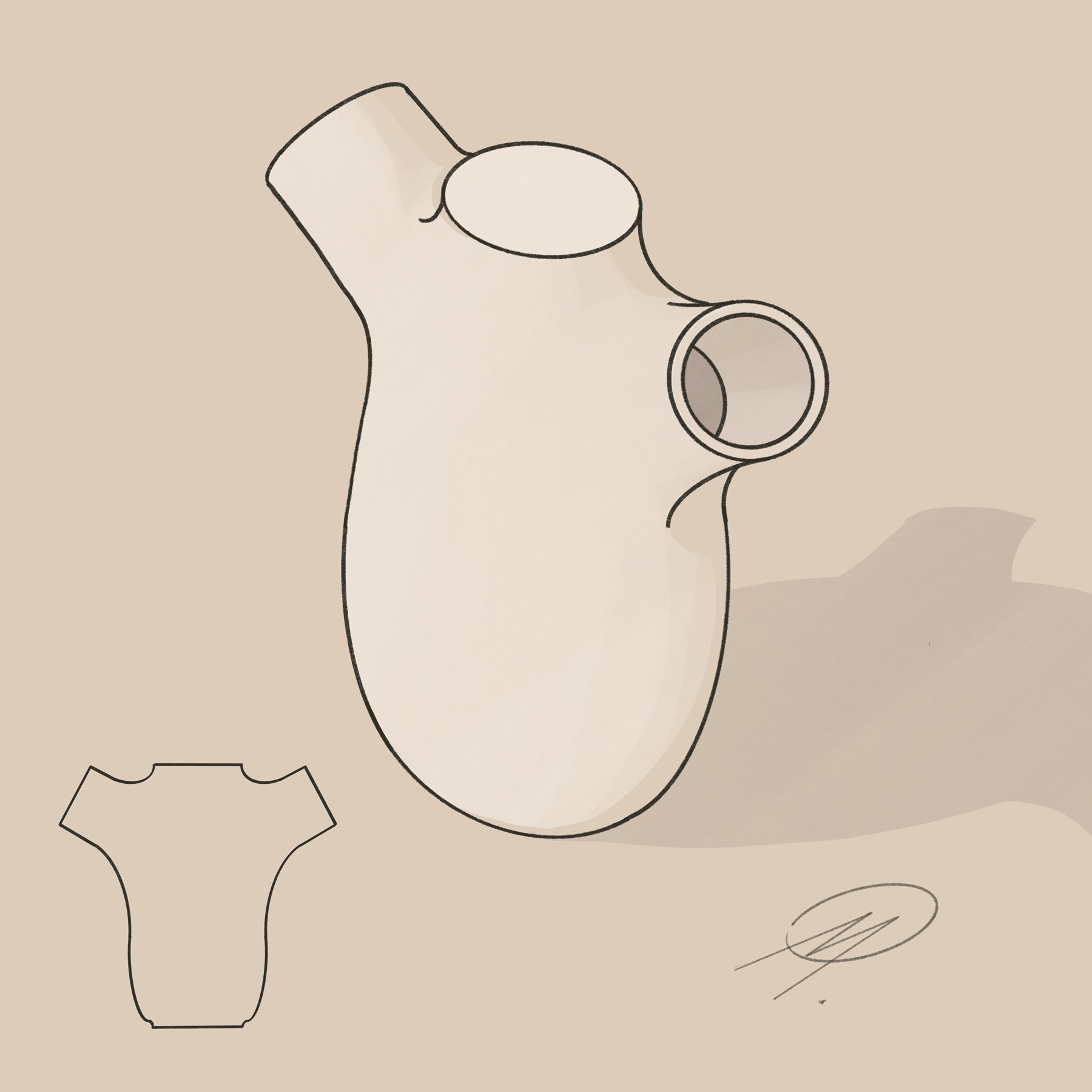
Flavors of Misconduct turns ordinary spices into small countertop interruptions. Peppercorns, chili flakes, rosemary, cinnamon, ginger, and paprika are reshaped into objects that look almost useful, almost decorative, almost absurd.
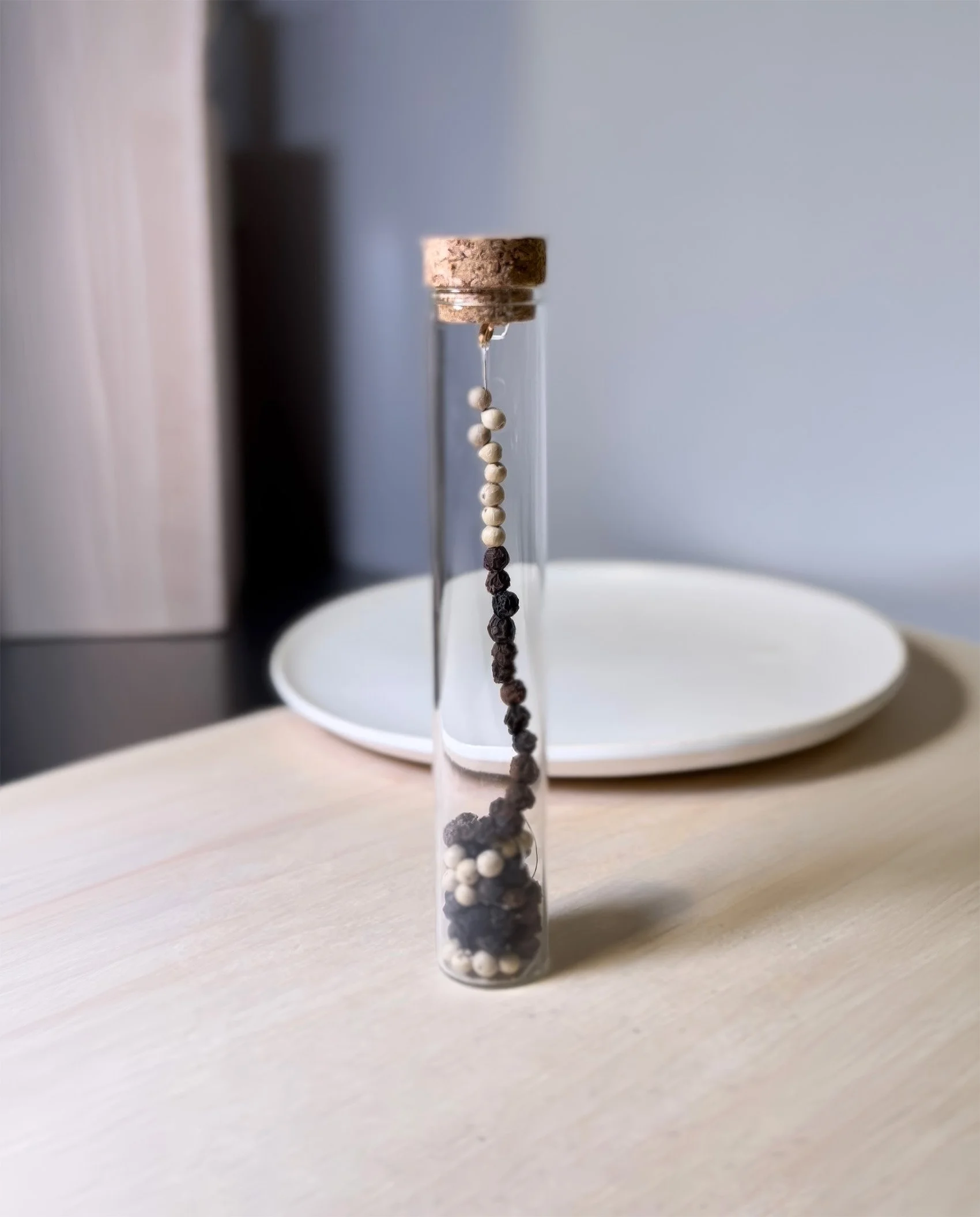
Photo: Martin Lenclos
Each form carries a quiet misconduct reference, but the first encounter stays domestic: a jar, a plate, a soup, a garnish, a question. What happens when something meant to season food also makes appetite hesitate?
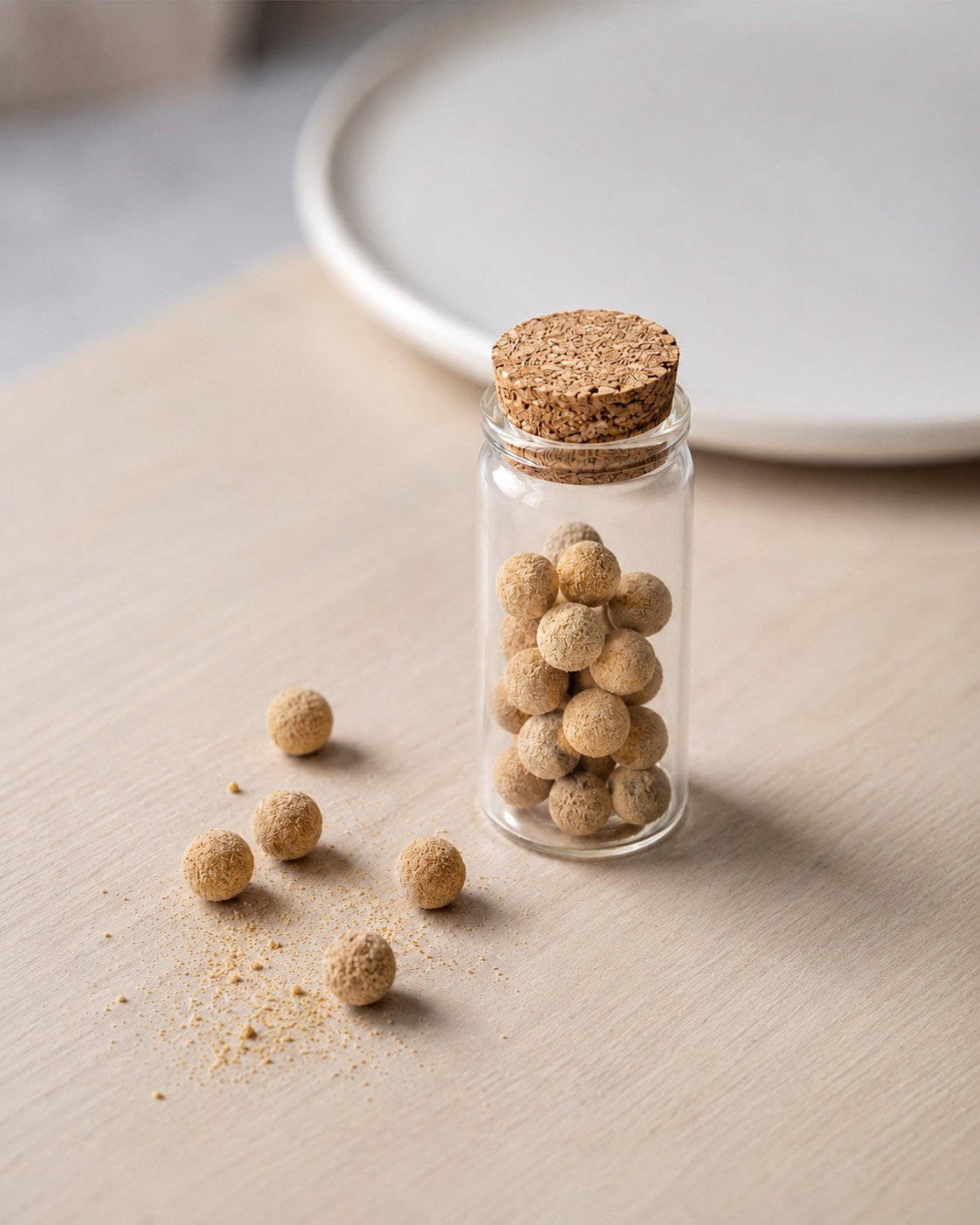
Ginger Bullets | When does heat become harm?
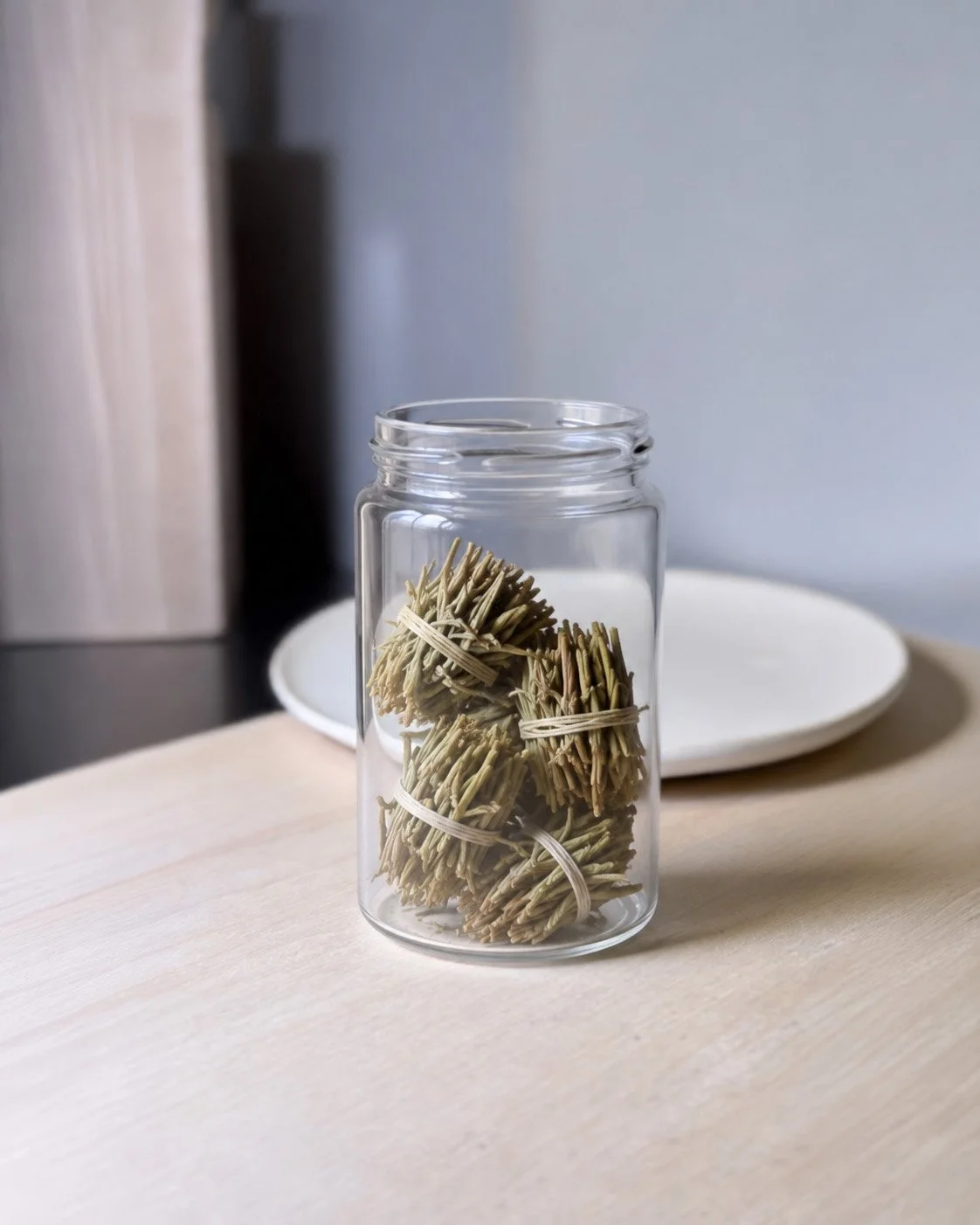
Rosemary Stacks | What gets distorted when public trust is managed through quotas and output?
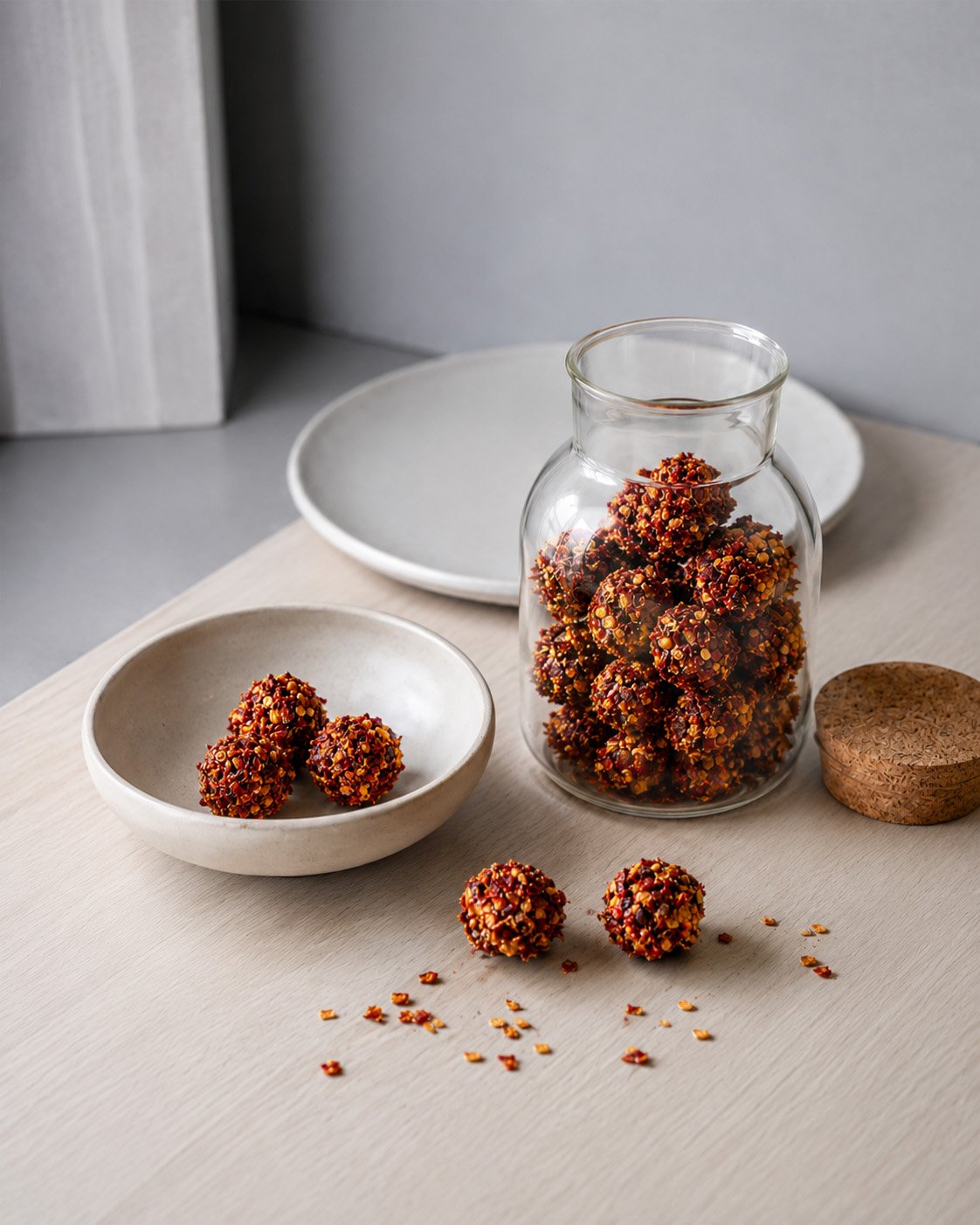
Chili Clusters | Who has to defend their credibility after harm has already occurred?
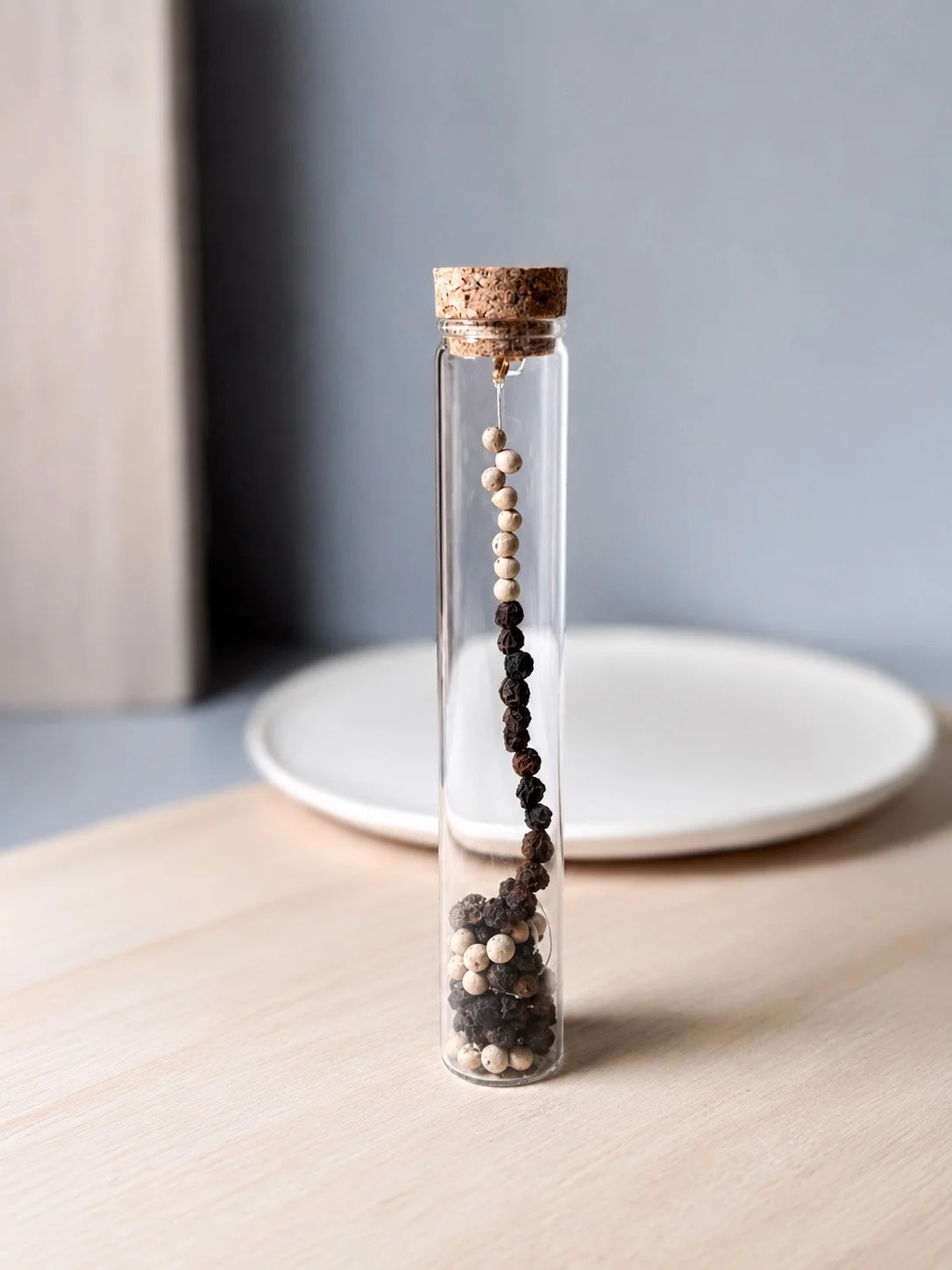
Pepper Threads | Who gets pulled aside, inspected, or treated as suspicious before anything has happened?
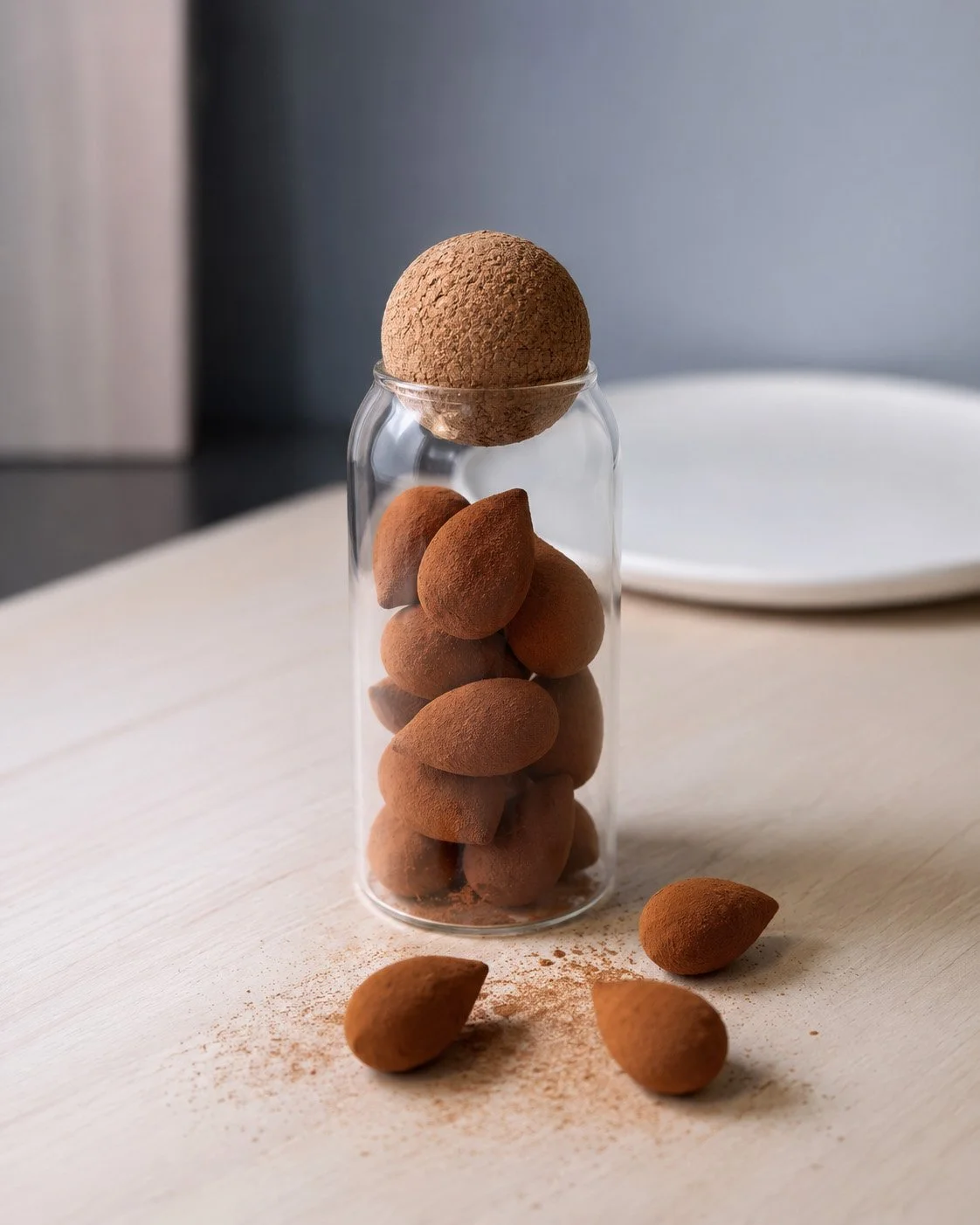
Cinnamon Teardrops | When does crowd control become a license to make people cry?
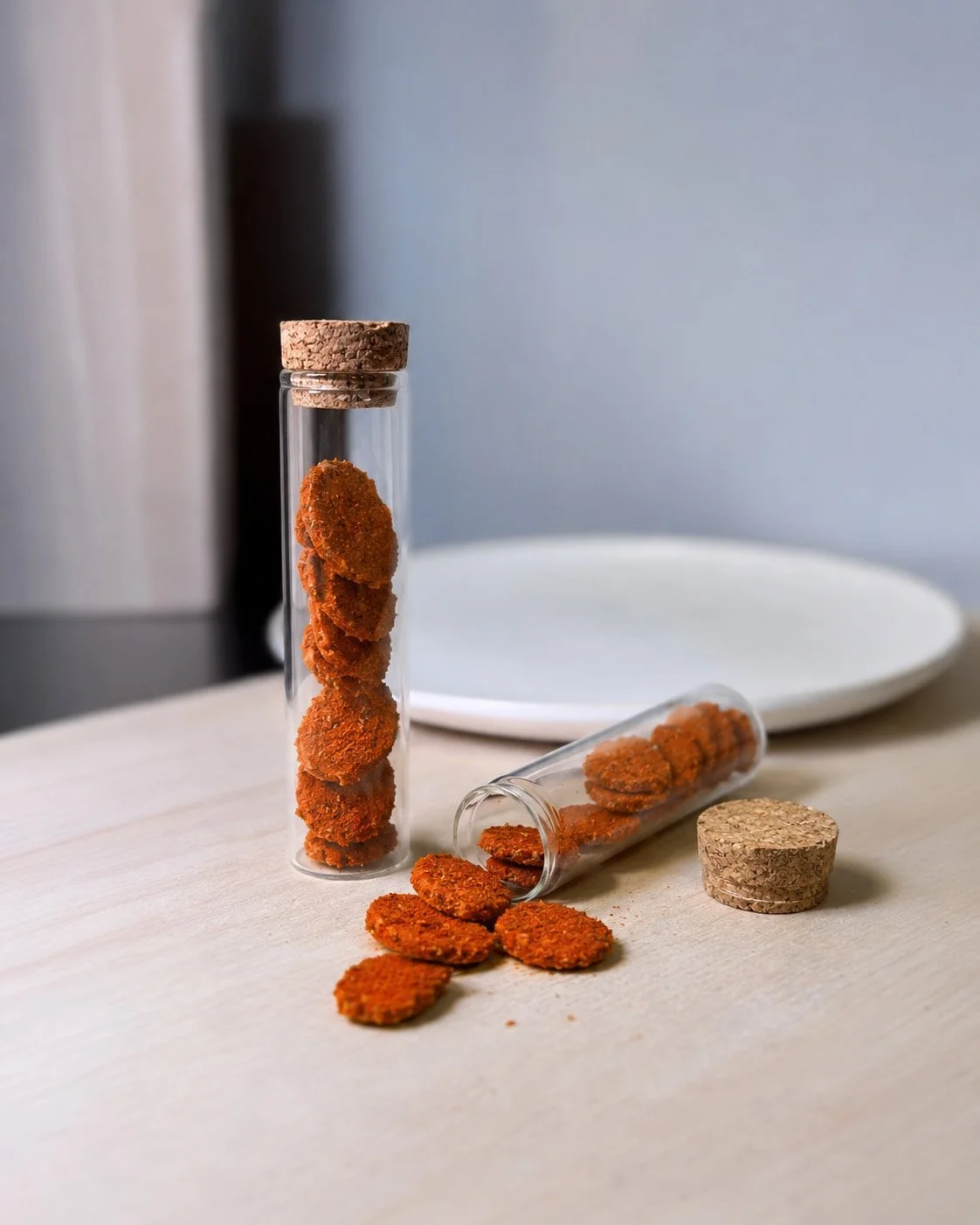
Paprika Impact Buttons | What does “less-lethal” hide from view?
Perceptual Design
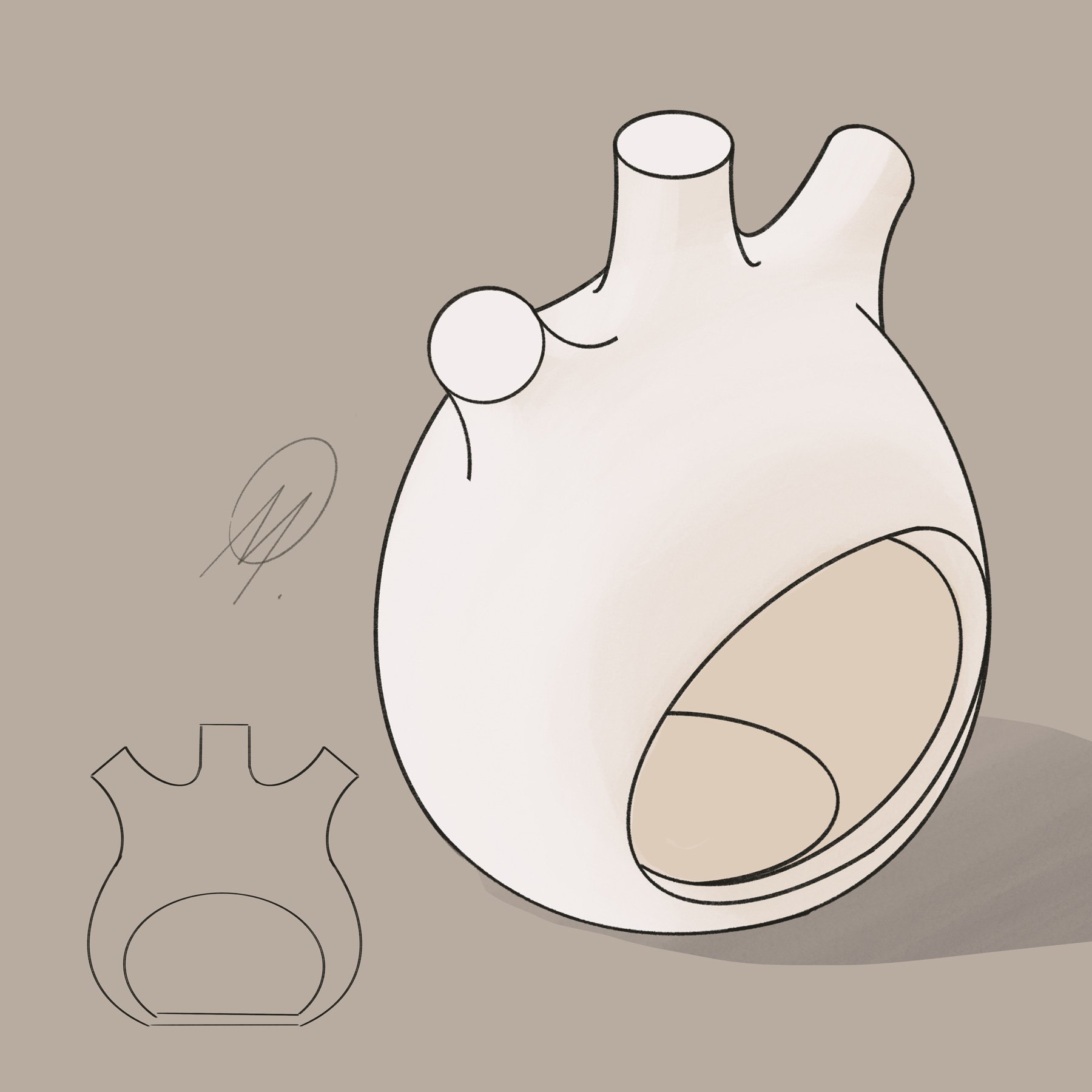
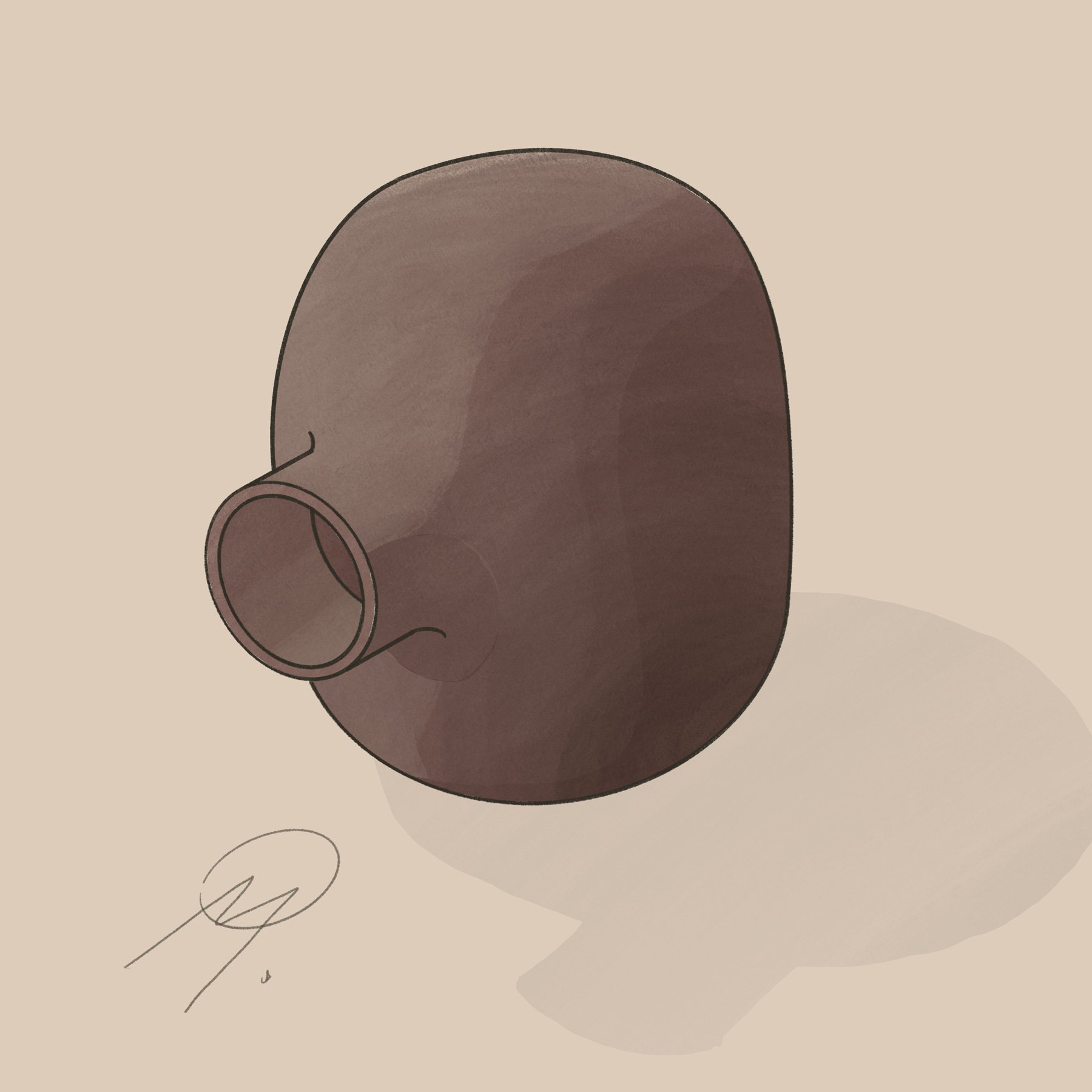
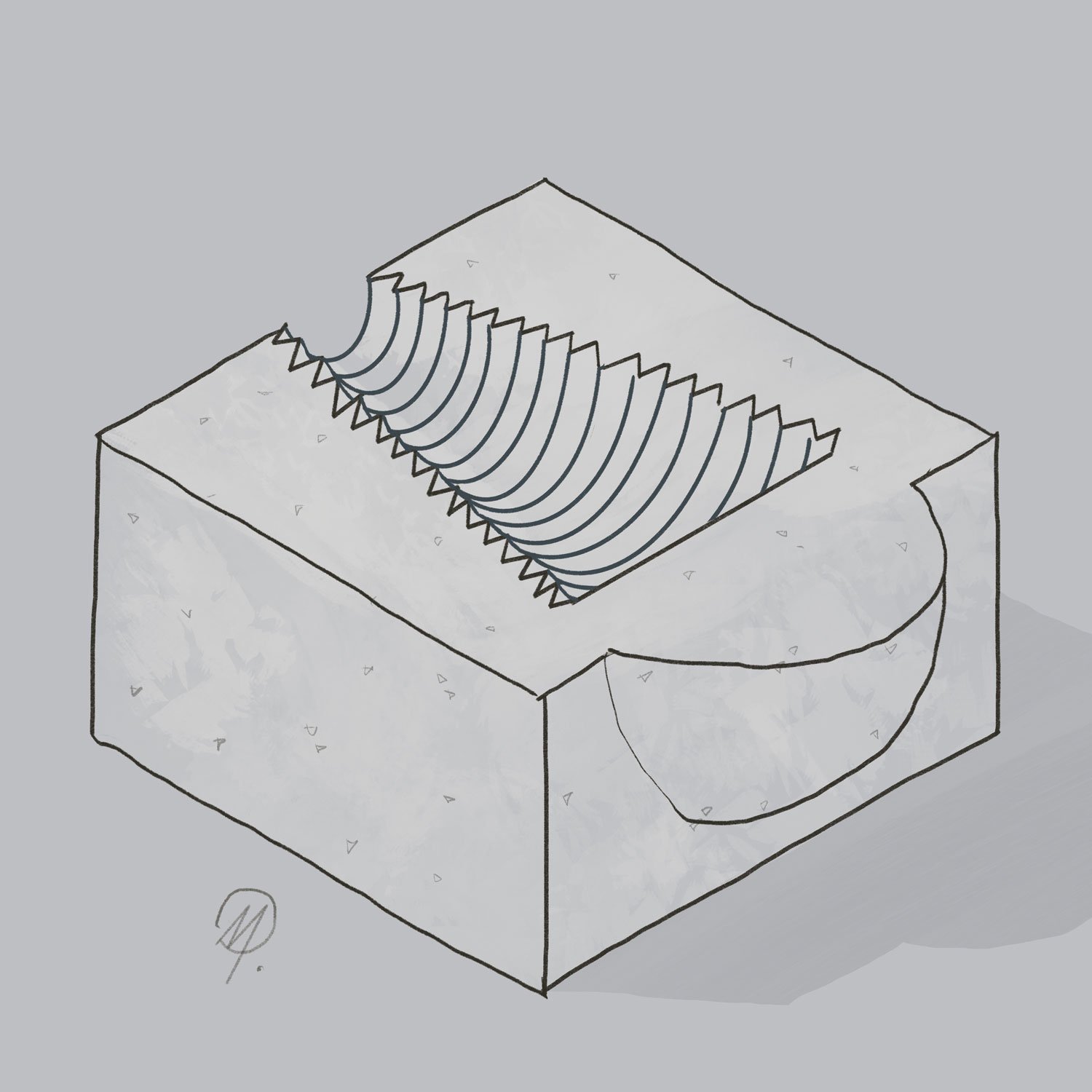
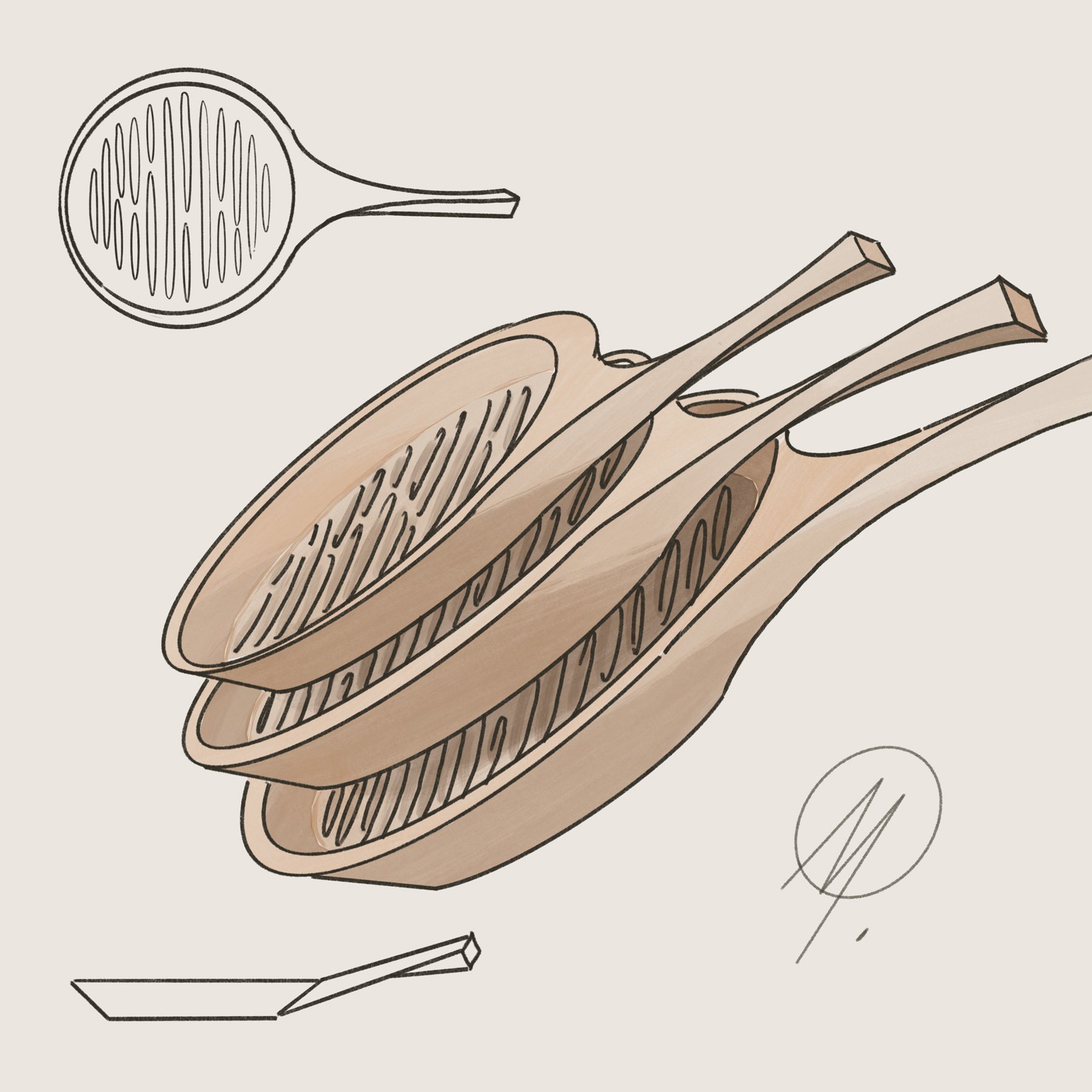
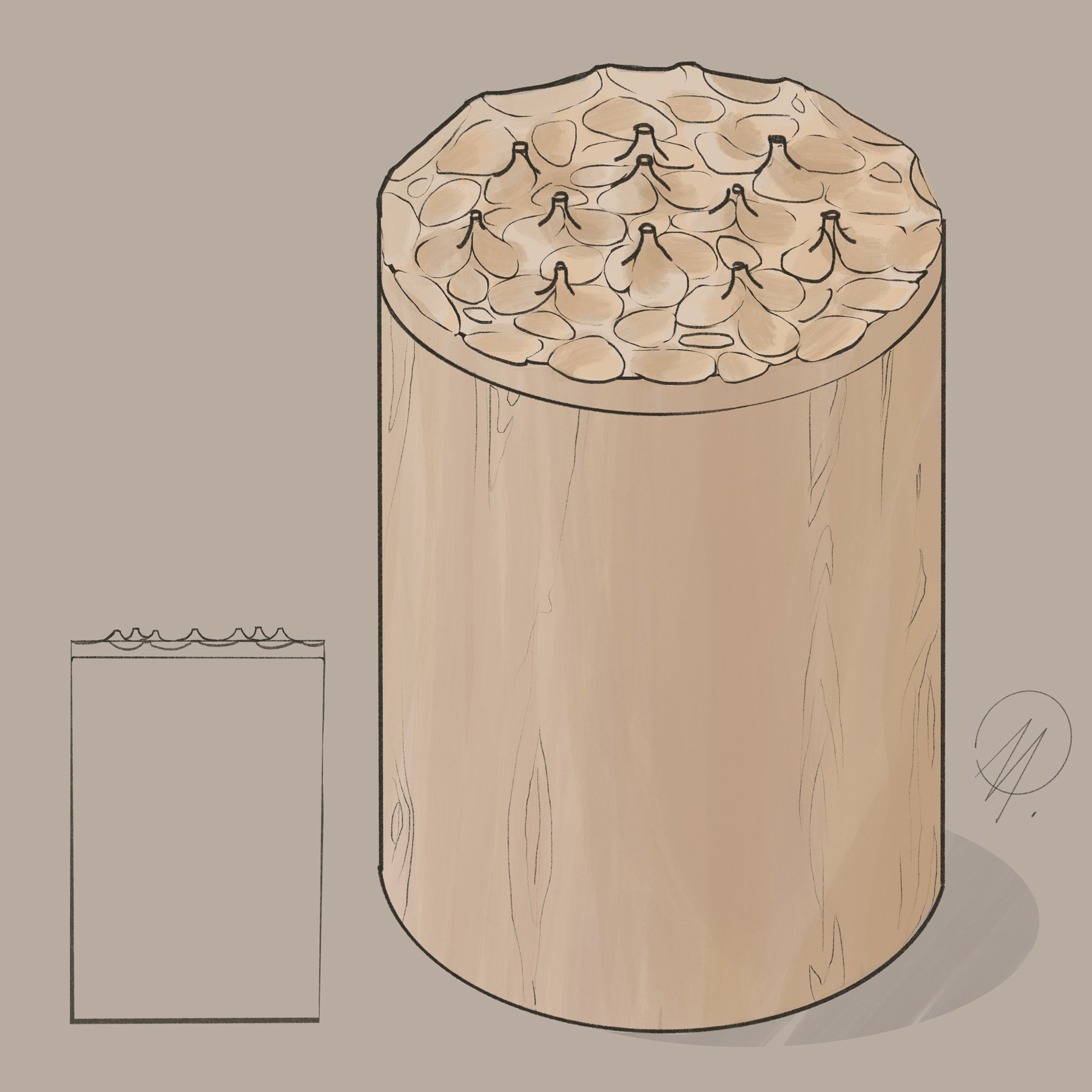
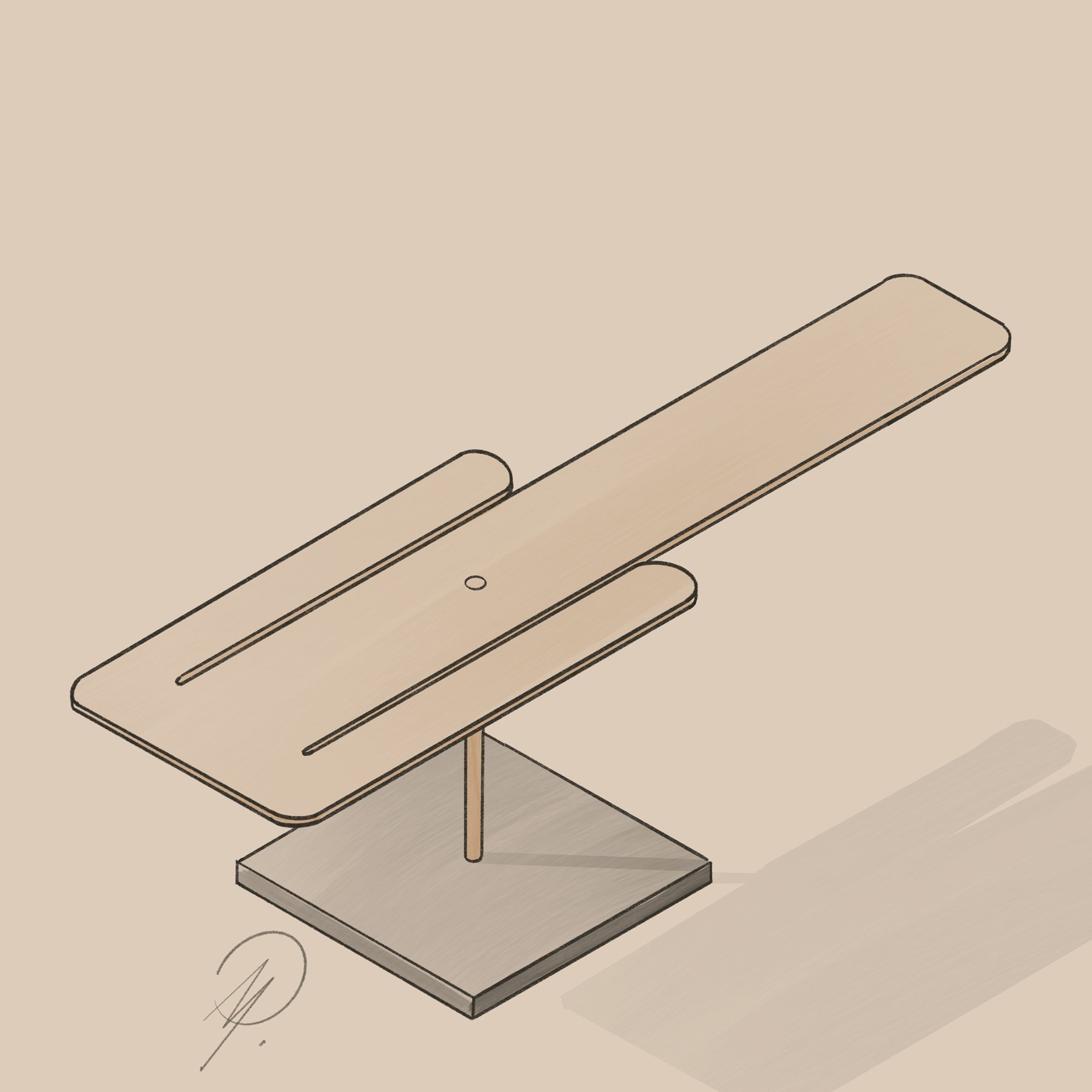
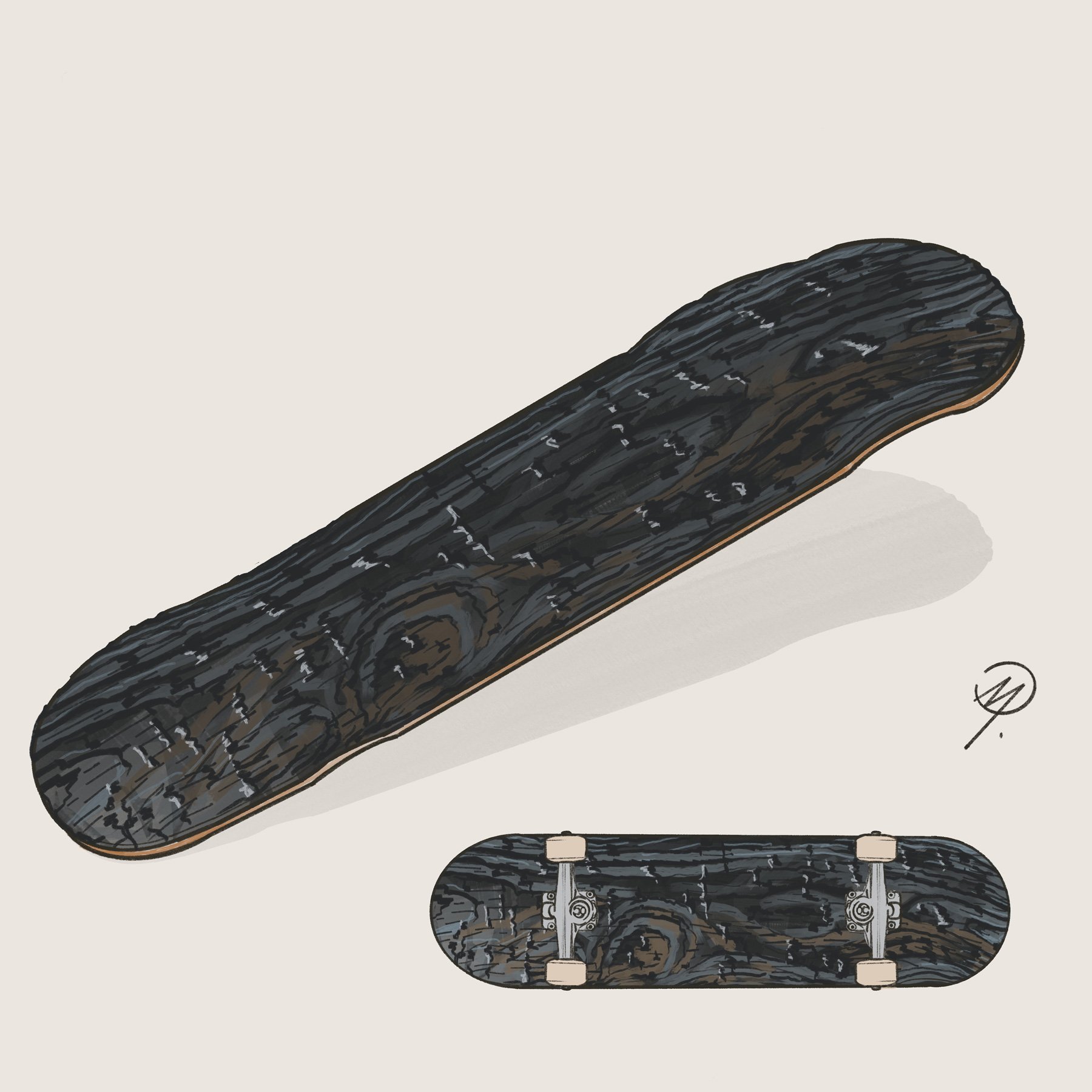
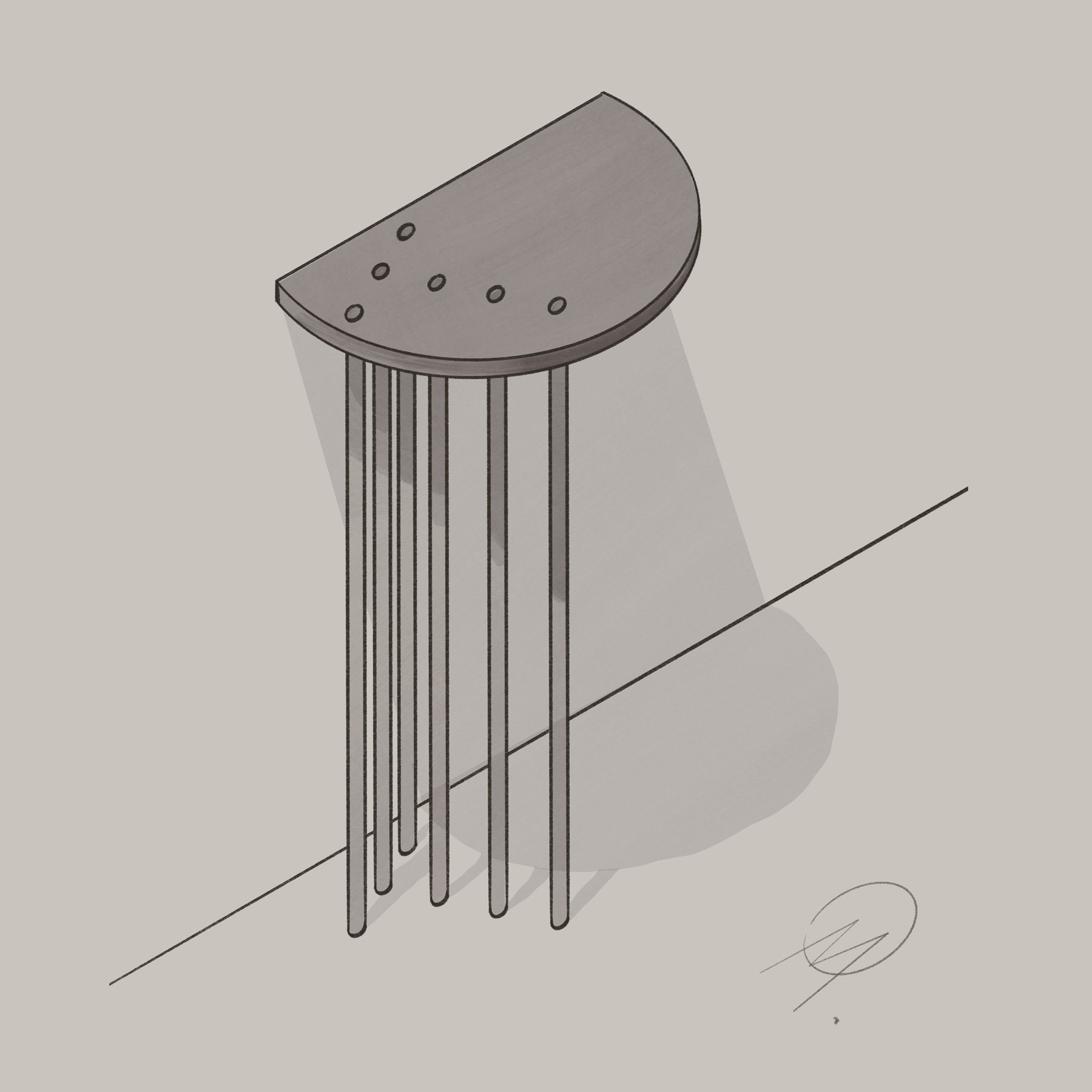
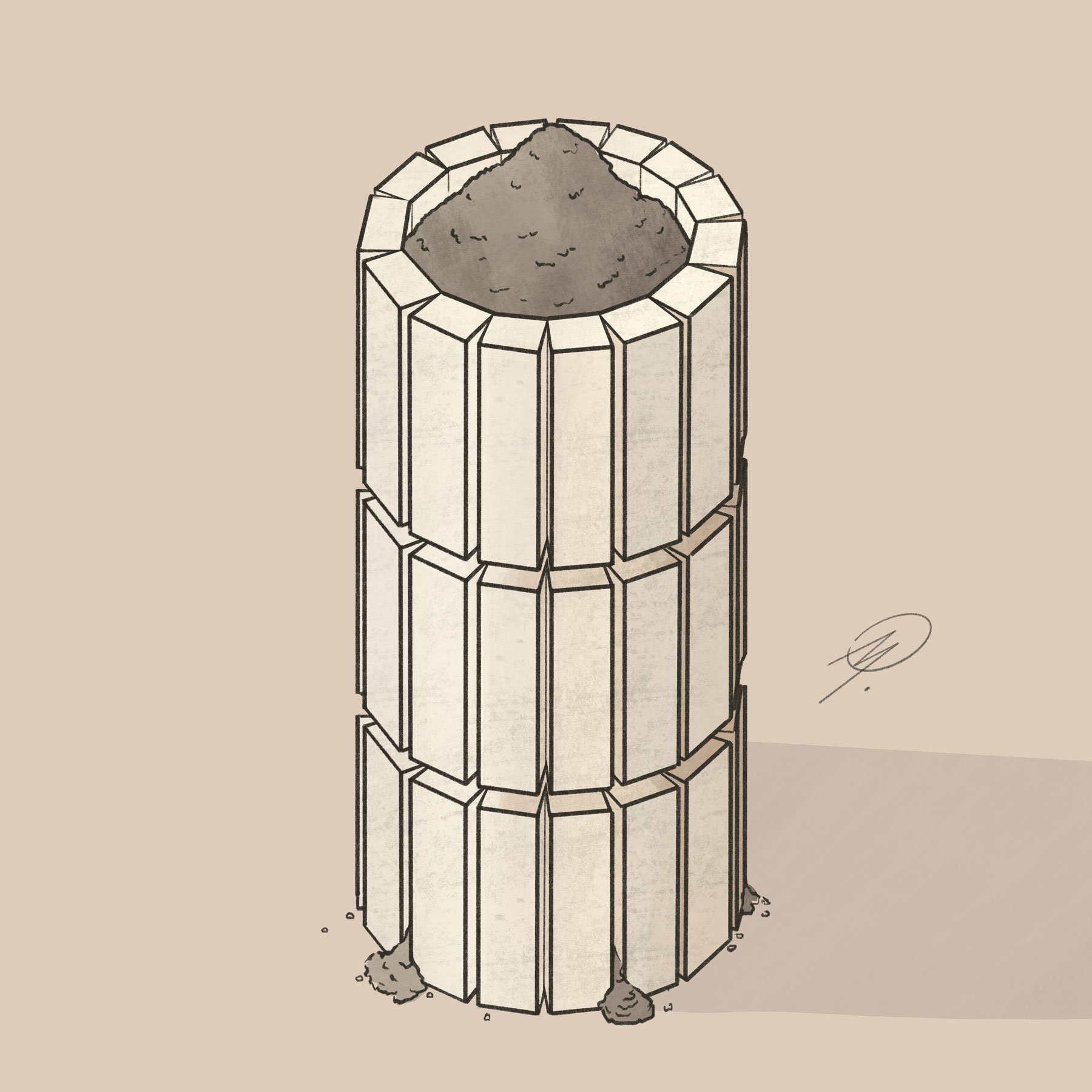
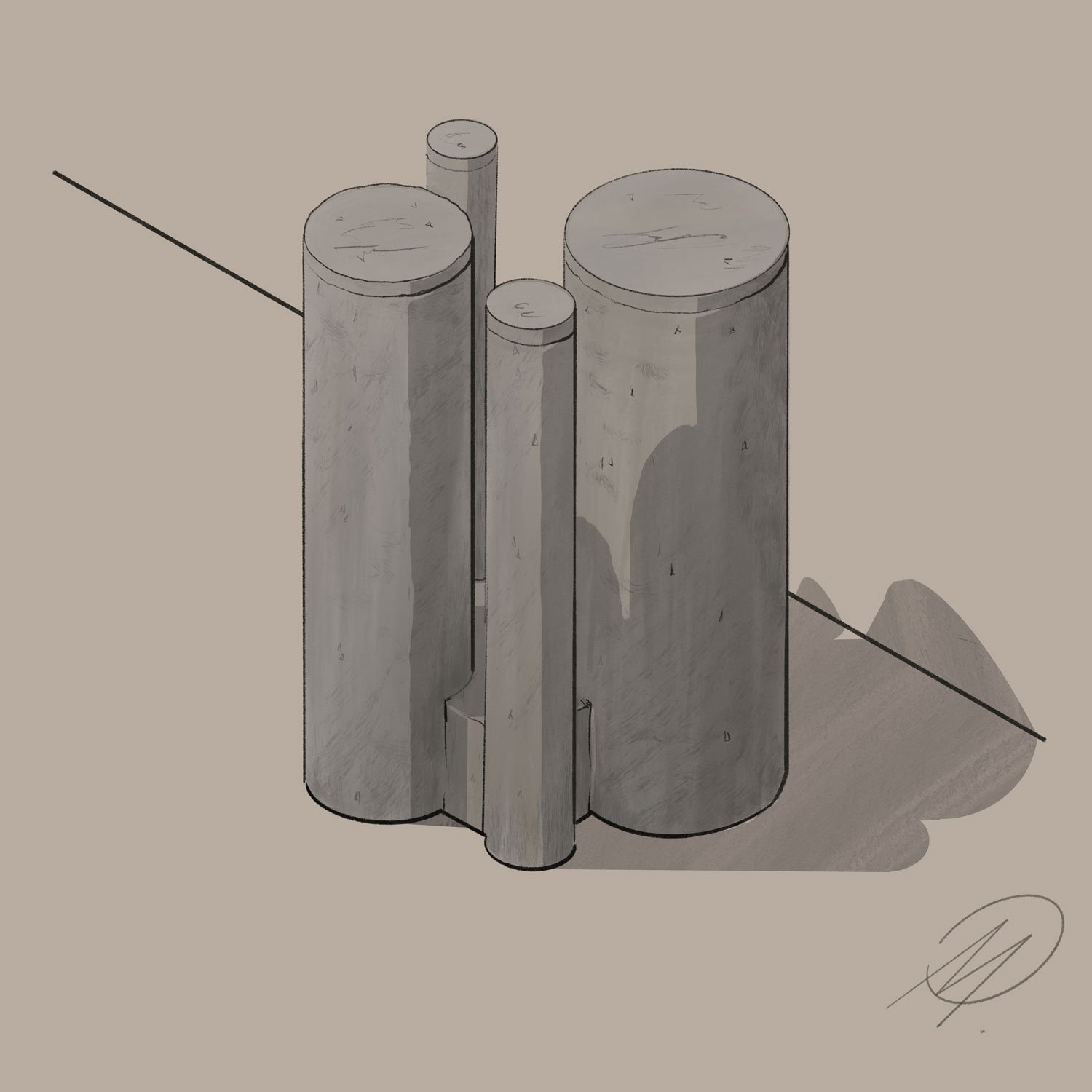
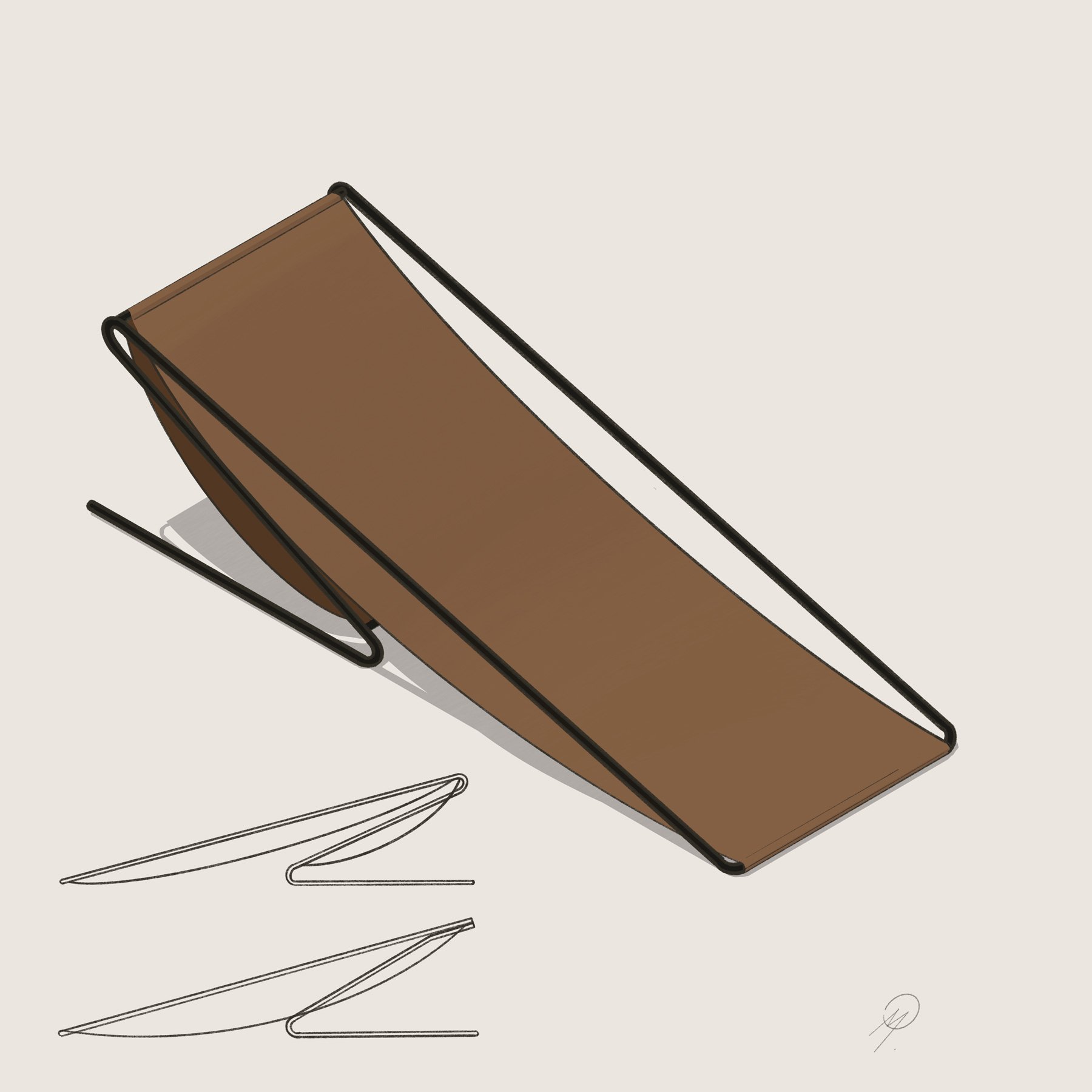
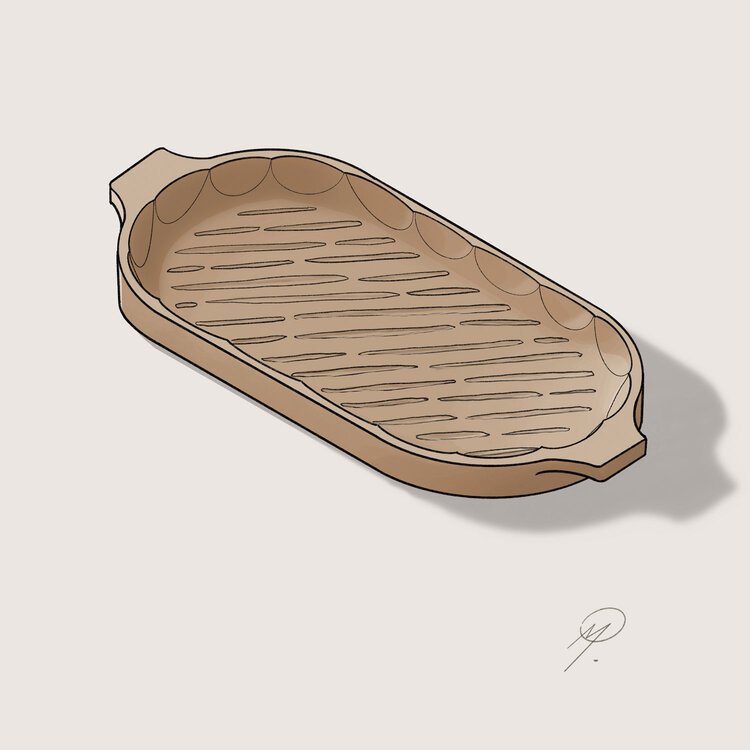
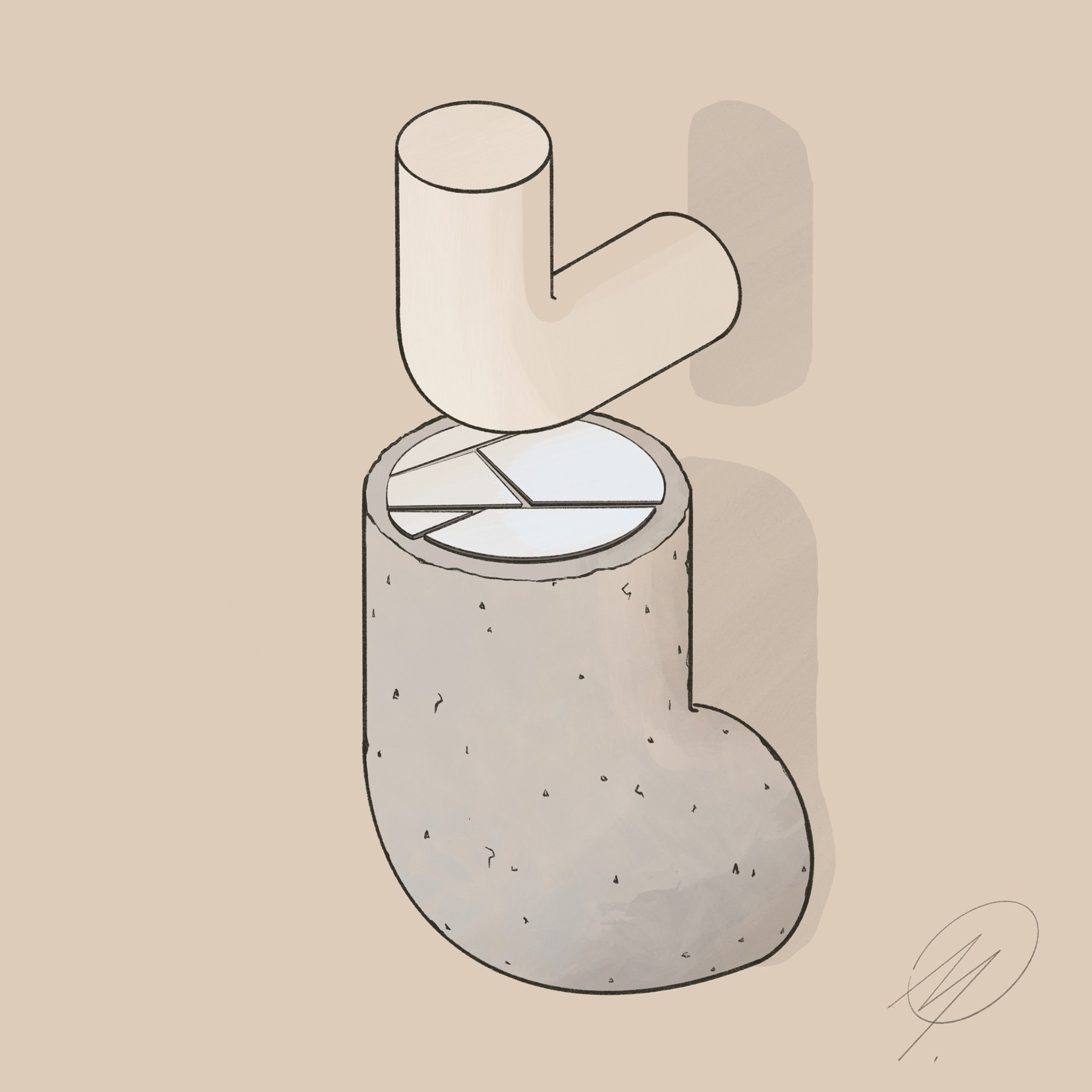
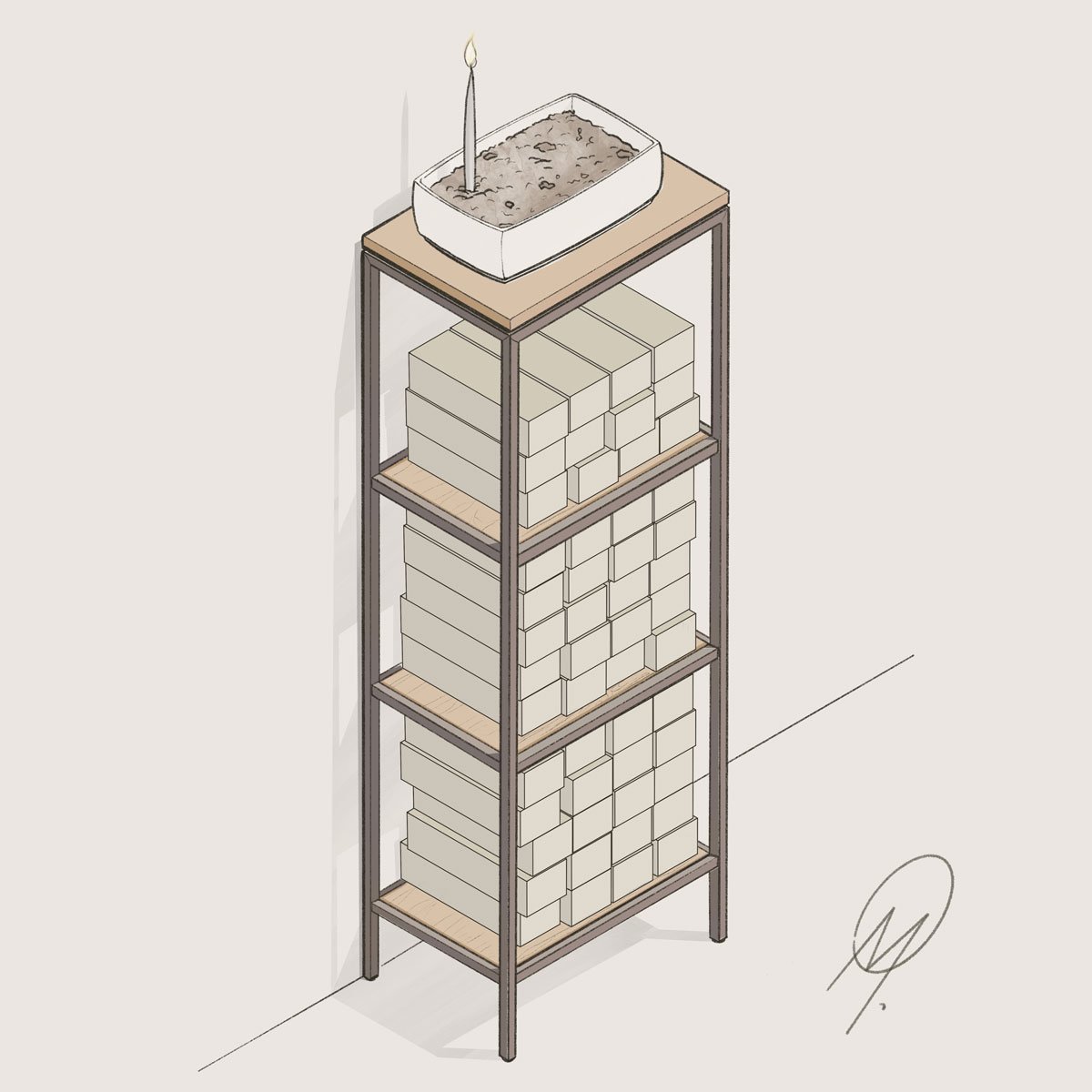
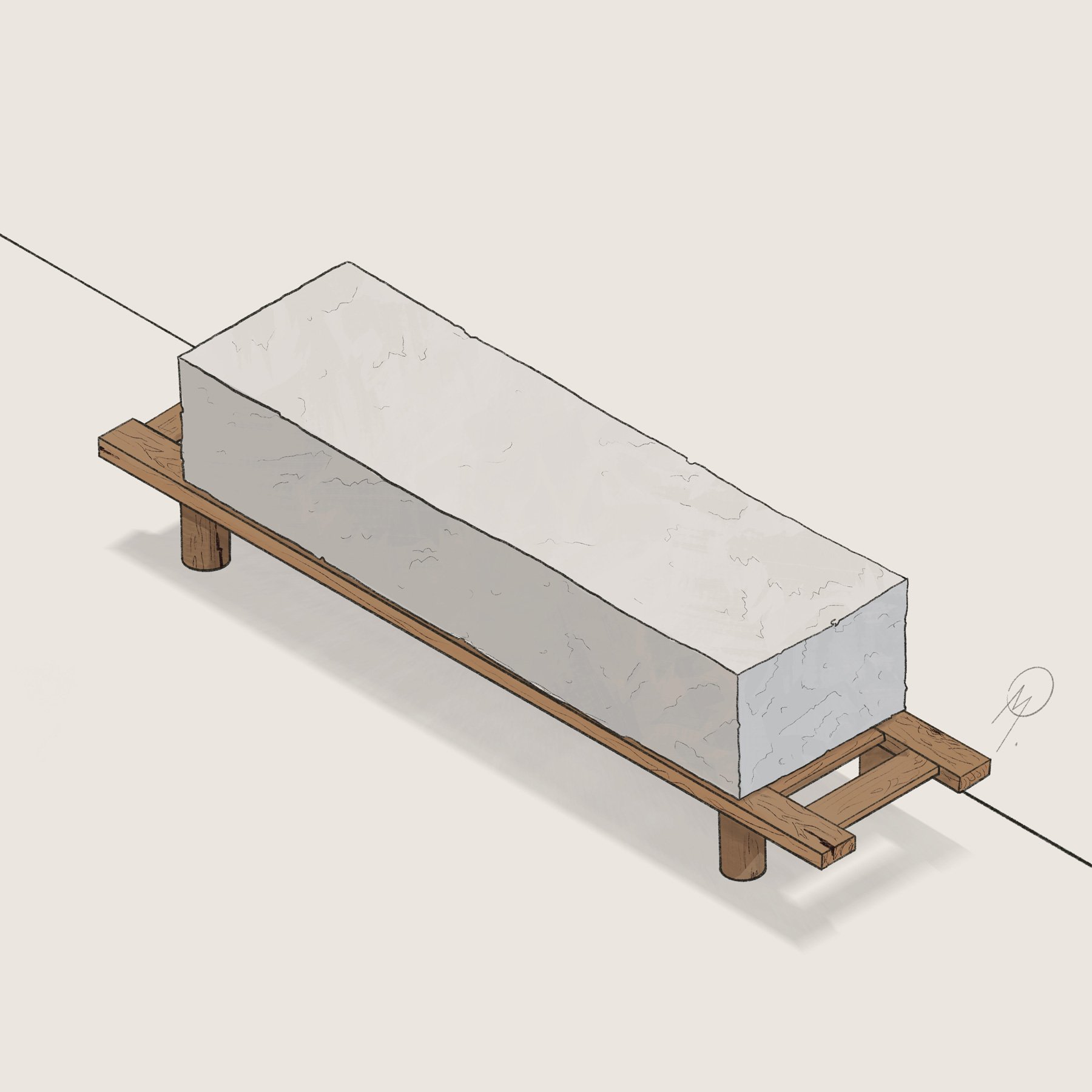
Self-Questioning Devices use objects as prompts for inquiry rather than utility alone. Familiar forms are altered just enough to interrupt habit, introduce ambiguity, and make perception itself part of the work.
Some remain usable. Others become more conceptual. In each case, the aim is not to instruct, but to unsettle the automatic reading of what is in front of us.
Project Types
Furniture, Design Objects, Household Items
Materials
Ceramic, Wood, Metal, Glass, Concrete





META NOTES
This page is a living document. Last updated: June 7, 2026.
Updated the page to frame Self-Questioning Devices as a design-inquiry category: objects, props, and situations that interrupt the first reading of use, safety, taste, value, and certainty. Added the Design Week chair experiment and Flavors of Misconduct as examples of perceptual friction in everyday forms.
03-19-2026: Shifted the Self-Questioning Devices page away from overt spiritual language and toward a clearer design-inquiry frame, emphasizing perceptual friction, ambiguity, and self-questioning over awakening claims.
Newly created on Oct 2, 2024