THE DREAMER PROJECT
From Principles to Practice
How the consciousness-first premise becomes something to test in everyday life.
Last updated: April 24, 2026Not ideas to agree with.
The Dreamer Project does not treat principles as ideas to agree with. Each principle has to become a perceptual move: something that can be tried in a real room, a real relationship, a real mood, or a real decision. This page shows how the consciousness-first premise becomes practice — through reversals, cues, protocols, and daily tools.

PRACTICE PRINCIPLES
From Perceptual Reversal to Field Test
Each practice begins as a principle: a shift in how reality is framed. The move is simple: take a consciousness-first reversal — world as cause → mind as cause, separation → shared field, identity → awareness — and turn it into something the experimenter can actually try.
A principle becomes a practice when it can be carried into a real moment: a question, a cue, a stance, a visualization, or a next move. This is how the project avoids leaving philosophy at the level of theory. The principle is not only explained; it is placed inside life and tested there.
See the Consciousness-First Principles →Example format:
Identity is personal → Identity is universal
“When roles harden, who’s the one behind them all?”
Follow the shift into practice → We The Dreamer Core Practices
THE PRACTICE LIBRARY
Where Principles Become Field Tests
The Practice Library is the field lab of We The Dreamer: a collection of mind-first tools, perception cues, and real-life field tests for trying the consciousness-first premise in ordinary life. It includes We The Dreamer Core Practices, Experiments in Perception, Tools for Inner Navigation, and Field Tests in Relationship.
Enter the Practice Library →One Sequence, Six Ways to Test the Premise
The Core Practices are the main bridge between the consciousness-first hypothesis and the lived experiment.
Each one can be used separately, but together they form a tuning loop and ladder:
First Dream Now brings the hypothesis into the present moment, The Dreamer Stance brings it into the room, We The Dreamer reverses the ordinary assumption of separation, As The Dreamer shifts identity, See The Dreamer turns the stance into felt perception, and I Choose Dream-First returns the frame when perception tightens.
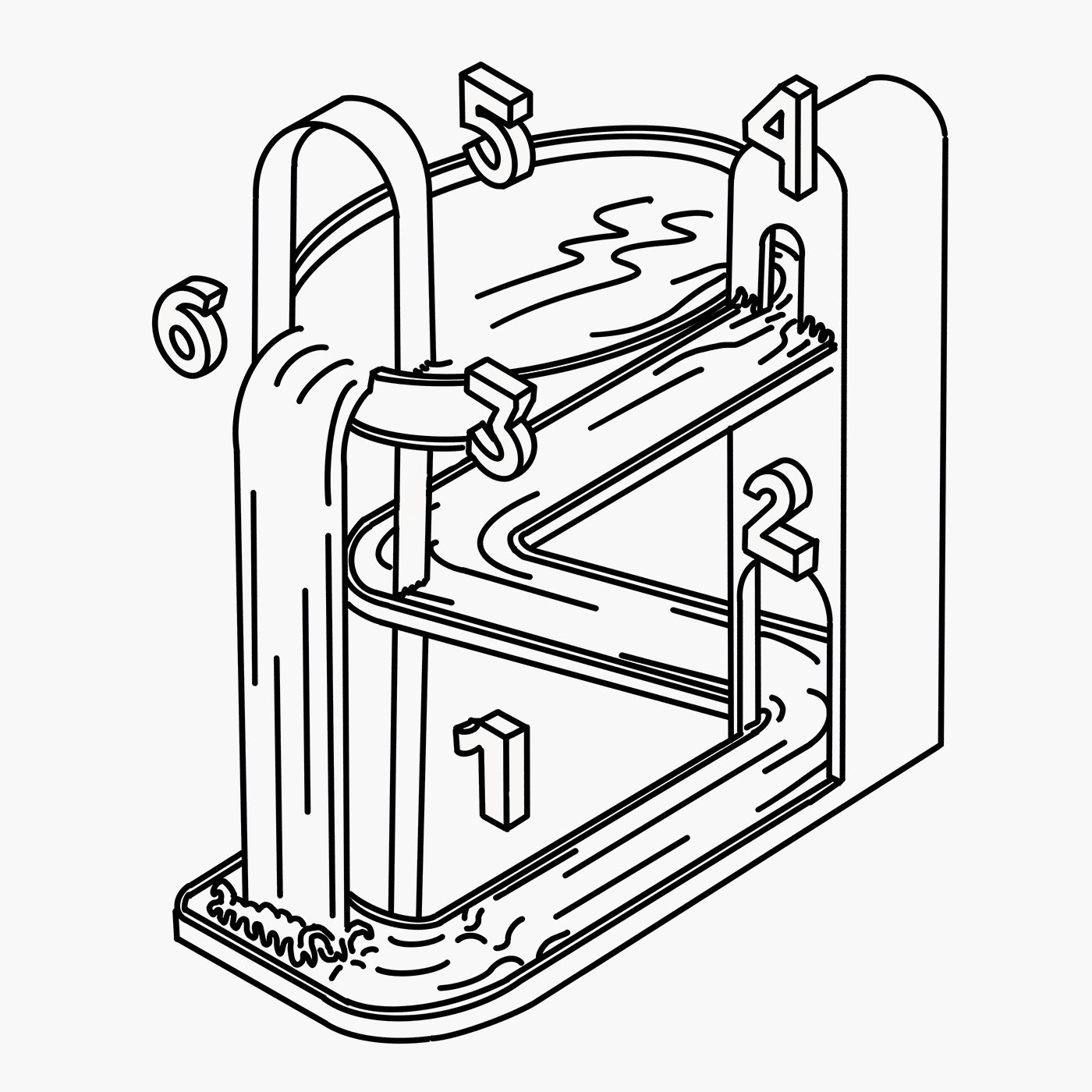
TUNING LOOP
“The point is not to memorize a system, but to have a compact sequence for testing mind-first perception in ordinary life — alone, with others, in calm moments, in conflict, or while moving through the day.”

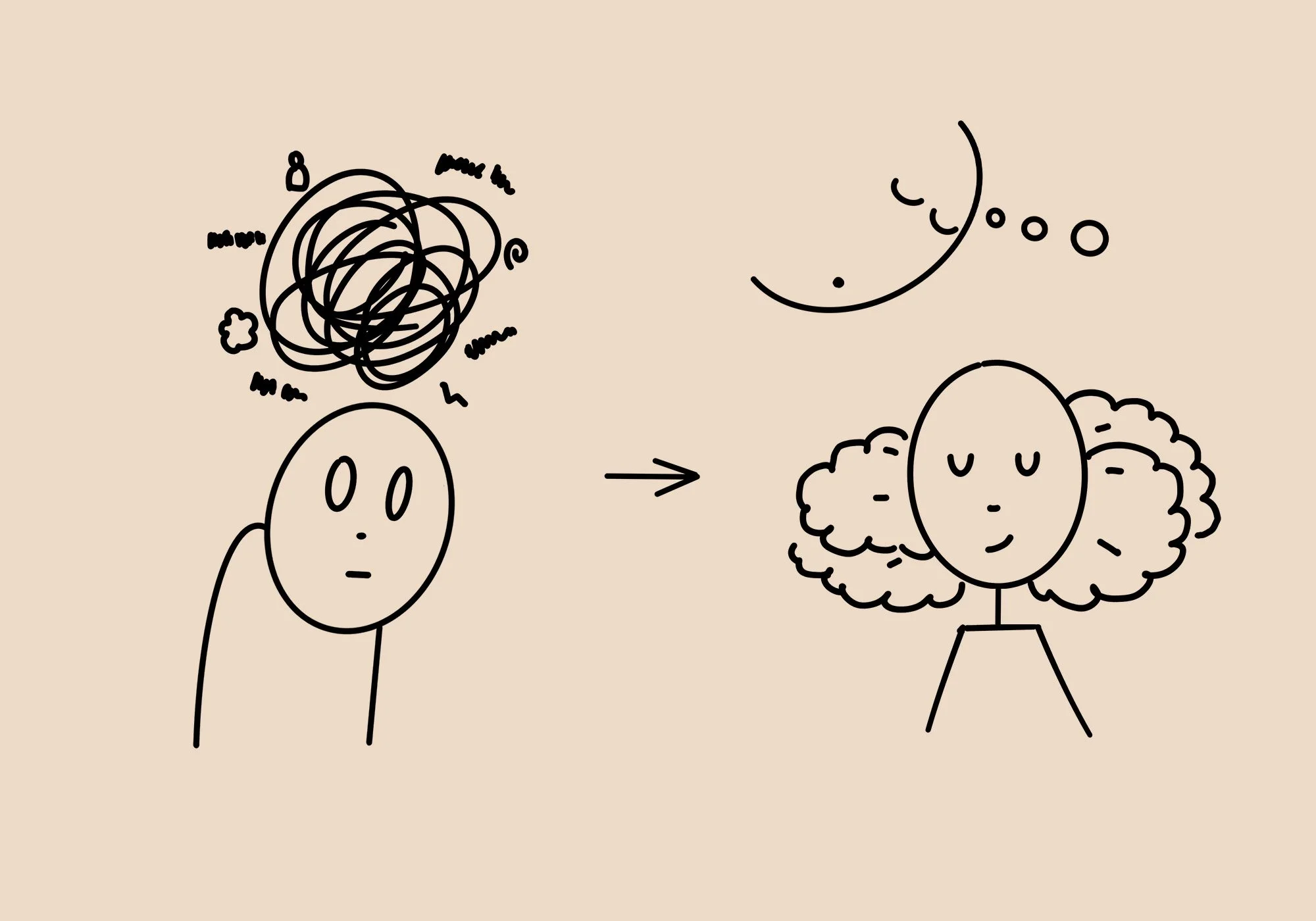
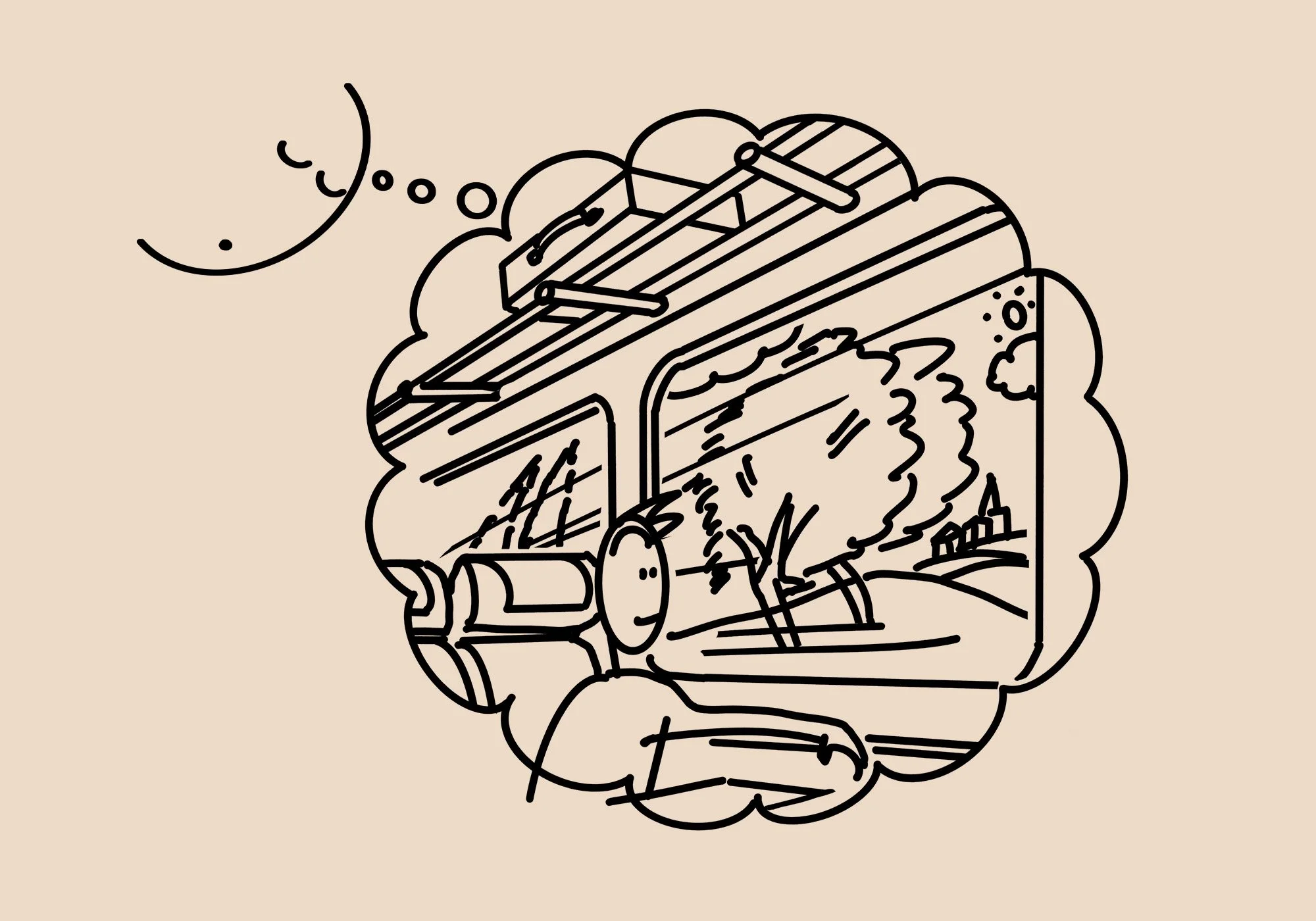
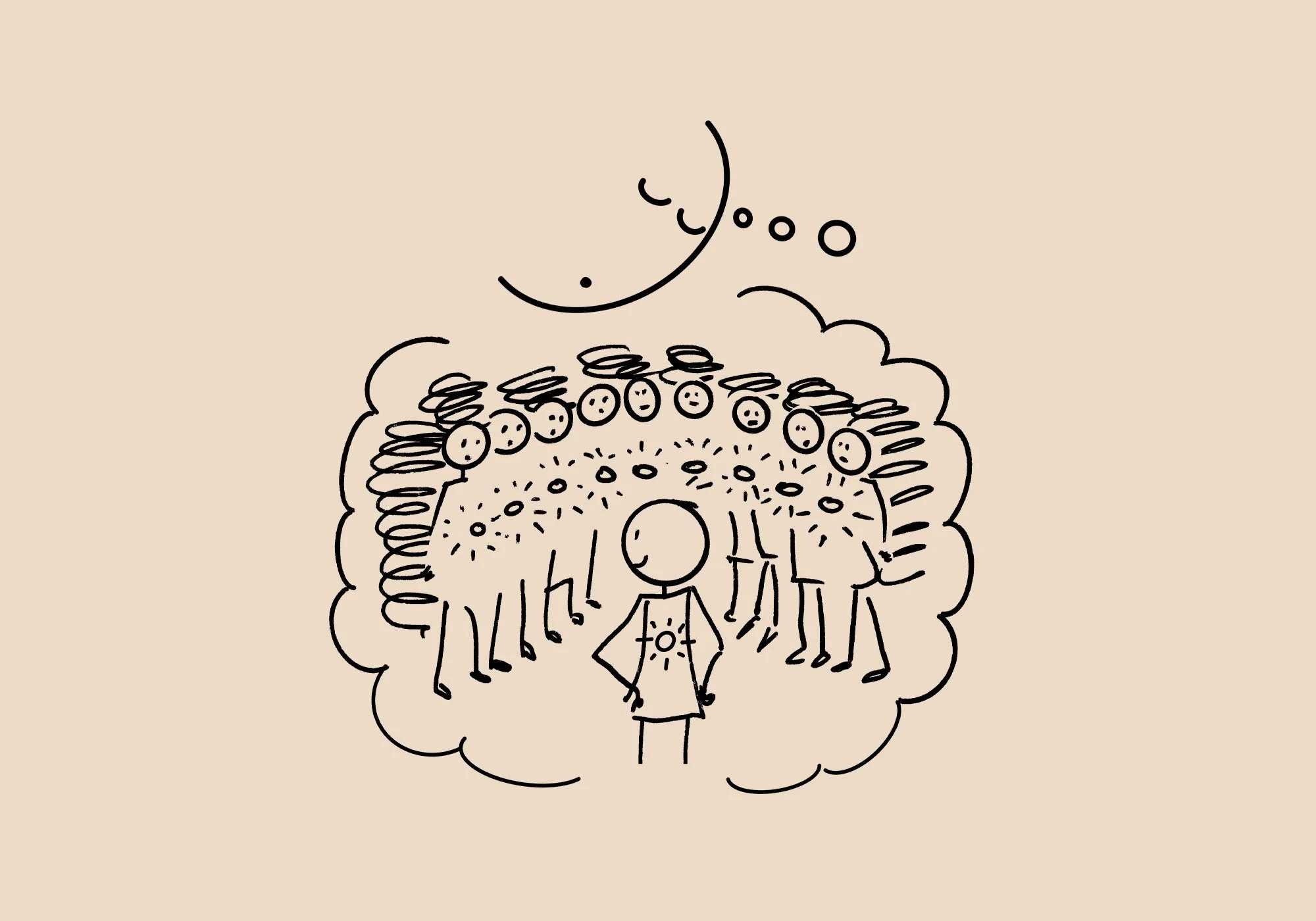
From Practices to Tools
The Structures That Make the Experiment Repeatable
MORNING PROTOCOL
Setting the Premise Before the Day Takes Over
The Morning Protocol is the daily threshold practice.
Its function is simple: before the day’s roles, demands, and interpretations take over, the experimenter consciously re-enters the mind-first frame.
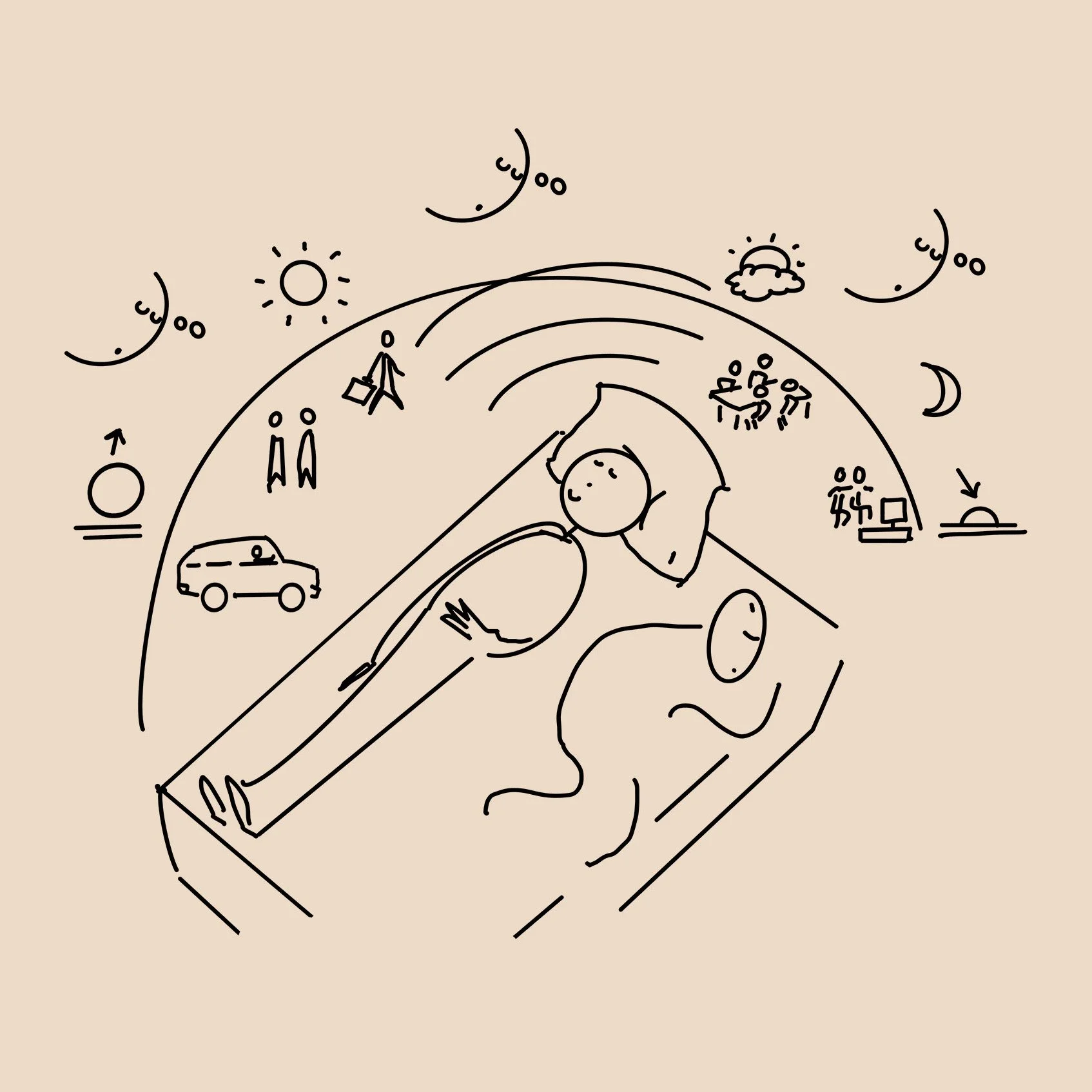
Sleep tends to reset perception back to default: the world appears already given, the self appears inside it, and the day arrives as something to answer to. The protocol interrupts that default. It asks the experimenter to begin again from the premise: what if this day is another scene in the First Dream — one mind, many appearances, ordinary life as the testing ground?
In this sense, the Morning Protocol is less a meditation than a boot sequence. It prepares attention to treat the day not as proof of being at the mercy of circumstance, but as material for experiment: something to test, notice, observe, and revise.
Premise Protocol (Beginning the Day as the Dreamer) →THE DAILY ALLOCATOR
Giving the Day a Testable Form
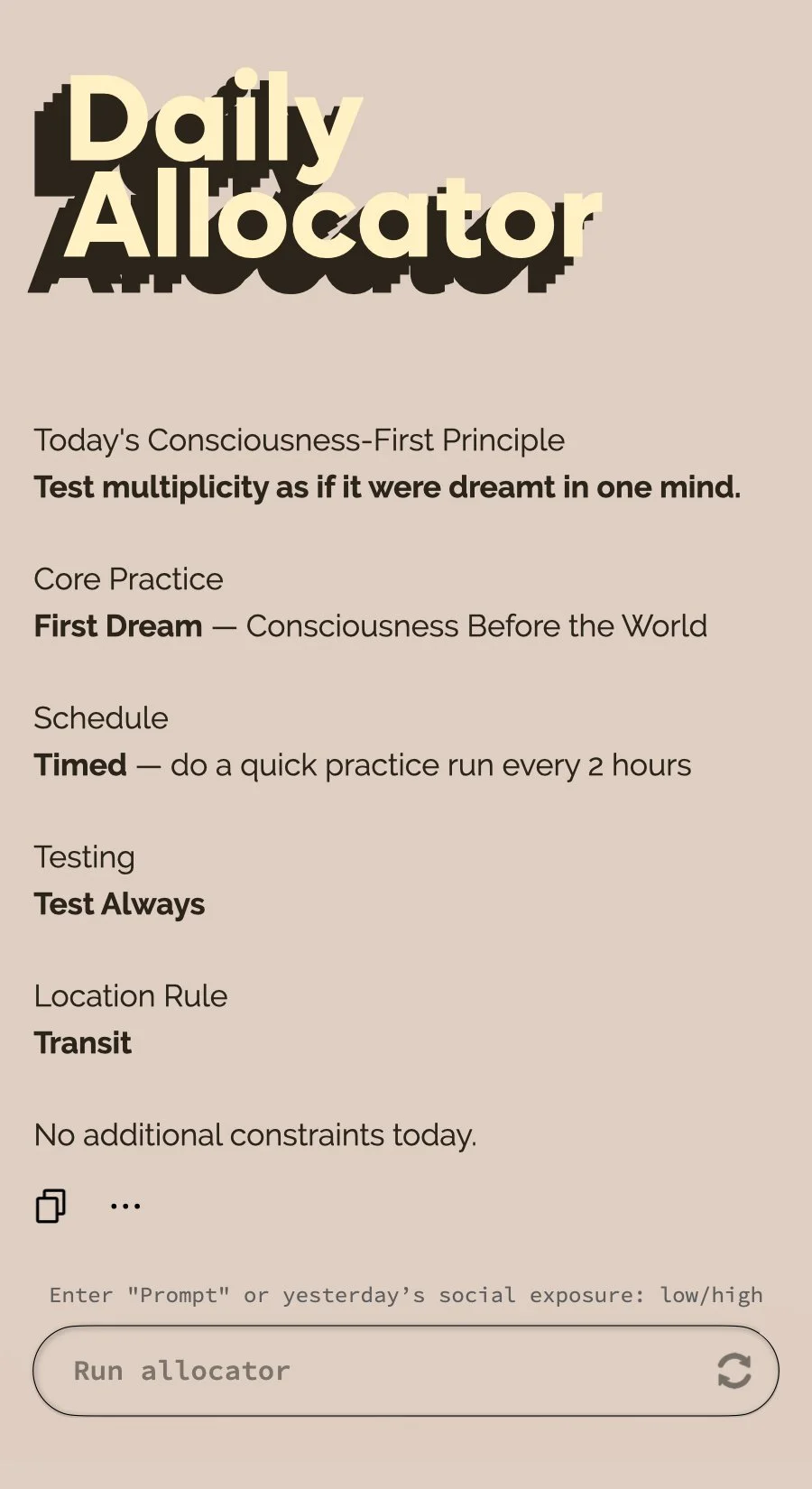
The Daily Allocator turns the experiment into a daily assignment.
It selects what will be tested: a principle, a practice, a rhythm, a mode of use, and sometimes a constraint or randomized condition. Its purpose is to prevent the inquiry from remaining mood-based, vague, or purely reflective.
Ordinary life quickly installs its own assumptions. The Allocator helps begin the day in a chosen frame rather than a default one. It gives the experiment structure before work, habits, social situations, and emotional weather take over.
A day might be assigned a core practice to memorize, a principle to hold, a permission mode for when to apply it, a location rule, or a constraint that limits how the practice is used. Sometimes the tool introduces chance, so the experiment is not only driven by preference. The result is a strange but serious structure: a way to let ordinary life become the field in which perception is tested.
META NOTES
This page is a living document. Last updated: Newly created on April 24, 2026