The Aware in Awareness Is the Real in Reality - Where the Inquiry Begins
JOURNAL OF THE EXPERIMENT775 words · 3 min read · Read in French · Listen on SoundCloudThis Journal of the Experiment entry extends the inquiry from the Project Philosophy page and connects directly to the practice The Aware in Awareness Is the Real in Reality ∞. It traces the minimum honest ground of the experiment: before any theory about reality, there is awareness, experience, and the question of what can actually be verified from the inside.
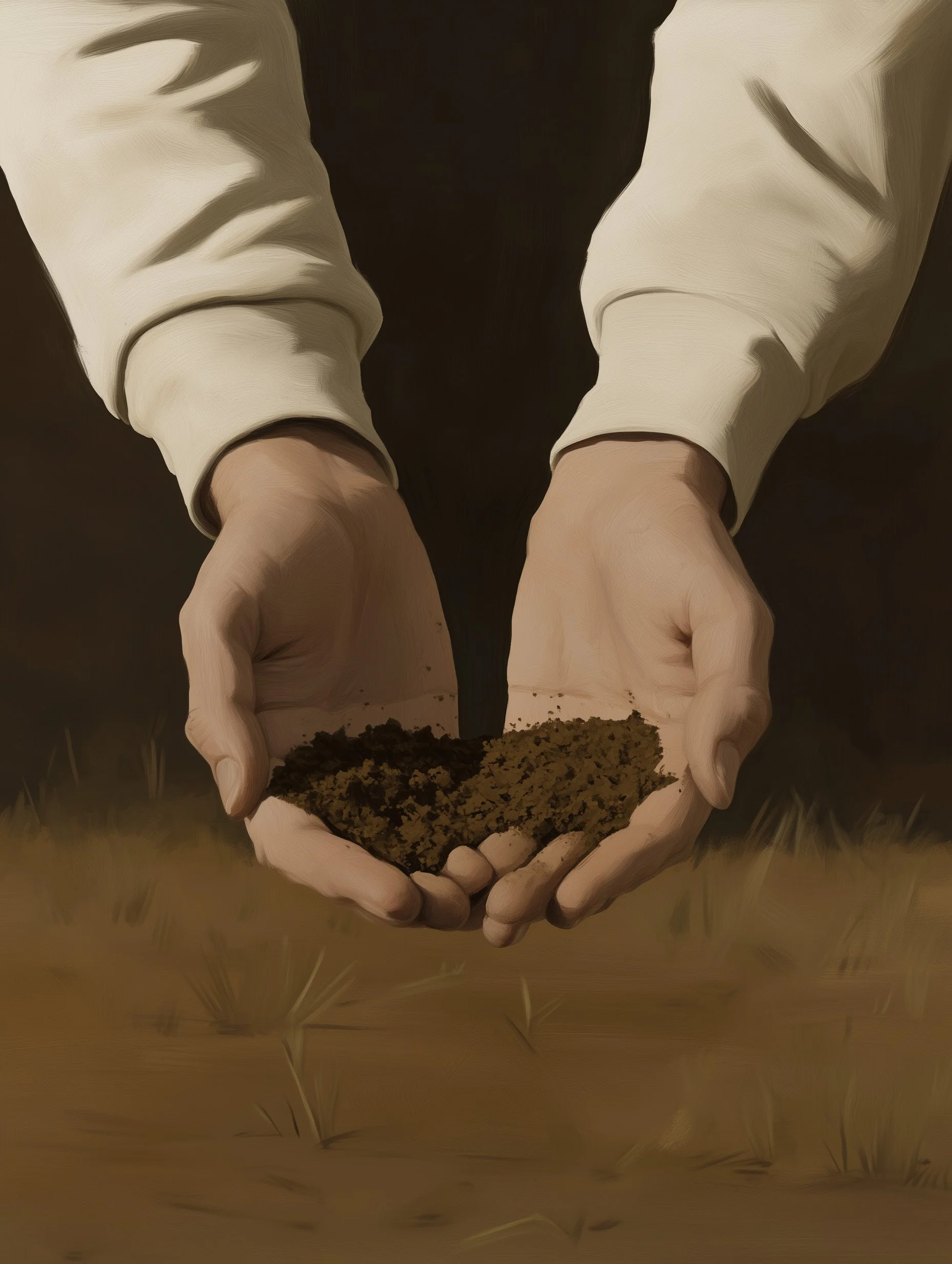
Before the hypothesis grows, something has to be held without pretending it is settled.
In recent weeks, I’ve gone deeper into the experiment — field tests, constraints, logs, all of it. Not just to learn more about reality, but because we still don’t know what reality is.
“Whatever we call ‘world’ only ever shows up as experience.”
And if I’m going to build anything around a hypothesis as strange and serious as the idea that reality may be consciousness-first, I want to begin from the minimum honest ground available to me.
Whatever we call “world” only ever shows up as experience.
The formulation I’ve landed on is:
the aware in awareness is the real in reality.
It’s the simplest starting point I know, and I want to talk to you about it.

One of my field sketches — the world may feel vast and outside us, yet it still only arrives as experience.
The Minimum Honest Ground
The Dreamer Project is a practical inquiry. It treats perception as a design space, using careful first-person observation to test whether this changes what we take reality to be — and how we move through it. The big question is old and unsolved: what is reality, and what role does mind play in how it appears? Science, philosophy, and religion have all taken their turns; what remains is a mix of models, symbols, arguments, and a stubborn leftover mystery.
Before any hypothesis about what reality is, there’s a simpler constraint: whatever we call “world” only ever shows up as experience. That’s not mysticism — it’s just the starting point of honest doubt, and the premise behind phenomenology’s attention to appearance. Contemplative practice, at its cleanest, tests the same point by distinguishing what is known (sensations, thoughts, images) from the knowing of it.
The one thing you can’t deny is that experience is present: there is awareness of something, and in that sense awareness simply is.
With that constraint in view, it’s fair to say the “world” is only ever encountered through the frame we can hold for it in experience — the attention we give it, the interpretations we reach for, and the degree of self-relevance we attach to what appears.
When the Experiment Meets Resistance
If The Dreamer Project is an experiment testing the hypothesis that reality is consciousness-first, it will predictably meet obstacles. The default model — broadly physicalist and materialist — can feel not just plausible but necessary, socially reinforced and constantly “confirmed” by consequences that seem to arrive from outside us.
So the question “Is one mind dreaming this world?” isn’t asked as a debate prompt. It’s asked at the exact moment there are infinite reasons not to hold it — when reality feels most fixed, urgent, and impersonal.

One of my field sketches — the scene can feel fixed and outside us, yet still appear within mind
And while some people may feel more permission to doubt physicalism because their experience of perception has been unusual or disruptive — for example through intensive meditation, contemplative prayer, or, for some, psychedelics — this field test is for anyone who hits that ordinary wall of doubt and wants a clean return to baseline: awareness is present, and even uncertainty about the premise is something arising in awareness.
Returning to Baseline
“Whatever is happening, I am aware that it is happening.”
For me, the formulation the aware in awareness is the real in reality is what keeps the lights on when doubt shows up — doubt about relevance, usefulness, even the foundation of the inquiry. From a bird’s-eye view, everything becomes questionable as experience in the same way: beliefs, interpretations, models, and stories all change, while the fact of being aware does not.
Whatever is happening, I am aware that it is happening; and despite centuries of debate about mind and world, that simple fact isn’t negotiable from the inside. So this line serves me as a pragmatic compass, not a metaphysical conclusion: I return to awareness as the one constant I can actually verify, then restart the inquiry from there.
I’ve put the fuller practice version of this thought here — as a philosophical and practical reminder for when the experiment itself starts to wobble, with the premise, a sustaining practice, field markers, and the rationale behind what it is testing.
I’ll say more soon about the practical side of this experiment — the logs, constraints, and small systems I’ve built around it.
Thank you for lending attention to something that tries to give it back, slowly.
— Martin
FROM THE PHOTOGRAPHY WORK
This question has a visual life too.

From Veil of Perception — one of my photographs exploring the same inquiry: even what feels most outside us still only ever appears in awareness.
Photograph — Nikon FM2