I Met Myself in a Conjoined Dream, Then I Started Logging the Experiment
JOURNAL OF THE EXPERIMENT1220 words · 7 min read · Read in French · Listen on SoundCloudThis journal entry is part of the Journal of the Experiment, a living record within The Dreamer Project. It documents ongoing attempts to test a consciousness-first hypothesis through ordinary life—using small, reversible experiments, careful observation, and structured logs rather than belief or doctrine.
This entry emerged while refining the project’s experimental method (see How The Dreamer Project Works) and reflects on a dream-based thought experiment that clarified a recurring methodological challenge: how to treat subjective experience as data without turning it into evidence of a conclusion.
Some encounters don’t introduce new information. They rearrange the frame.
I want to start by telling you about the conjoined dreams I had the other night. What was strange was realizing that the first dream was continuing inside the second—only from a completely different point of view. At a certain point, the surprise was such that I became lucid. I’m not sharing them for the symbolism so much as for their structure: they felt like a thought experiment disguised as dreams.
“What stayed with me wasn’t the image—it was the structure of the choice.”
This happened to me exactly like this, and I’d like to know what you would do.
Imagine that you’re dreaming. You’re in a place you love—a familiar street, familiar air—walking relaxed, but somehow you wake up. You check your phone. It’s the middle of the night, so you fall back asleep.
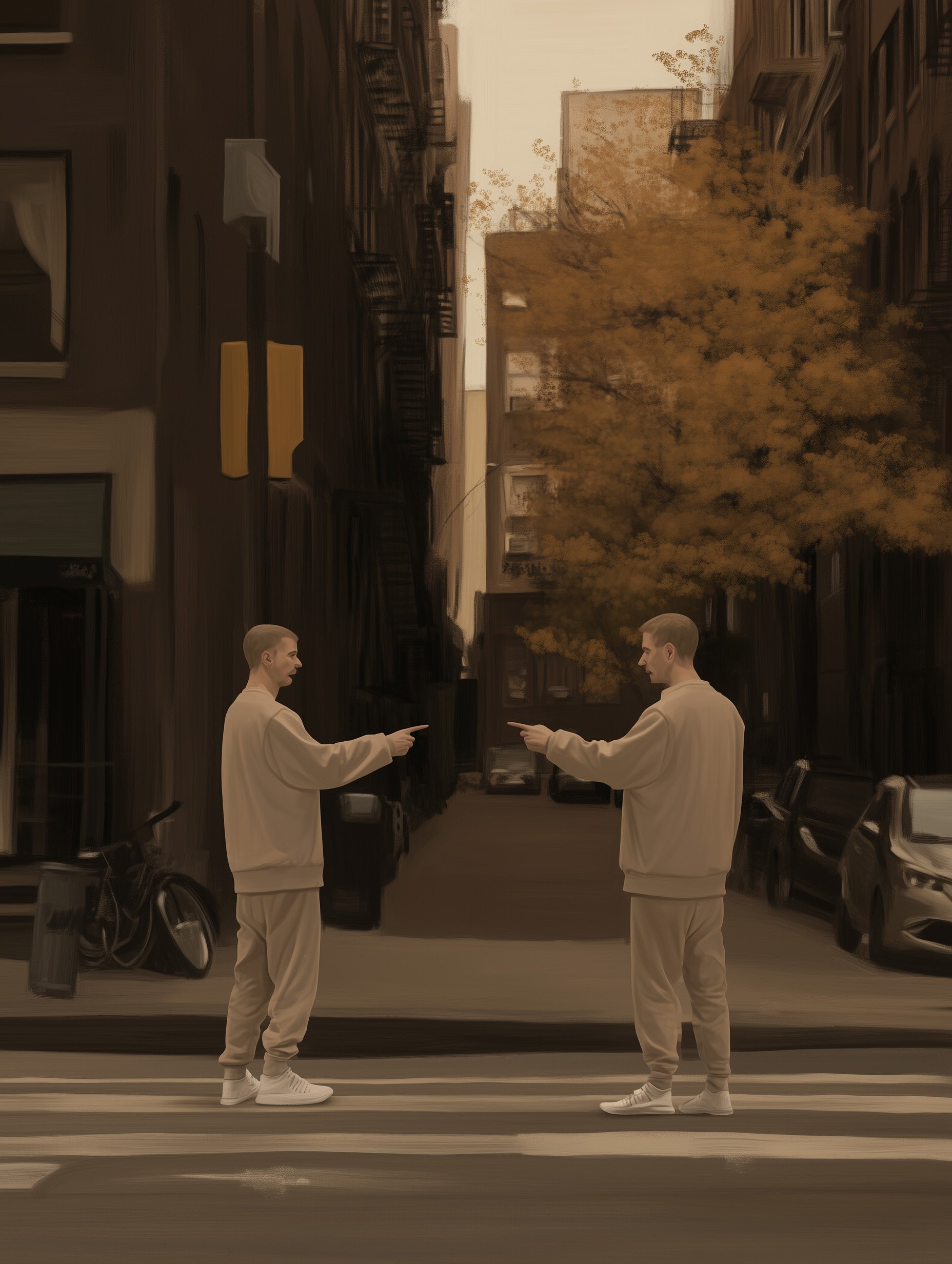
A moment later, you’re dreaming again, but you’re back in the same place—only a little further along than before. Suddenly you feel a strange certainty: you’re about to see yourself. You duck behind a column and watch your other self walking in your direction, unaware.
Now you have a choice: step out and let your other self see you, risking freaking them out… or stay hidden and let them continue as if nothing happened. What do you do?
The Structure of the Choice
When I woke up, what stayed with me wasn’t the image—it was the structure of the choice. Not good versus bad. Not true versus false. But whether revealing something I couldn’t unsee would help, harm, or simply destabilize the version of me still living inside the ordinary frame—the one already embedded in routines, relationships, and responsibilities.
What struck me later was that this is the same problem I keep running into in the experiment I’m running: what if I treat the world as if it were a shared dream in one mind—and what happens if that lens starts affecting how I live?
This question doesn’t start with me. There’s still no agreement on what consciousness is, or whether it’s fundamental. That question remains open. What we do know is that people across cultures and centuries have reported moments where their sense of self or reality shifts in a lasting way—often described as awakening—without science yet agreeing on what, if anything, those experiences reveal.
Every experiment needs an interface. Most of the time, we mistake it for reality.
Identity Under Pressure
Those conjoined dreams showed up right when I was already wrestling with a question: how to deal honestly with the outcomes of an experiment like this—one that plays with identity. I’ve been trying to keep it contained: setting aside time to step into the lens, and time to come back to ordinary life. In other words, I’m trying to know when I’m in the practice, and when I’m just living.
But do you keep it private and run it quietly in your own head? Do you speak from the position of the observer, knowing that the version of you still inside the frame didn’t ask for that disruption? And if identity itself starts to loosen—if you begin to relate to yourself less as an individual and more as part of the Dreamer—what actually changes in how you live?
“Identity isn’t trivial. It’s where ideas meet real lives.”
I’m not interested in becoming a different kind of person, or adopting a role. I’m already a father, a partner, a son, a brother. This isn’t a conversion or a teaching position. It’s a design and philosophical exploration into awakening—treated as a hypothesis, not a claim.
Why Testing This Is Hard
If the world appears in consciousness rather than consciousness appearing in the world, how do you work with experiences that are personal, internal, and hard to verify—without borrowing spiritual explanations or turning them into projections, beliefs, or an “enlightened” story about yourself? How do you treat them as material for a hypothesis, not as evidence of a conclusion?
What makes this hard is that the “one mind dreaming this world together” lens pulls on identity. And identity isn’t trivial. In ordinary life, it doesn’t feel like that at all—we live as separate individuals, with other people clearly “out there.” Our senses confirm it. Our language reinforces it. Our identities rest on it.
The problem, of course, is that everything about this everyday setup argues against the hypothesis. If consciousness were fundamental, perception itself might be the thing obscuring it. Which raises a more practical question: how would you even begin to test such an idea without confusing imagination for insight?
Separation isn’t an error—it’s the default interface.
From a Choice to an Experiment Log
I realized that deciding—either to believe it or dismiss it—wasn’t the move for me. Believing would be arbitrary. Dismissing would be premature. The only option that felt intellectually honest was to experiment—carefully, reversibly, and without claiming authority.
So instead of asking whether consciousness is fundamental, I began asking something narrower: what happens if I occasionally treat experience as if it were? Not all the time. Not as a worldview. Just as a temporary lens, layered on top of ordinary life. What shifts, if anything, when identity is held a little more loosely? When situations are approached as if meaning and relation arise from mind rather than collide with it?
“The only option that felt intellectually honest was to experiment—carefully, reversibly, and without claiming authority.”
That’s what led me, over the past weeks, to formalize an experiment log for the Dreamer Project. I started keeping a record of what happens when this hypothesis is tested in daily life.
Nothing dramatic. Just dated entries, four or five times a week. Situations encountered. Whether I deliberately apply a mind-first lens or not. What I noticed. What changed. What didn’t. Sometimes the choice to use a practice is decided by a simple randomizer, just to keep me honest. Sometimes nothing happens at all—and those entries stay.
There are no conclusions there. No final dataset. Just field material—observations, fragments, occasional revisions when experience warrants it. Over time, patterns might appear. Not proofs. More like textures: subtle shifts in reactivity, changes in how conflicts resolve, a different relationship to identity under pressure. Not always better. But different enough to keep going.
I’m aware of how this sounds. Subjective. Unsettled. That’s intentional.
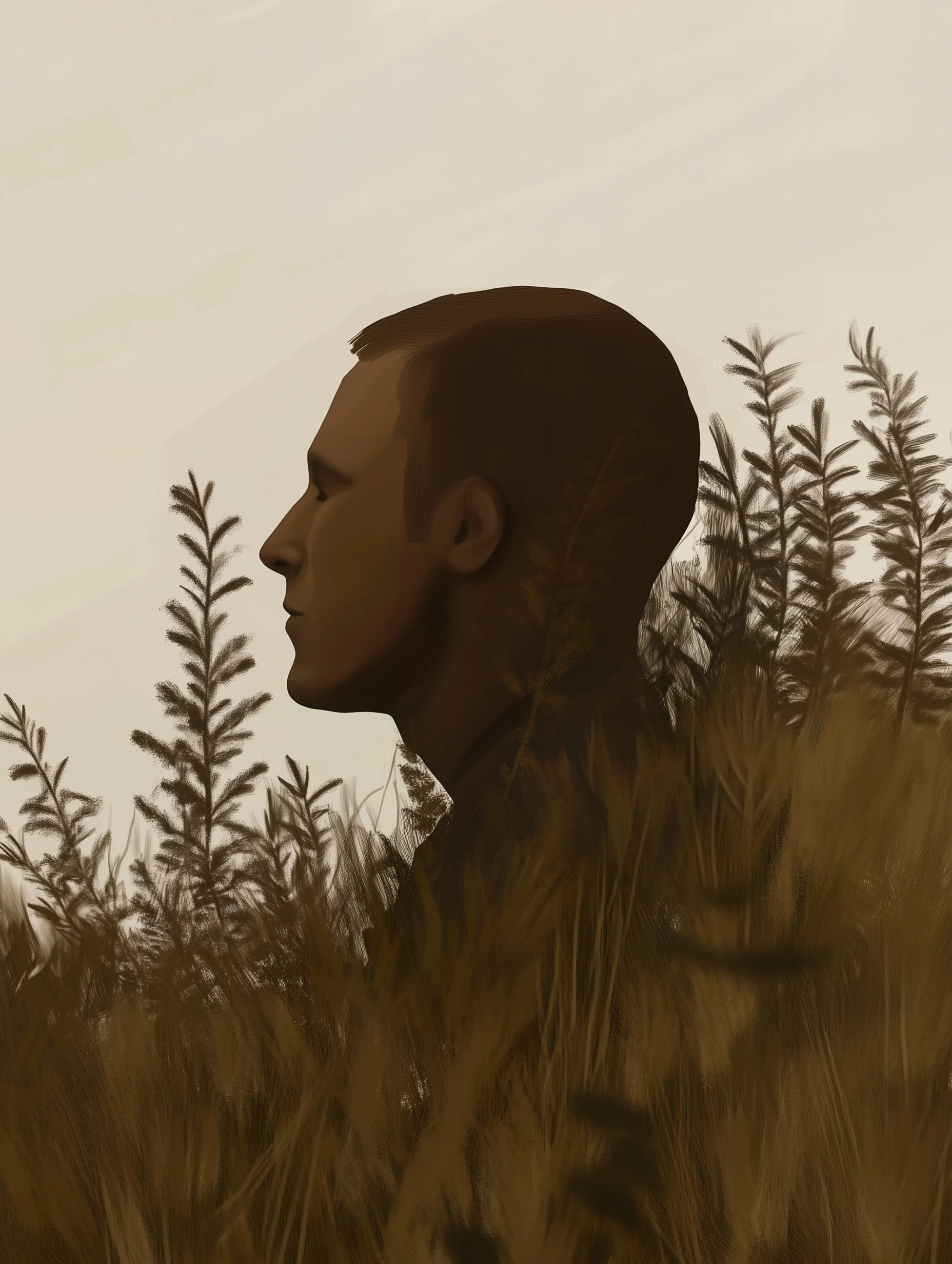
Sometimes attention is the experiment.
If there’s anything I’ve learned so far, it’s that whatever people have historically called awakening doesn’t seem to announce itself as new information—it feels more like remembering something that was already structuring experience all along. And that makes it especially easy to mistake for self-story.
That’s why the log matters. The structure matters. The discipline of recording null results matters. It’s my way of staying behind the column in the dream a little longer—leaving the version of me still living inside the ordinary frame undisturbed while I watch carefully before stepping out. Because I don’t run this experiment in a vacuum. That version of me is where accountability lands—in responsibilities, commitments, and people he loves.
And I don’t want this to become just another big idea that spills into everything before I’ve learned how to hold it responsibly.
If this resonates, I’ve shared a read-only snapshot of the experiment log’s structure: how the logs are kept, what gets recorded, what doesn’t. Not the content itself—just the method. You don’t need to agree with the premise to find the experiment interesting. You don’t need to adopt the language to run a parallel inquiry of your own.
For now, I’ll just say this: I don’t know whether the world is a shared dream. I don’t know whether consciousness is fundamental. But I do know that treating the question as testable—rather than answerable—has already changed how I walk down familiar streets.
And I still haven’t decided what I’d do in that dream.