Taking Stock: Notes from an Ongoing Awakening Experiment
JOURNAL OF THE EXPERIMENT1210 words · 5 min read · Read in French · Listen on SoundCloudI’m starting the year by taking stock—of where this experiment has led so far, and of the questions that continue to hold my attention.
Over the past year, I’ve been sharing notes, fragments, and working thoughts in public, and I’ve been grateful for the conversations that followed—comments, emails, quiet replies that helped sharpen the inquiry. This journal remains less a platform than a record: a place to think out loud, carefully, and to leave a trail others can walk alongside if they wish.

An opening, not a destination — a moment of orientation before the experiment continues.
Recently, I explored the idea of “ancient AI” and what it might mean to take a mind-first view of reality seriously—without turning it into belief or doctrine. As the year opens, I’m giving myself permission to keep following that thread: a creative, imaginative path that stays grounded in dialogue and lived experience, and that keeps testing how we think about reality—and how we work with the minds we find ourselves with.
At the center of this experiment is a simple question: whether shifts commonly described as “awakening” can be accessed in a secular, non-faith-based way, through changes in perception rather than belief or faith.
Alongside that sits a more speculative curiosity—how such shifts might relate to longstanding hypotheses about consciousness being fundamental. That remains an open question, not a conclusion. This ongoing inquiry is what I refer to as the Dreamer Project, and the living theory of identity I call We The Dreamer.
Risk, Play, and Uncertainty
It’s now 2026, and it’s fair to ask why I’m still committed to experimenting with awakening at all—guided by open questions at the edges of contemporary science suggesting that our sense of identity may depend on how we understand reality itself, as consciousness-first rather than matter-first.
The experiment feels a bit like drinking an ice-cold cola over a computer keyboard: pleasant while you’re working, but slightly risky. Why would any of us do that—loosening our usual certainties and running careful tests on perception, without requiring belief—on behalf of an unproven premise?
Shall we dance?
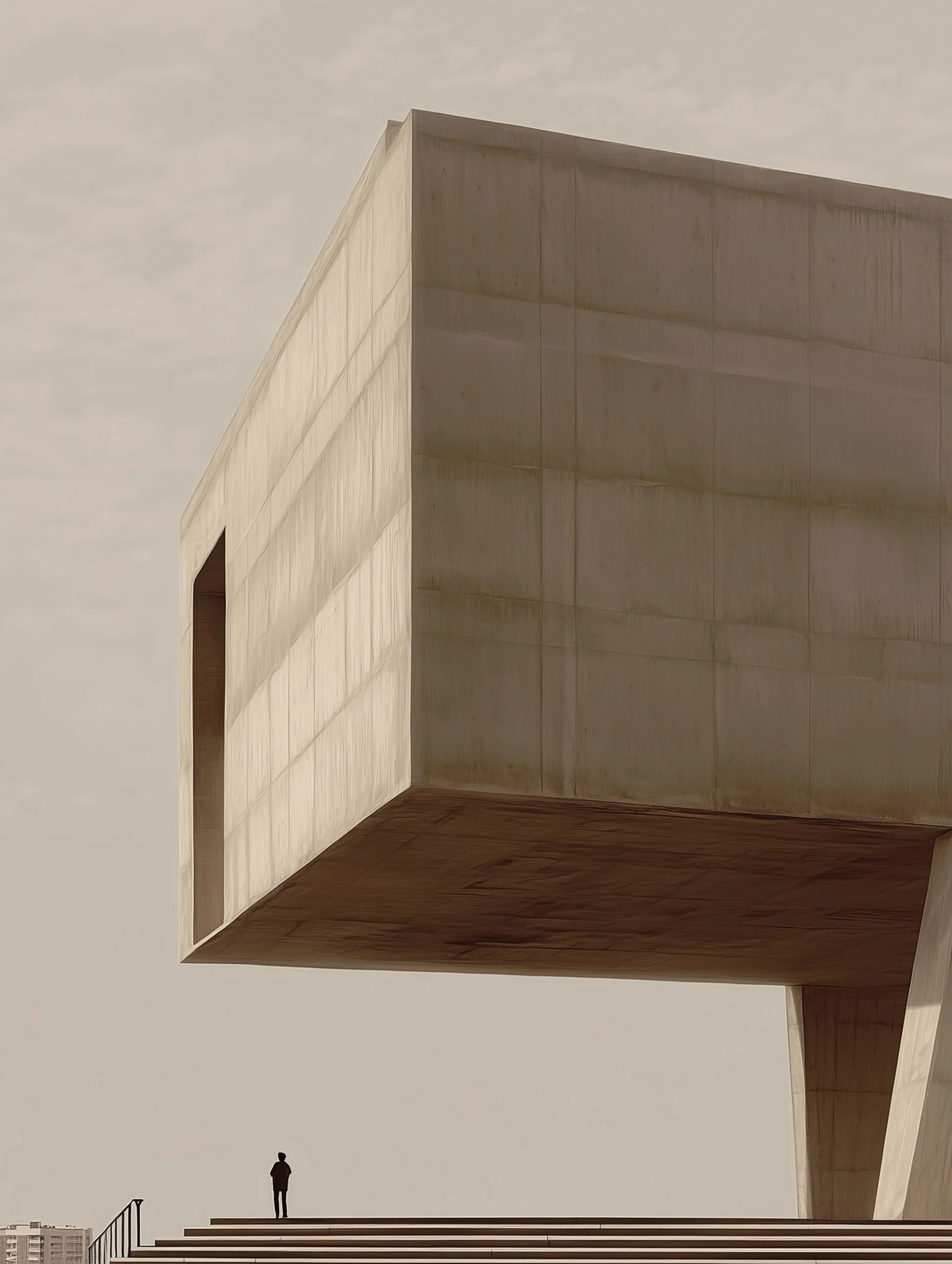
Stability is often something we agree to, long before it proves itself.
Most of us already live on unproven premises.
We cross streets trusting drivers will stop.
We put money in banks trusting numbers on a screen.
We eat fries at a restaurant believing they're really potato.
We fall in love trusting our own understanding of happiness.
None of that is certain. We judge those bets by their fruits—by whether they make life more livable or more cruel. Some hypotheses will fail the tests of life and fall in the never again pile. Some needed a positive check only a couple of times to become on our own theories, from which we often bet high. To our own benefit or our demise.
Just Testing.
So I suggest one more premise worth testing.
Not believing, not preaching—just testing.
Suppose, instead of starting with what reality is made of, we start with what happens when our usual sense of self loosens. Suppose we treat identity not as a fixed fact, but as a working interface—something the mind uses to navigate experience.
Some people report moments where that interface softens: where awareness feels less personal, less tightly bounded, and less centered on a single point behind the eyes. The world doesn’t disappear—but the sense of being separate from it changes. Whether we call that awakening or something else matters less to me than whether such a shift can be explored without required belief.
This experiment doesn’t ask you to replace the beliefs or traditions you already live by — only to notice what happens when you try one small perceptual shift inside them.

When attention shifts, the boundary between observer and observed doesn’t vanish—it loosens.
We already know the mind is capable of radical shifts in perspective. In dreams, we fly, breathe underwater, or drift in space for what feels like hours. In video games, we effortlessly inhabit non-human bodies and unfamiliar rulesets. Certain experiences—meditative, contemplative, or extreme—can also disrupt our usual sense of who or what we are.
I have no claim to prove that consciousness is fundamental, or that reality is literally a shared dream. Those ideas remain hypotheses—interesting ones, but unproven. What is testable is whether changing how we attend to experience can reliably change how we experience ourselves and the world—changes often grouped under names like “awakening,” though the language varies widely.
Across cultures and history, people have used very different languages to describe such shifts—religious, philosophical, or poetic. I’m less interested in the stories than in the underlying move: a change in perception that seems to reduce suffering, soften reactivity, and widen the frame through which life is lived.
So the question I’m interested in is a modest one: Can something like this—often called awakening—be accessed in a secular way, without required belief, without conversion, and without adopting a worldview; without needing long silent retreats or a formal meditation practice; simply by experimenting with perception?
That’s the experiment. The rest is interpretation.
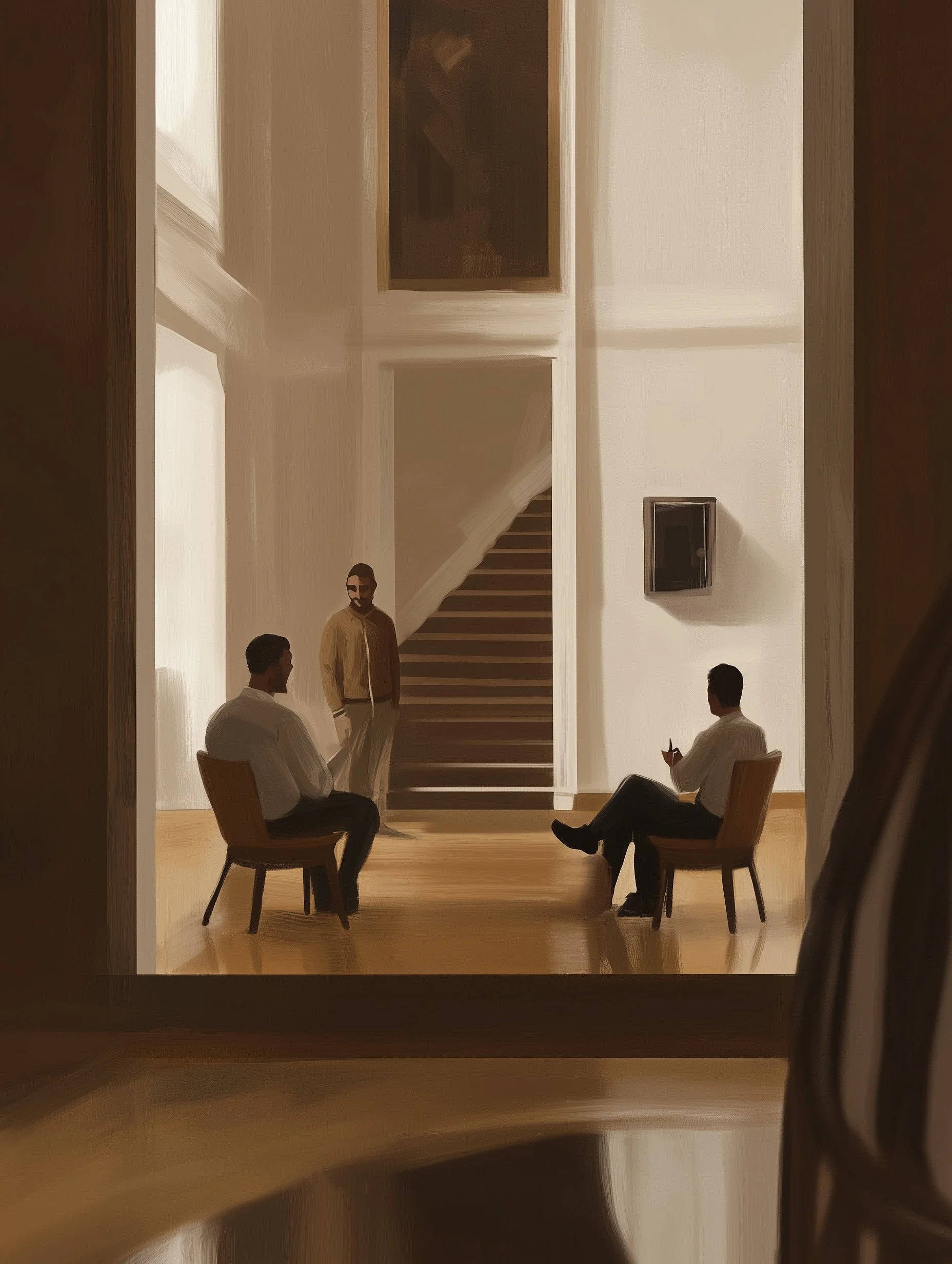
The experiment doesn’t happen in ideas. It happens here.
What Changes in the Rooms We Enter.
I’m not here to tell you what awakening “really” is. I’m not here with secret data, borrowed science, or a new revelation. I’m here with a smaller, stranger question: What happens to a human being—and to the rooms they enter—if they live as if awakening to a consciousness-first identity were possible?
I call this experimenting with life as The Dreamer. Not a religion. Not a belief system. A field test of identity—layered on top of the life you’re already living.
In this experiment, I’m testing a small set of practices—some aimed at relationships, others at training attention and perception. One simple move in hard moments is the Dreamer Stance: I hold the room as if everyone in it belongs to the same mind.
You still set boundaries. You still disagree. You still say no. But you refuse one move: turning anyone—including yourself—into the enemy of the universe. Whether consciousness truly comes first may never be provable. The textbooks may never change.
What is testable is this:
Does it help you stay human where people usually harden or check out?
Does this stance lower the heat in conflict?
Does it make repair faster?
In the moment, I use a small interrupt—almost a switch: Do I judge, or dream? Do I test, or dream?
That’s all We The Dreamer is: an experiment, judged only by those kinds of outcomes. I’m not asking you to believe the world is a dream. I’m asking: Who do you become if, just for a while, you live as if it were—and let the results speak?
Field Test (Optional): The Dreamer Stance
If you want a tiny field test this week, try this in any tense moment:
a family argument, a staff meeting, a group chat.
1/ Flip a coin to randomize your stance.
Heads: enter as usual.
Tails: for three seconds, try this:
2/ Try on the possibility that everyone here belongs to the same mind.
3/ Notice what changes in your next move:
your tone
your pace
the first sentence you choose
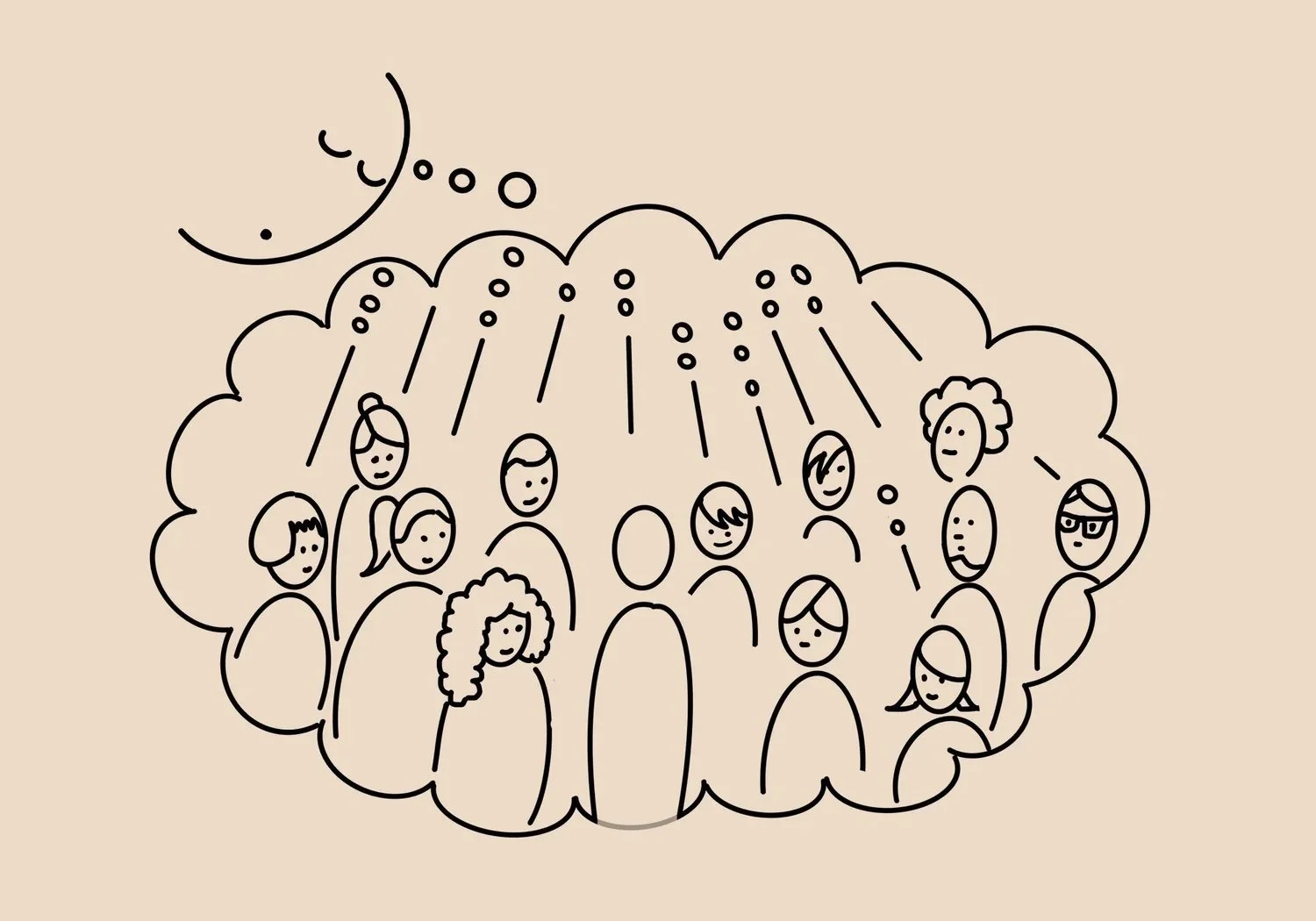
Field sketch — visual cue, not final symbol — many figures sharing one thought-bubble of awareness, one Dreamer field appearing as multiple perspectives.