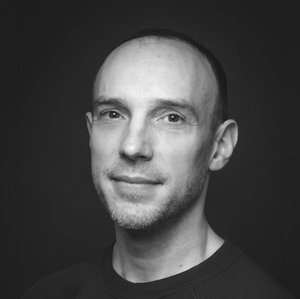
Following a Strange, Sincere Exploration in Public.
JOURNAL OF THE EXPERIMENT1380 words · 5 min read · FR Available · Listen on SoundCloudThis Journal of the Experiment entry sits alongside the Dreamer Project / How It Works material as a stance memo. It explains why I’m about to share short “field tests” and a Dreamer Report in public, and why I’m treating The Dreamer Project not as a finished philosophy but as a secular, day-to-day creative experiment in ordinary life that I’m now opening to a wider community.

You can stand in front of centuries of answers and still choose to run your own experiment. Illustration inspired by Gwaneumsa Buddhist Temple.
I’m in a much better place than I was a few months ago to start releasing social media around the creative exploration I’ve been circling for months:
the artistic process can happen inward and doesn’t always need physical products;
perception itself might be the first creative act;
a secular, day-to-day awakening can be tested right in the middle of ordinary life.
“The working hypothesis, at least for this phase of the experiment, is simple: take consciousness as primary, treat the world as its dream, and watch what that does to your way of seeing.”
The working hypothesis, at least for this phase of the experiment, is simple: take consciousness as primary, treat the world as its dream, and watch what that does to your way of seeing.
I’ve spent the last few years turning that hypothesis into objects, scenes, and graphic design collaborations. Now I’m about to create prototypes of perception itself: small, testable frames for reality as if it were one mind’s dream—a long, long dream that began at the dawn of time.
Knowing My Limits
The “authentic codes” that have quietly shaped my career are being tested again. This time, I can’t make the same mistakes I’ve made before—relying too heavily on technology, on other people’s brains, research, and funding. The rule of thumb going forward is simple: protect independence and clarity; respect your own subjective observation and reasoning; be explicit about your limits; and let “I don’t know” drive the loop of creating, testing, and listening.
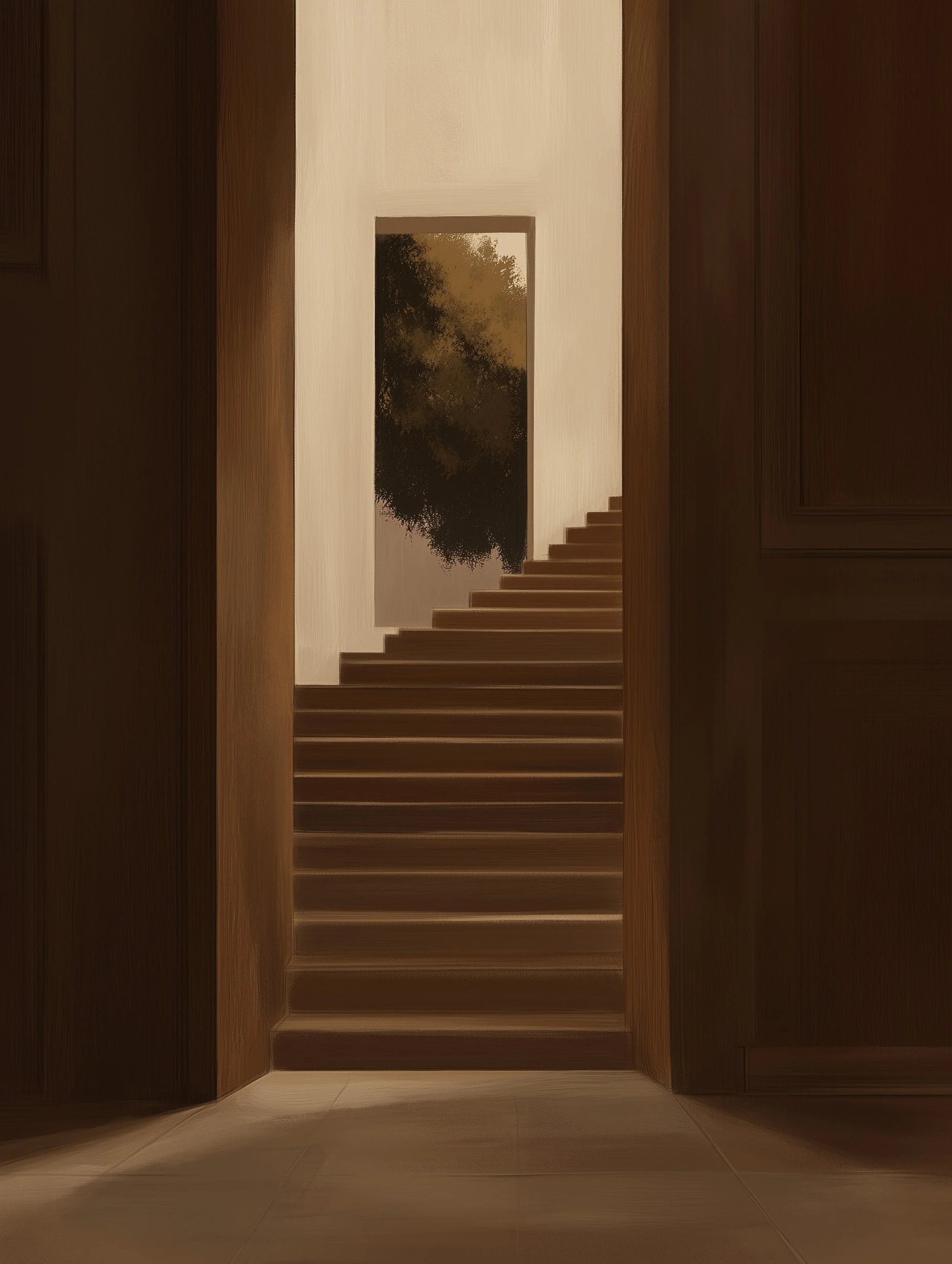
The world doesn’t arrive framed; we do the framing, step by step.
I also need to be precise about my relationship to all the traditions and fields that inspire me. My exposure to Christianity, Hinduism, Daoism, Buddhism, quantum physics, idealism ∞, Stoicism, and many other domains has mostly come through texts I stumbled on, conversations I overheard, books I read, or classes I managed to take—but never with the sustained depth of a specialist.
So my understanding of any given practice, religion, theology, philosophy, or ideology is necessarily partial. The only honest thing I can do is point you back to the sources and say: make your own opinion.
As many of you know, I’ve been deeply inspired by the work of people like Annaka Harris on the possibility that consciousness might be fundamental. At this point, though, it feels more honest to treat that work as background to my own small experiment rather than something I can speak for. I don’t know the field well enough to do more than point to it and say: it’s a must-read, and it’s up to you to form your own view.
The same is true for David Chalmers, Donald Hoffman, Bernardo Kastrup, Philip Goff, Eckhart Tolle, and for many of the scientists, philosophers, and contemplative teachers who’ve shaped the modern conversation around consciousness, mind, and awakening. If you ever want to see some of the sources behind this, I keep a growing selection of them in the Bibliothèque on my site so you can dig in directly.

Even if the field behaves like a black hole, one small way of seeing can still be a worthwhile experiment.
A Different Kind of Work
My work is something else: an artist who became a designer, then an entrepreneur, and wound up a philosophical outsider and conceptual artist working directly with perception and inward mind-training. I’m trying to define a new genre of creative experiment that may never have more impact than a small gesture in the black hole of the media-arts industry. It’s not a claim about how reality is—it’s a way of looking I’m experimenting with.
“It’s not a claim about how reality is—it’s a way of looking I’m experimenting with.”
Can The Dreamer Project ever matter to scientific research on consciousness? Maybe, but it’s not clear.
Can We The Dreamer—as a living theory of consciousness being fundamental—help us live better if we experiment with identifying as the Dreamer rather than the individual self? Maybe, but it’s not clear.
Can adopting a stance like Stoic Idealism actually help people suffer less, or is it just a practical lens for the few who feel called to test consciousness-first principles? Again: maybe. Not clear.
Listening to Sam Harris describe the nearly two years he’s spent in silent retreat, the teachers he’s worked with, the languages and terminologies he’s learned, I see someone who went very deep in a specific practice and earned the right to talk about it with authority. When Sam speaks with a Buddhist monk about non-dual mindfulness and the recognition of selflessness, he’s describing clear seeing into a non-dual perception he has trained in rigorously.
That’s not where I stand today.
Curiosity, Rebellion, and a Quiet Proposal
My creativity around the medium of mind, perception, and exploration feels tremendous—borderline unruly. It gives me a way to use my design sensibility, artistic skills, and entrepreneurial drive to delve into mind-first living without scarcity or grand claims. I don’t feel a lack of ideas for designing methods and drills that point toward a consciousness-first reality, but I do hold all of it as a creative experiment rather than a path I can certify for anyone else.
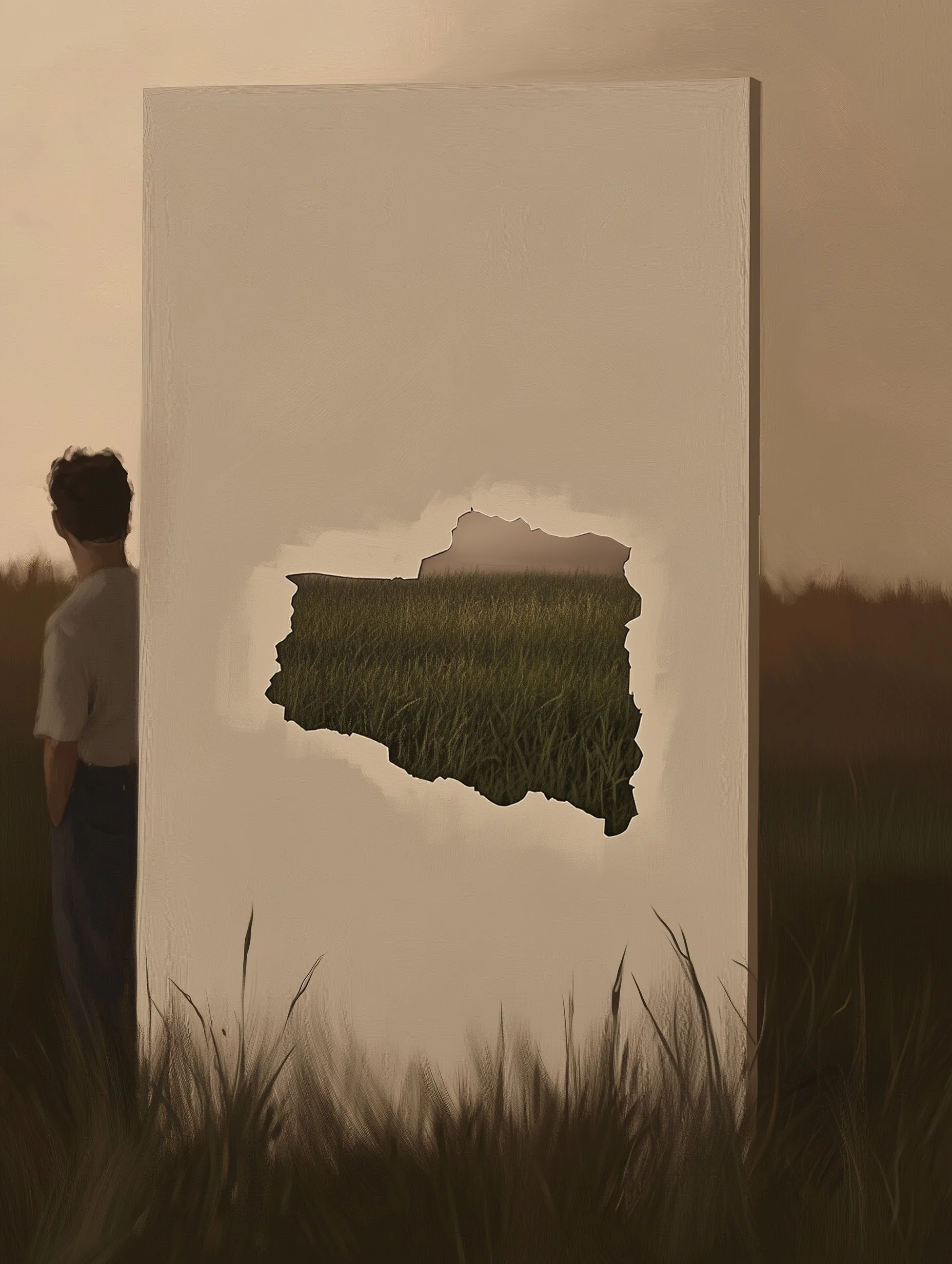
Not a new world—just a crack in this one wide enough for another way of seeing to slip through.
This inquiry has reawakened in me a very old mix of curiosity and rebellion. I don’t assume I’m right, and I can name many reasons why this kind of experience-based inquiry might be disturbing to some and distasteful to others. Yet the canvas in front of me feels—quietly—like a proposal: a gesture of love, a small peace offering, and a creative invitation.
As I integrate the teachings I’ve bumped into along the way—from my Catholic upbringing, through years of spiritual curiosity, to my design, art, and entrepreneurial background—I have no intention of copying or distorting them for personal gain, or of using them as credentials to suggest I “own” the truth.
My formation has been broad and my fact-retention fairly limited; my subjective experience and creative response are where things actually stick. The fruit of my interpretation is therefore genuinely independent—even when I use references (biblical, Christian mystical, Eastern non-dual, or New Age) as signposts for you to check for yourself.
Walking the Line in Public
“A creative endeavor that takes only the present moment as its witness.”
When I look at people who have spent decades in this territory—formal study of religious texts, years of contemplative practice, scientific and academic work, sustained engagement with ethics, meaning, and the future of our species—I see a span of reference points and a precision of recall that are part of their craft.
Out of respect for those who work at that level, I can’t pretend to that kind of scholarship. What I can offer is my energy, my heart, and my attention, in service of a creative endeavor that takes only the present moment as its witness.
So today I have to maintain a delicate balance:
between aesthetics and experiment,
between endless tinkering and actually releasing work into the world,
between hypotheses and subjective observation,
between promising “impact” and simply showing what happens.
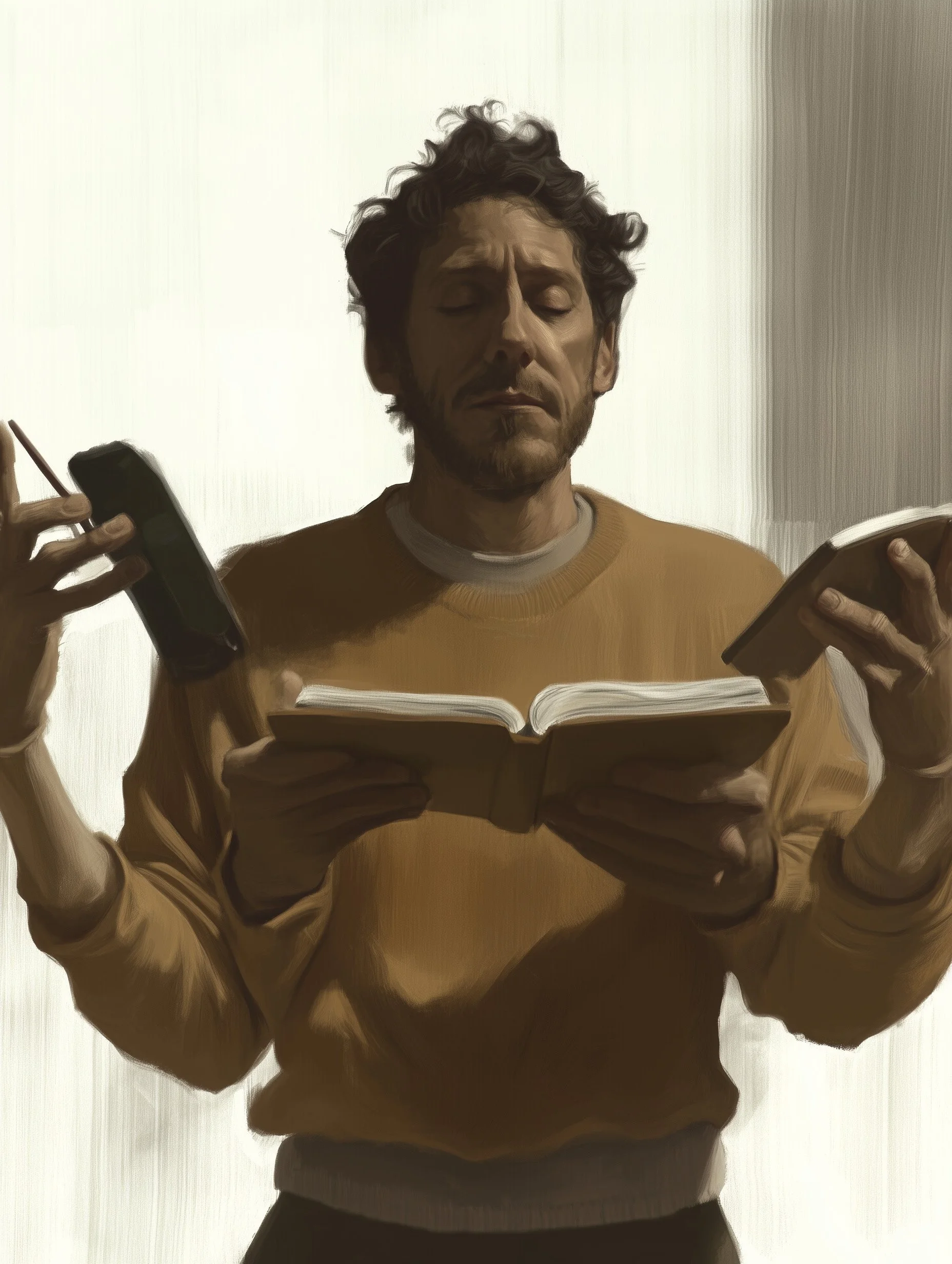
Sometimes balance isn’t about holding less, but about deciding what you’re willing to drop. Illustration inspired by a photograph of Avant-Garde artist Jean Cocteau.
The next phase—the social posts, the short 30–60 second “field tests,” the First Dream creative experiments—is simply my attempt to walk that line in public, with as much clarity and humility as I can manage: using perception itself as the place where this whole question is tested.
I don’t know whether treating consciousness as fundamental makes for a good philosophy of life, and I can’t honestly recommend it as one. What I can do is run this experiment in public—strange but sincere, part conceptual art and part research into perception—and let you decide what, if anything, it’s worth.
Keep sending me your questions; they’re one of the best ways I have to get my head around this work and see where the experiment actually matters. In the coming weeks I’ll start posting more publicly, and somewhere out there, a few people may find that this resonates enough to stay with it, join the conversation, or quietly try these lenses for a moment in their commute, their family, their creative practice, or their own narrative.
If this work eventually finds those few, that will already be enough. In the meantime, you’ve already been more than enough to get me going, and I’m genuinely grateful for that.
Thanks for giving attention to something that asks for it slowly.
Martin